
What sellers do differently in autumn
Autumn is the only season that gives a seller a perfectly innocent excuse for everything he would rather you did not notice.

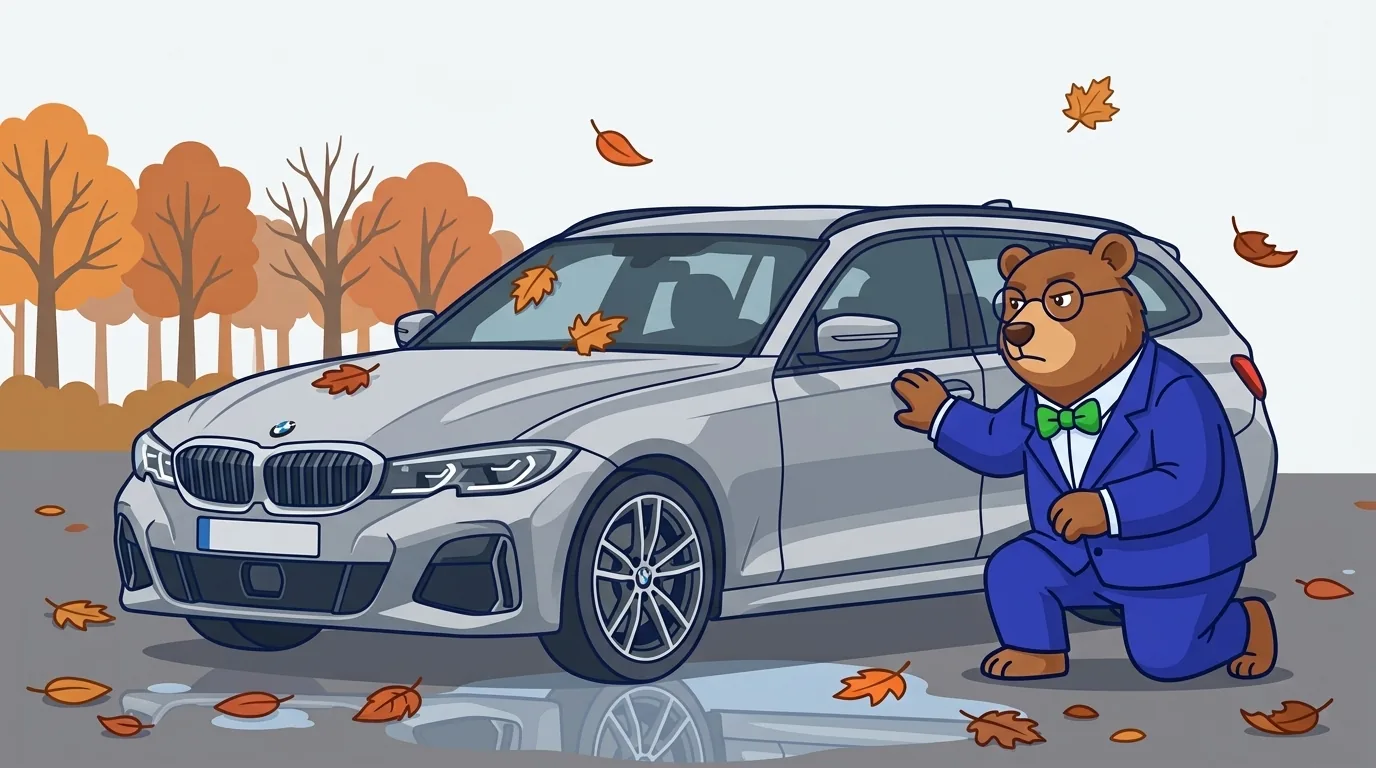
More listings, more choice, and a season that quietly works for the seller.
Autumn is the busiest part of the used-car year. More listings, more choice, and prices moving in your favour on some cars and against you on others.
It is also the one season that gives a seller a perfectly innocent excuse for everything he would rather you didn't notice.
He warmed the engine up because it's cold outside. He fitted winter tyres because winter is coming. He had the underside sprayed because of the salt. He cleaned the interior because it's damp.
All of those things sound reasonable. Every one of them also removes the evidence you wanted to see.
So this is a guide to buying well over the next three months, and to spotting the moments when autumn is quietly doing the seller's work for him.
The short version
What to remember
- Buy the soft-top now. Convertibles, coupes and big petrol lose value going into winter.
- Don't go shopping for a four-wheel drive in October. That is the one segment competing against you.
- If the engine is already warm when you arrive, you haven't seen the car start.
- Never judge paint in the rain or after dark, and from September an after-work viewing is both.
- Fresh underseal, new winter tyres and a cleaned interior all look like care. They also erase evidence.
- Sort by listing age before you sort by price.
Skip ahead: check a car nowthe pre-viewing checklist
The trap this article is really about is simple: in October a car can be cheap because of the season, or cheap because of what happened to it, and the season is perfect cover for the second one.
Find out why it is cheap
In October a car is cheap because of the season or because of what happened to it. A history check is the only thing that tells the two apart.
Example: WBA3A5G59DNP26082Free preview included
- 30+ countries
- Result in under a minute
- Full PDF report
More cars are for sale right now, and that cuts both ways
Autumn is when the market fills up. Summer cars get moved on, holiday plans are finished, and the people who spent August thinking about changing their car finally get around to listing the old one.
More supply is good for you. It also makes buyers less careful. When someone has twenty tabs open, they move quickly and ask fewer questions.
That's exactly the situation a bad car needs.
Treat the extra choice as a reason to slow down, not speed up.
Soft-tops and sports cars are cheap right now
The cars that lose value in autumn are the ones nobody wants to own through a winter:
- Convertibles, roadsters, targa tops
- Rear-wheel-drive coupes and sports cars
- Big-engine petrol
- Anything sitting on summer tyres with no second set
If you've been planning to buy one of these in spring, buying it now is the cheapest negotiation you'll ever do, because you don't have to say anything.
The calendar does the negotiating for you.
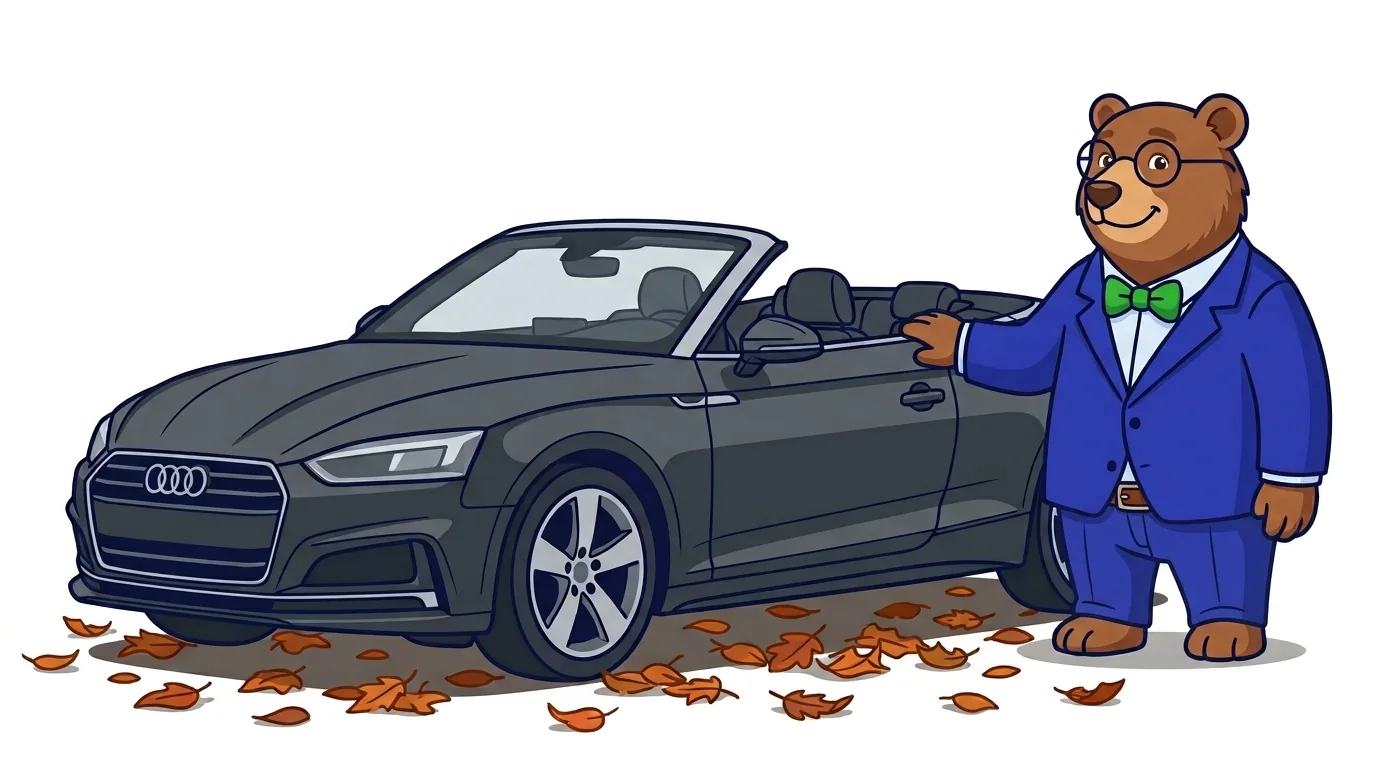
Nobody wants a soft-top in October. That is the entire discount.
Do not go shopping for a four-wheel drive in October
The opposite is true for winter cars. Four-wheel drive, all-wheel drive, SUVs, cheap reliable hatchbacks with a fresh inspection, anything with a tow bar.
The precise effect is worth understanding, because it isn't quite what people say.
Used prices as a whole tend to soften in the last quarter of the year. Nordic auction operator Kvdbil, which publishes a recurring market report, has recorded fourth-quarter prices falling between 1.6 and 5.3 percent against the third quarter across recent years, before recovering in January.
Meanwhile Blocket, Sweden's largest classifieds site, reports that demand for four-wheel drive climbs above its annual average as winter approaches, with more than a third of privately sold four-wheel-drive cars going within a week.
So the winter car doesn't necessarily get more expensive. It stops falling while everything around it continues to fall, and it sells before you've finished thinking about it.
Either way, you're the one with no leverage.
Anyone who has tried to buy a cheap old four-wheel drive in November already knows what this feels like. The car nobody wanted in July suddenly has four people asking about it.
There is no published figure for that segment and we're not going to invent one, but the pattern is consistent enough that you should plan around it.
If you want a winter car, you wanted it in August.
The discount is really the seller's storage bill
It helps to understand where an autumn discount comes from, because that tells you how far it can go.
A man selling a convertible in October is looking at five months of insurance, road tax, a garage or a driveway, and almost no buyers.
Every week he keeps it, the car gets older and worth slightly less. That holding cost is the discount. It's arithmetic, not sentiment.
Which is why the listing that's been sitting there for two months is the one that moves, while the fresh one doesn't.
Sort by listing age before you sort by price.
If the bonnet is warm when you arrive, you have not seen the car start
This is the big one, and it's almost invisible as a trick because it looks like basic courtesy.
In July, warming a car up before a viewing hides nothing. In October it hides the glow plugs, the smoke on start-up, the rattle in the first three seconds, the battery that won't turn the engine over on a cold morning, and the timing chain that only complains before the oil is up.
Tell the seller in advance that you want to see the car started from cold.
If you turn up and the engine is warm, that's not the end of the world. But it is the end of that visit. Arrange to come back early in the morning.
A seller who won't allow a cold start has answered your question.
Autumn gives a seller an innocent reason to destroy the evidence
Once you notice the pattern, you can't unsee it. Each of these is a perfectly normal thing to do before winter. And each one wipes out something you needed to inspect:
| What he did | Why it sounds fine | What it removed |
|---|---|---|
| Fresh underseal | Protects against road salt | The sills, the welds and the corrosion |
| New winter tyres | Legally required soon | The wear pattern that shows bent suspension |
| Cleaned interior | It gets damp this time of year | The smell that says water is getting in |
| Heater running on arrival | Making you comfortable | A heater that only half works |
| A long drive beforehand | Warming it through | The diesel particulate filter warning |
None of these prove anything on their own. Several of them together, on a car being sold in a hurry, is a shape worth noticing.
Ask what the underside looked like before it was sprayed. The answer, and how readily it comes, tells you more than the underside would have.
Never judge paint in the rain or after dark
Wet paint makes everything look better. It hides swirl marks, the edge of a respray, a colour that doesn't quite match the wing next to it, and lacquer that has gone dull.
The seller doesn't even have to arrange this. Autumn does it for him, and so does the clock.
From September, an after-work viewing is a night viewing.
Go in daylight, on a dry day, or accept that you haven't looked at the bodywork yet.
"Winter tyres included" is a sentence, not a fact
Somewhere between the start of November and the start of December, most countries in the region require winter tyres. That makes a second set worth real money, which is why it appears in so many autumn listings.
Go and look at them before you decide what they're worth:
- The DOT code on the sidewall gives the week and year they were made. Rubber hardens with age regardless of tread.
- Four matching tyres, or four different ones somebody collected.
- The correct size for the car.
- A real winter compound, not all-season tyres described loosely.
- Tread that is actually usable, not merely above the legal minimum.
If the set is old, mismatched or nearly worn, you're buying a car with no winter tyres. Replacing them properly is a few hundred euro at least, and more on larger wheels.
That's a price argument the seller can't dispute, because it has a date attached to it.
The cold and the wet do half your inspection for you
This is the part that works in your favour, and it's the best reason to buy now rather than in May.
In spring, a car can hide a dead heater, a tired battery and a leaking door seal for months, because nothing is asking it not to.
In October, the weather does the asking.
The heater either gets hot or it doesn't. The battery either restarts the car after the test drive or it doesn't. The windows either clear or they sit misted over while the seller explains that it's only the damp.
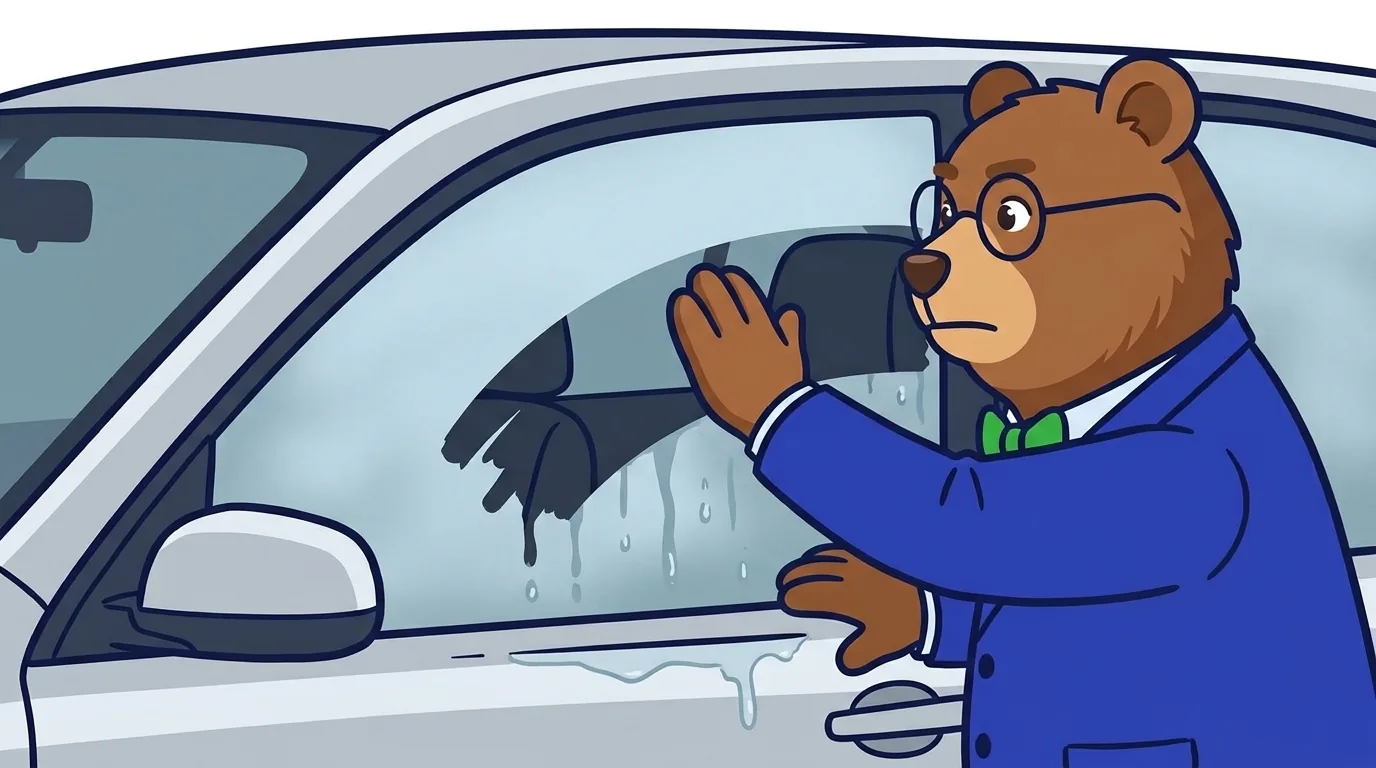
A car that mists up and will not clear is telling you where the water gets in.
Electric cars gain the most from this. Winter range is the number every buyer worries about, and almost nobody gets to check it because most of them buy in spring. In October you can watch the consumption climb in front of you and find out whether the preheating actually works.
"It has to go before winter" is a deadline he invented
Autumn makes a fake deadline sound like a real one.
It has to go before the snow. The price goes up when the weather turns. My insurance renews next week.
Some of that is even true. None of it is your problem, and none of it is a reason to skip a cold start or a daylight look at the paint.
If a car is right, it will still be right on Saturday.
One of these cars is cheap because it is October. The other is cheap because it is damaged
This is the trap that catches good buyers rather than careless ones.
In October, you will find two cars: same model, same year, both around twenty percent under what they were asking in spring.
One is cheap because of the season. The other is cheap because of what happened to it, and the season is perfect cover.
The buyer who feels clever about the timing is exactly the buyer who stops asking why it's cheap. He's already explained the discount to himself.
And by the time you're standing in front of it, everything you would normally look at has been dealt with. The underside is sprayed. The tyres are new. The interior is clean. The engine is warm.
What is left is the car's record: where it has been registered, what damage has been paid for, and what the mileage said the last time somebody official wrote it down.
That's the one part of the car nobody can prepare for winter.
Before you go and look at anything
- Sort by listing age, not just by price.
- Ask for a cold start, in the morning, before you agree a time.
- Go in daylight and preferably when it is dry.
- Put your hand on the bonnet when you arrive.
- Lift the boot floor and feel the spare wheel well.
- Pull up a corner of the carpet.
- Read the DOT dates on the winter tyres.
- Ask what the underside looked like before it was sprayed.
- Run the heater and the air conditioning, both.
- Check the history before you fall in love with the price.
Seasonal price patterns are typical rather than guaranteed and vary by market, model and seller. Winter tyre requirements and their start dates differ by country. Replacement tyre costs are indicative.
Before you agree a price
The one thing he could not prepare
Mileage over time, damage, finance and import records across 30+ countries, in one report, in under a minute.
- 30+ countries
- Under a minute
- Full PDF report
Not sure yet? See what a full report looks like first
Frequently asked questions
When is the cheapest time of year to buy a used car?
For convertibles, sports cars and big-engine petrol, autumn. Used prices as a whole tend to soften in the fourth quarter, and the cars nobody wants to own through a winter fall furthest. Winter cars are the exception: their prices hold while everything else drifts down.
Should I wait until spring to buy a four-wheel drive?
If you can. Demand for four-wheel drive climbs above its annual average as winter approaches, so autumn is the season you compete with the most other buyers for it. The cheap months for a winter car are late spring and summer.
Why does a cold start matter when viewing a used car?
A warm engine hides weak glow plugs, smoke on start-up, a rattle in the first seconds, and a battery that struggles on a cold morning. Ask for a morning viewing and put your hand on the bonnet when you arrive. If it is already warm, you have not seen the car start.
How do I tell a seasonal discount from a damage discount?
Not from the car: by the time you view it, the underside is sprayed, the tyres are new and the interior is clean. The record is what separates them: where the car was registered, what damage was paid for, and what the mileage read when it was last officially recorded. A vehicle history check shows all three.
About this guide
- Seasonal prices: fourth-quarter used prices falling between 1.6 and 5.3 percent against the third quarter, from the recurring market reports of Nordic auction operator Kvdbil. Patterns are typical rather than guaranteed and vary by market and model.
- Winter car demand: demand for four-wheel drive rising above its annual average as winter approaches, with more than a third of privately sold four-wheel-drive cars selling within a week, as reported by Blocket, Sweden's largest classifieds site.
- Winter tyre rules: most countries in the region require winter tyres from between early November and early December, but the exact rule and its dates differ by country. Replacement costs are indicative.
- Why the record matters here: an autumn discount and a damage discount look identical on the forecourt, and the preparations that hide one also hide the other. How mileage goes missing is covered in odometer fraud, and what damage records actually show in our damage statistics study.
Read next