
Importing a car from the USA: what you need to know in the Netherlands
Customs duty, VAT, BPM and the RDW inspection. And why a missing CO2 figure can cost more than the car itself.

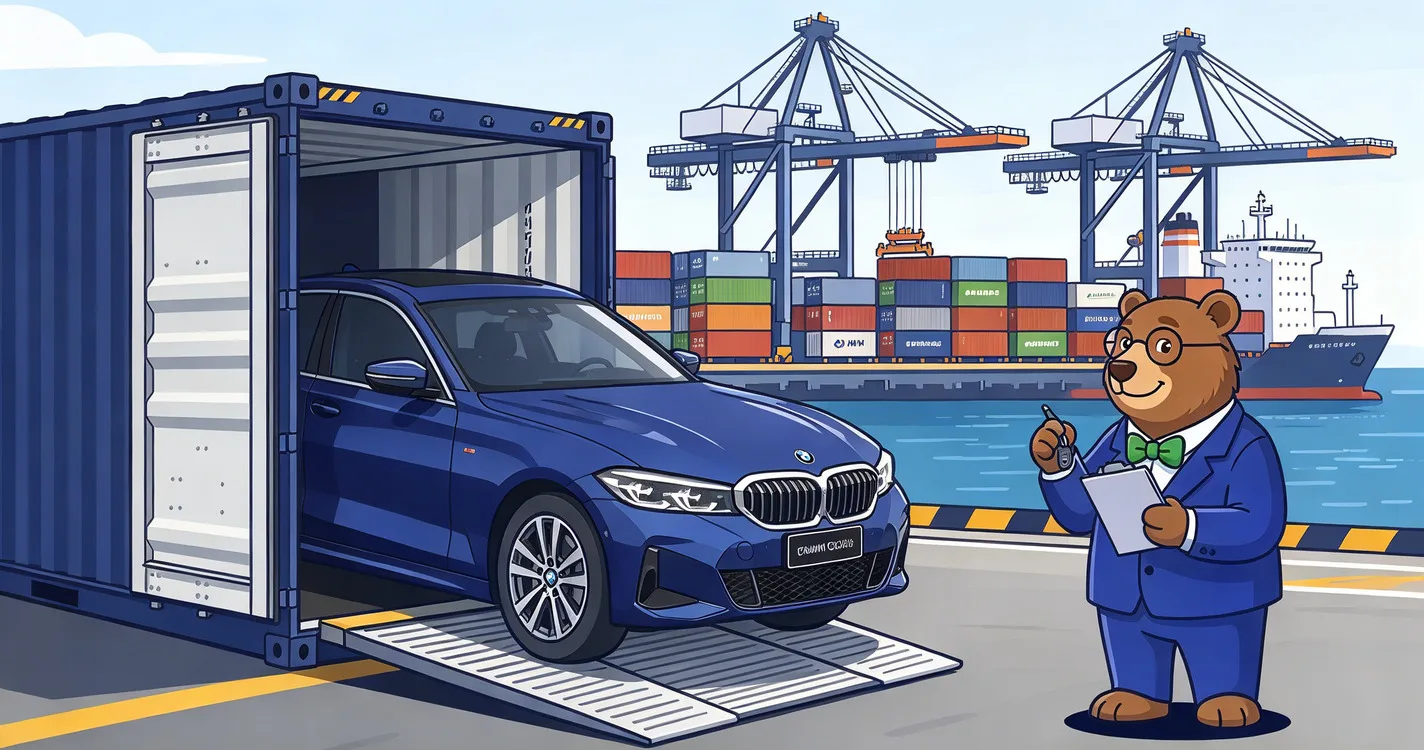
A car from a US auction often looks like a bargain. But the auction price is only the start. Before the car gets Dutch plates, you add transport, customs duty, VAT, the RDW inspection and the BPM (the Dutch registration tax). And that last one can change the whole picture.
This guide shows what a private import really costs in 2026, which steps you need to take, and what to sort out before you bid.
In short
- You pay 10% customs duty and 21% VAT. Since 1 July 2026 the duty can drop to 0% for cars built in the USA, but proving it is difficult in practice.
- BPM is the big cost. Without a CO2 value recognised in Europe, the Belastingdienst (the Dutch tax authority) uses a high default value.
- For a 2018 saloon, that is the difference between about 5,200 and 49,800 euros of BPM.
- The RDW (the Dutch vehicle authority) usually inspects cars from outside the EU in Lelystad. After water damage, a damage inspection is always required.
Jump to: check the vehicle history·cost example·compare 12 countries
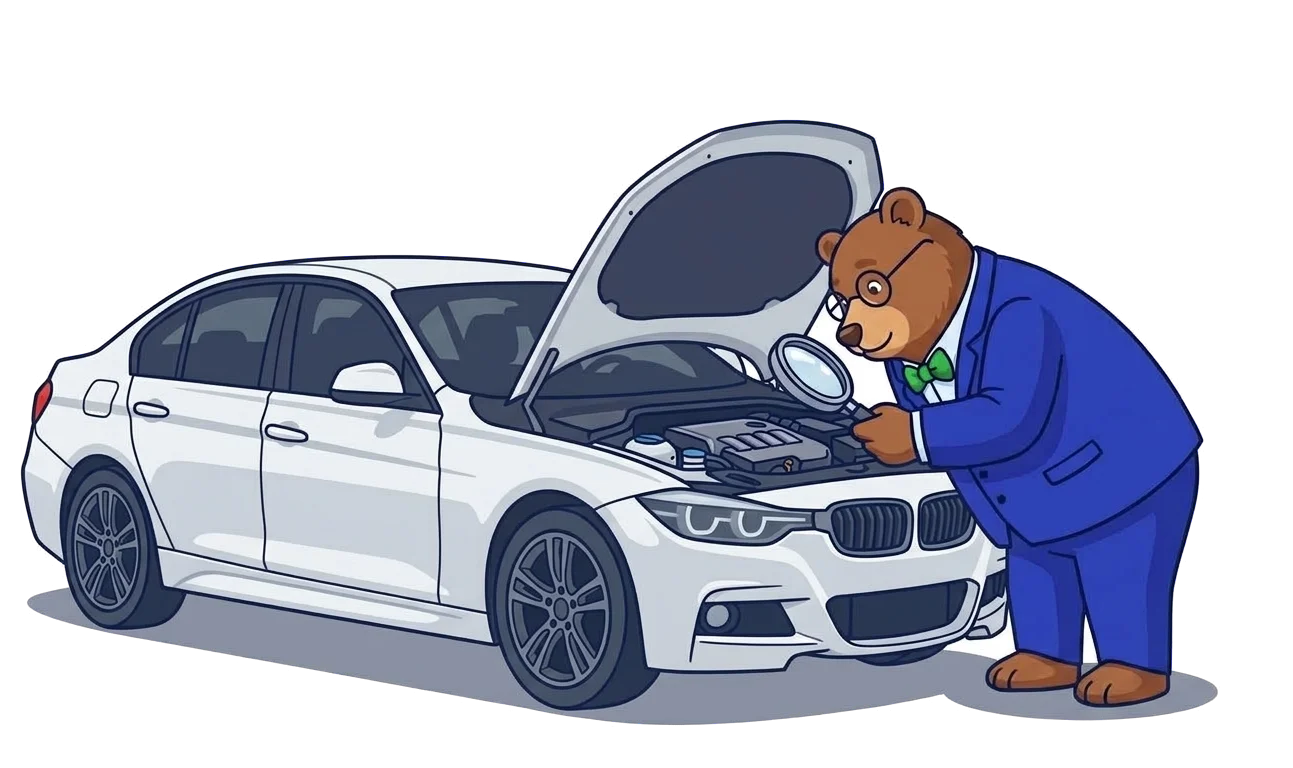
What did it go through in the US?
Once a car is registered here, its US past is easy to hide. The VIN still shows it: auction photos, damage records and title brands.
Example: WBA3A5G59DNP26082Free preview included
- 30+ countries
- Result in under a minute
- Full PDF report
Customs duty, VAT and BPM
Everything starts from the customs value: the purchase price plus transport and insurance to the EU border. On that you normally pay 10% customs duty. VAT of 21% is added on the customs value plus the duty.
New since 1 July 2026: EU Regulation 2026/1455 cuts the duty on goods of US origin to 0%, for now until the end of 2029. Passenger cars are included. What counts, though, is where the car was built, not where you bought it. A Japanese or Mexican car from an auction in Florida still pays 10%. According to the European Commission, a "Made in USA" sticker or a line on the invoice is not enough. A customs broker who clears cars in the Netherlands reports that since July he has not once got 0% for a used auction car. So plan for 10%.
BPM (the Dutch registration tax) is paid after the RDW inspection and before you get a registration number. It is based on CO2 emissions. A US car only has US EPA figures and no European CO2 value. If you cannot show that value through European type approval or the RDW's individual approval, the Belastingdienst uses a default value: 507 g/km for petrol cars first registered between 2015 and mid 2020, and 550 g/km after that.
For used cars you get a BPM reduction based on age, through the standard depreciation table, a price list or a valuation report. From 17 years and 10 months, you pay no BPM at all.
Cost example: a 2018 saloon
You buy a 2018 saloon with a 2.0 petrol engine for USD 12,000 and pay USD 1,800 for shipping to Rotterdam. At 0.86 euros per dollar and an RDW inspection in November 2026, the bill looks like this:
| Customs value (price plus transport) | €11,868 |
| Customs duty 10% | €1,187 |
| VAT 21% | €2,742 |
| RDW inspection, registration and certificate | €1,251 |
| BPM without a recognised CO2 value (507 g/km) | approx. €49,757 |
| BPM with a proven 170 g/km | approx. €5,217 |
Customs uses its own monthly exchange rate. BPM after a 77.75% age reduction under the standard table and the 2026 rate. For a 2018 car, a historic rate may come out lower. Not included: auction fees, transport inside the USA, customs agent, modifications, registration plates and insurance.
Port and customs
Rotterdam, together with Antwerp, is a main gateway for US cars into the EU. The declaration is made where the car enters the Netherlands, in practice by a carrier or customs agent who often also advances the duty and VAT. Many buyers from other EU countries have their car cleared in Rotterdam and then register it at home. You only pay BPM when the car gets Dutch plates.
The RDW inspection
A US car has no European certificate of conformity, so it needs an individual approval from the RDW. Cars from outside the EU are usually inspected at the RDW test centre in Lelystad. You book online and the RDW calls within two weeks to confirm the appointment. As a private person you can arrange this yourself.
The inspection costs 1,128 euros, or 1,986 euros for cars built from 2024, plus 50 euros registration and 72.50 euros for the certificate. A re-inspection costs 650 euros, and you pay even if the car is rejected. The RDW keeps the US title document, so make a copy first.
Salvage, rebuilt, flood: damage from the USA
Many cheap US cars have a salvage, rebuilt or flood title. That means an insurer has already written them off as a total loss, or they stood in water. There is no import ban, but the RDW warns that damaged imports face extra requirements through the damage inspection. After water damage, an inspection is always required.
Severe damage can lower the BPM through a valuation report. Since July 2026 the Belastingdienst checks these reports more closely, because damage is sometimes invented or exaggerated. There is one more thing: some US cars are first registered in Germany to get a documented CO2 value. The US damage history no longer appears on those German papers.
A German or Dutch registration will not tell you that a car was a total loss in the USA.
That is why step 2 matters: check the US history before you bid, not after. The RDW also advises checking the mileage against other sources. US odometers show miles, so convert first.
Our guide to checking the history of an imported car shows what else can get lost when a car crosses a border.
Step by step: from the listing to your driveway
This is how an import works in practice. The timings are typical, not official deadlines. Allow roughly six to twelve weeks for the whole journey.
Set your budget and choose the car
before buyingAdd transport, customs duty, VAT, the RDW inspection and above all the BPM to the auction price. A car older than 17 years and 10 months pays no BPM.
Check the VIN
before you bidGet the VIN and check the US history before you bid:
- title brands such as salvage, rebuilt or flood,
- auction photos and damage reports,
- mileage readings over the years,
- where it was built. A VIN starting with 1, 4 or 5 usually means a US-built car.
Sort out the CO2 question
before you bidFind out whether you can show a European-recognised CO2 value for this model. If not, plan with the default value and the BPM that goes with it. This one number decides whether the import pays off.
Bid and buy
auction daySet your maximum bid including all costs. Only pay if you get the original Certificate of Title, and keep the invoice and proof of payment safe.
Transport and shipping
1 to 4 weeksA forwarder collects the car, takes it to a US port and handles the export. Most cars for the Netherlands arrive in Rotterdam.
Customs clearance
after arrivalA customs agent files the declaration and you pay duty and 21% VAT. If you want 0%, arrange proof of US origin and direct transport in advance.
Prepare the car for inspection
usually 1 to 3 weeksHave a garage check the car beforehand on the points where the RDW often rejects:
- headlamps,
- rear fog lamp and side indicators with European approval,
- US mirrors that are too flat,
- tyres and a horn that is too quiet,
- exhaust and noise.
Valuation report, if you want one
within 1 month before the inspectionIf the car has more than normal wear or damage, an independent valuer can write a report for the BPM. The car must then stay unchanged for six working days and may be checked by the Belastingdienst.
RDW inspection in Lelystad
1 appointmentWith a one-day registration number you may drive to the inspection. The RDW checks the car and keeps the US title document. The cost is 1,128 euros plus registration and certificate.
BPM declaration
onlineAfter the inspection you file the BPM declaration online with the Belastingdienst and pay. Choose the depreciation method that works out best: standard table, price list or valuation report.
Registration certificate and insurance
within 5 working daysOnce the Belastingdienst approves, the RDW sends the registration card within five working days. Have plates made by an approved plate maker and take out third-party insurance before you drive.
Fit the plates and drive
doneWith plates and insurance, you are done. Keep all the US paperwork. Whoever buys the car from you later will want to see the history.
Before you bid
Check the US history
Auction photos, damage, title brands and mileage readings from over 30 countries, in one report.
- 30+ countries
- Under a minute
- Full PDF report
Not sure yet? See what a full report looks like first
Good to know
- Classic cars: from 17 years and 10 months you pay no BPM. That makes older US classics and youngtimers relatively attractive in the Netherlands.
- Newer cars: for cars built from 2024, the RDW inspection costs 1,986 euros instead of 1,128 euros, because of stricter European safety rules.
- Motor vehicle tax: it depends on weight, fuel and province, and you get it automatically after registration.
- Tyres: DOT tyres are allowed on cars first registered before 2024. After that they need a European approval.
- Buying in the EU instead? A car bought inside the EU pays no customs duty and no import VAT at the border. National taxes and registration costs still apply. Our guide to buying a car at auction in Europe explains that route.
Importing from the USA to another country?
Customs duty is the same everywhere in the EU. VAT, registration tax and the approval rules are not. Choose a country to read its guide.
- BulgariaVAT 20%, product fee, legalised translations
- CroatiaVAT 25%, PPMV tax by CO2
- CzechiaVAT 21%, no registration or road tax
- FranceVAT 20%, CO2 malus, RTI approval
- GermanyVAT 19%, no registration tax
- HungaryVAT 27%, registration tax by emissions class
- ItalyVAT 22%, IPT, superbollo over 185 kW
- LatviaVAT 21%, no registration tax
- NetherlandsVAT 21%, BPM by CO2
- PolandVAT 23%, excise 3.1% or 18.6%
- RomaniaVAT 21%, no registration tax
- SlovakiaVAT 23%, low registration fee
Frequently asked questions
How much customs duty do I pay on a car from the USA?
Normally 10% on the price plus transport to the EU. For cars proven to be built in the USA, the duty can drop to 0% since 1 July 2026. 21% VAT is always added.
How high is the BPM on a US car?
It depends on the CO2 value and the age. Without a CO2 value recognised in Europe, the Belastingdienst uses a high default value. For a 2018 saloon that can be almost 50,000 euros instead of a good 5,000 euros.
Do I pay BPM on a classic car from the USA?
No. From an age of 17 years and 10 months the depreciation is 100% and you pay no BPM.
Can I register a car with a salvage title?
There is no import ban, but the RDW sets extra requirements for damaged cars, and after water damage an inspection is required. Check the US history before you buy.
Sources
- Regulation (EU) 2026/1455, Annex I (chapter 87)
- Customs: cars and motorcycles
- Belastingdienst: calculating the BPM rate
- Belastingdienst: depreciation, price list, valuation report and standard table
- RDW: getting a car from outside the EU approved
- RDW: tips for importing
- RDW: inspection after a driving ban
- SRA: extra checks on BPM declarations (July 2026)
- European Commission, Access2Markets: new tariffs on US goods
Position as of October 2026. RDW fees without a year on the RDW site; check them before you book.
Read next