
Importing a car from the USA: what you need to know in Latvia
Customs duty, VAT, CSDD certification and registration. And why some cars with US papers cannot be registered in Latvia at all.

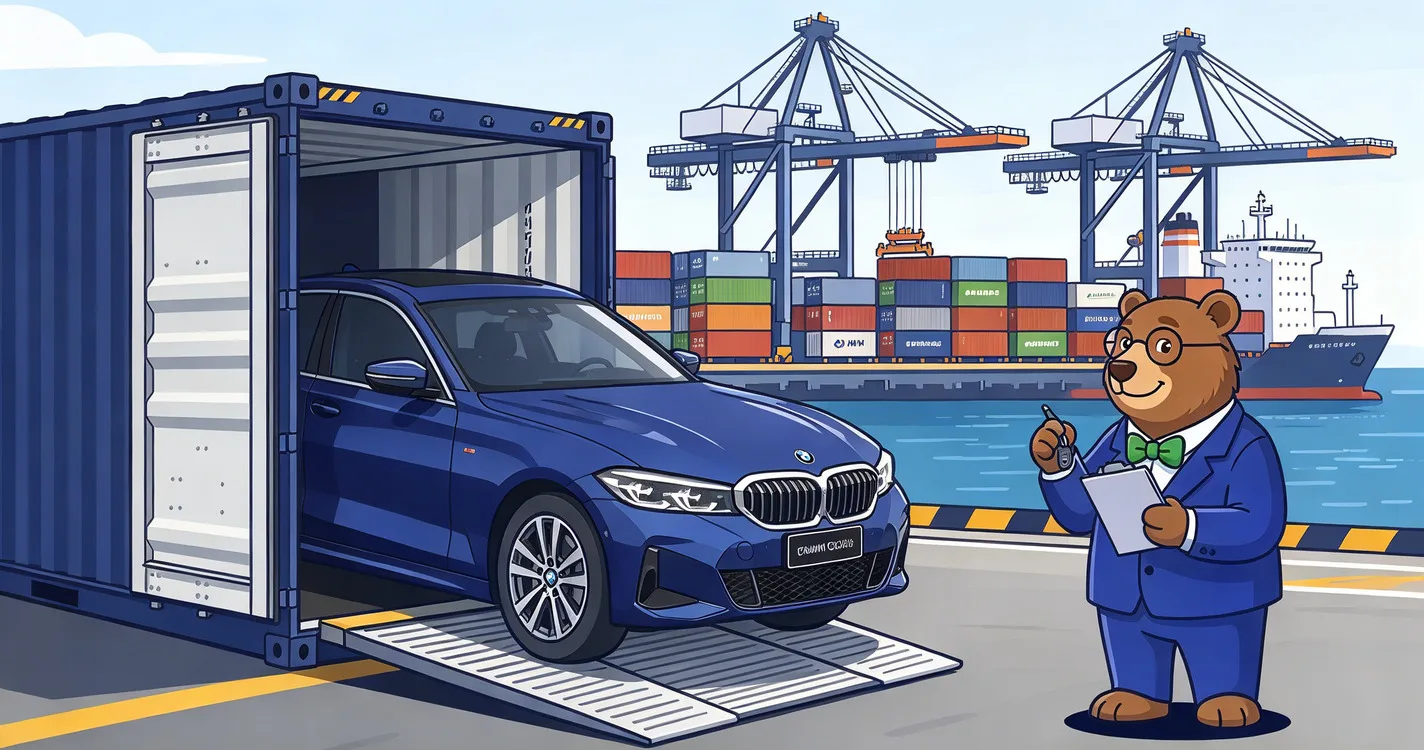
A car from a US auction often looks like a bargain. But the auction price is only the start. Before the car gets Latvian plates, you add transport, customs duty, VAT, certification and registration. And sometimes a past nobody told you about.
This guide shows what an import really costs in 2026, the order of the steps, and what to check before you bid.
In short
- You pay 10% customs duty and 21% VAT. From 1 July 2026 the duty on cars built in the USA can be 0%, if you prove the origin.
- Latvia has no one-off registration tax based on CO2 or price. At first registration you pay CSDD fees, the natural resources tax (dabas resursu nodoklis) of 110 euros and part of the vehicle operation tax (ekspluatācijas nodoklis).
- CSDD has a separate route for US and Canadian cars: before you present the car, you get a written answer on the procedure and the costs.
- CSDD does not accept a document that says the car is written off or not repairable as a registration document.
Jump to: check the vehicle history·cost example·compare 12 countries
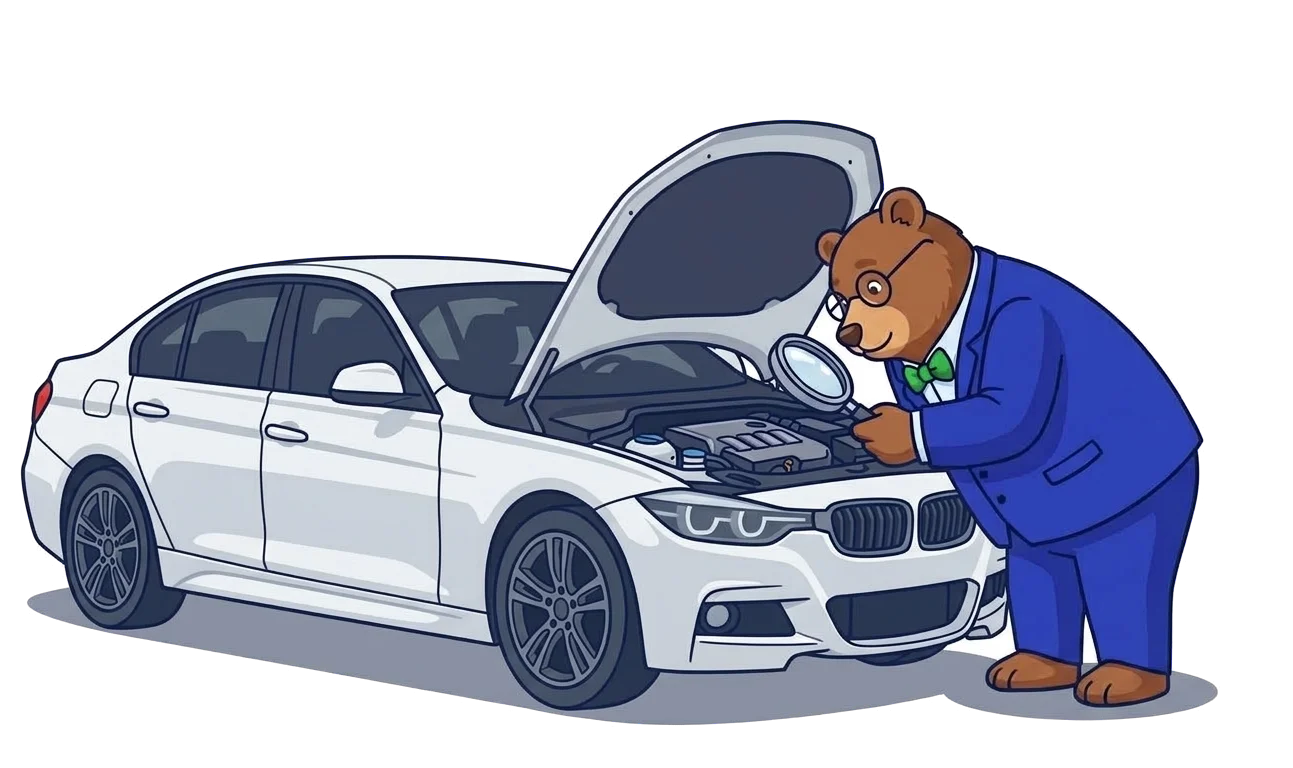
What did it go through in the US?
Once a car is registered here, its US past is easy to hide. The VIN still shows it: auction photos, damage records and title brands.
Example: WBA3A5G59DNP26082Free preview included
- 30+ countries
- Result in under a minute
- Full PDF report
Customs duty, VAT and taxes
Everything starts from the customs value: the transaction price plus transport, loading and insurance to the EU border. The tax authority (VID) states that the duty on a passenger car is 10% of the customs value. VAT of 21% is charged on the customs value plus the duty.
New since 1 July 2026: EU Regulation 2026/1455 cuts the duty on goods of US origin to 0%, for now until the end of 2029. Passenger cars are included. What counts is where the car was built, not where you bought it. A car built in Japan, Korea or Mexico still pays 10%, even if it comes from a US auction. According to the European Commission, a "Made in USA" sticker or a line on the invoice is not enough proof. For a used auction car the origin is hard to prove, so plan with 10% and treat 0% as a possible bonus.
Latvia has no registration tax. At first registration you pay the natural resources tax of 110 euros and the vehicle operation tax for the remaining months of the year. The operation tax is usually calculated from CO2. US cars normally have only EPA data, and if there is no CO2 value on record, the tax is the sum of the rates for full mass, engine size and power. Big engines then become expensive.
Cost example: a 2018 saloon
Say you buy a 2018 saloon with a 2.0 petrol engine (140 kW, full mass 1,950 kg) for USD 12,000 and pay USD 1,800 for transport to an EU port. You clear customs in Riga and register in November:
| Customs value (price plus transport) | USD 13,800 |
| Duty 10% | USD 1,380 |
| VAT 21% | USD 3,188 |
| Total customs payments | USD 4,568 |
| The same car with accepted US origin (0%) | USD 2,898 |
| CSDD individual certification and certificate | €192.50 |
| Comparison of unit numbers | €19.25 |
| Registration, certificate and two plates | €41.88 |
| Natural resources tax | €110 |
| Vehicle operation tax without CO2 data, per year | €147 |
Customs converts at its own exchange rate. The state fees and the natural resources tax in the table come to 363.63 euros, plus the operation tax for the remaining months of the year. Not included: auction commissions, transport in the USA, customs broker, the technical data entry and description fee, conversion work, the technical inspection and OCTA (compulsory motor liability insurance).
Port and customs clearance
The usual Baltic entry points for US car containers are the Freeport of Riga and Klaipeda in Lithuania, and some people clear in Bremerhaven or Rotterdam. You can submit the declaration in the VID electronic declaration system yourself or through a customs broker, and in practice almost everyone uses a broker at the port.
You may clear customs in Lithuania and register in Latvia. If customs clearance took place in another EU country, CSDD registers the car when you confirm this in the registration application. VAT in Lithuania is also 21%, so the total does not change. Keep the Lithuanian customs declaration.
CSDD individual certification
A car without a European certificate of conformity goes through individual certification at the CSDD Technical Department in Riga, Antenas iela 2A. Cars built for the US and Canadian market have a separate route: send [email protected] a copy of the US title, photos of the car and of all its stickers in the CSDD format, and your contact details. Within a few working days CSDD replies in writing with the procedure and the costs for your exact car.
The fees are 78.08 euros for the documentation opinion, 107.42 euros for the vehicle inspection and 7 euros for the certificate. A car registered before 2001, or with a model year of 2000 or older, does not need a conformity document.
Salvage, rebuilt, flood: cars after an accident
Many cheap US cars have a salvage, rebuilt or flood brand: an insurer has already declared them a total loss, or they stood in water. In Latvia this matters. CSDD does not accept as a registration document any paper that says the car is written off, not repairable, or banned from future registration. So with a US Non-Repairable, Junk, Parts-only or Certificate of Destruction document, the car cannot be registered in Latvia.
Whether CSDD will accept an ordinary restorable Salvage Certificate is best clarified beforehand by sending a scan to [email protected]. A Rebuilt title is usually issued after a state inspection and is an ordinary title. After registration in Latvia the American past is no longer visible in the papers.
The Latvian registration certificate will not tell you that the car was a total loss in the USA.
That is why step 2 matters so much: check the US history before the auction, not after it.
Our guide to checking the history of an imported car shows what else can get lost when a car crosses a border.
Step by step: from the listing to your yard
This is how an import works in practice. The times are indicative, not official. Plan roughly six to ten weeks for the whole route.
Set a budget and choose the car
before you buyAdd transport, duty, VAT, CSDD fees and conversion to the auction price. If the car has no CO2 data, the operation tax depends on mass, engine and power.
Check the VIN
before you bidAsk for the VIN and check the US history before you bid:
- salvage, rebuilt, flood or junk brands,
- auction photos and damage records,
- odometer readings over the years,
- the country of manufacture. A VIN starting with 1, 4 or 5 usually means a car built in the USA.
Send the documents to CSDD
before you bidSend [email protected] a copy of the US title and photos of the car and its stickers. CSDD will answer in writing on the procedure and the costs, and you will learn whether the title can be used for registration at all.
Bid and buy
auction daySet your maximum bid including all commissions. Pay only if you receive the original Certificate of Title, and keep the invoice. The purchase document must show the make, model, VIN, seller, buyer and the transfer of ownership.
Transport and shipping
2 to 6 weeksThe shipping agent collects the car, takes it to the US port and handles the export. Choose the port: Riga, Klaipeda or a Western European port with onward transport.
Customs clearance
on arrivalThe broker submits the declaration and you pay the duty and the VAT. For the 0% rate, prepare proof of manufacture in the USA and of direct transport.
Transport to Latvia
after clearanceThe car usually comes on a car transporter. Within five days of arriving in Latvia the car must be presented for the comparison of unit numbers, even if you are not registering it yet.
Conversion to European requirements
usually a few days to 2 weeksCSDD sets the requirements for each car, but usually you need:
- amber rear turn signals,
- a rear fog light,
- E-marked headlights,
- a speedometer in km/h.
CSDD individual certification
1 or more visitsThe CSDD Technical Department checks the documents and the car. If the inspection has to be repeated, each repeat costs 41.26 euros.
Comparison of unit numbers
1 visitAt any CSDD centre, have the VIN and the unit numbers compared for 19.25 euros. Take an identity document, the US title and the purchase document. The certificate is valid for 30 days.
Registration
1 visitAt one of the 26 CSDD customer centres, submit the certificate, the US title, the purchase document, your passport and a copy of the certification. Pay 41.88 euros, the natural resources tax and the share of the operation tax. The US title does not need a translation.
Technical inspection and on the road
within 5 daysA car registered abroad must pass the technical inspection within five days of registration, and it costs 36.95 euros. With the operation tax paid and valid OCTA insurance you can drive. Keep all the US documents: when you sell, a documented history is an argument for honest buyers.
Before the auction
Check the US history
Auction photos, damage, title brands and odometer readings from more than 30 countries in one report.
- 30+ countries
- Under a minute
- Full PDF report
Not sure yet? See what a full report looks like first
Good to know
- Big engines: without CO2 data, a 5.0 V8 with more than 300 kW and a full mass of 2,101 to 2,600 kg pays about 657 euros a year in operation tax.
- Foreign plates: a Latvian resident who drives a car registered abroad must pay the operation tax in Latvia. US plates are not a way around it.
- Selling: a Latvian resident may sell a car bought abroad only after registering it in Latvia.
- In 2027: from 1 January the company car tax increases. It does not affect private persons.
- Buying in the EU instead? A car bought inside the EU pays no customs duty and no import VAT at the border. National taxes and registration costs still apply. Our guide to importing a used car to Latvia explains that route.
Importing from the USA to another country?
Customs duty is the same everywhere in the EU. VAT, registration tax and the approval rules are not. Choose a country to read its guide.
- BulgariaVAT 20%, product fee, legalised translations
- CroatiaVAT 25%, PPMV tax by CO2
- CzechiaVAT 21%, no registration or road tax
- FranceVAT 20%, CO2 malus, RTI approval
- GermanyVAT 19%, no registration tax
- HungaryVAT 27%, registration tax by emissions class
- ItalyVAT 22%, IPT, superbollo over 185 kW
- LatviaVAT 21%, no registration tax
- NetherlandsVAT 21%, BPM by CO2
- PolandVAT 23%, excise 3.1% or 18.6%
- RomaniaVAT 21%, no registration tax
- SlovakiaVAT 23%, low registration fee
Frequently asked questions
How much is the customs duty on a car from the USA?
Usually 10% of the price plus transport to the EU. From 1 July 2026 the duty on a car built in the USA can be 0%, if you prove the origin. VAT of 21% is always added.
Is there a registration tax in Latvia?
No. At first registration you pay CSDD fees, the natural resources tax of 110 euros and part of the operation tax for the remaining months of the year.
Can I register a car with a salvage title?
CSDD does not accept as a registration document a paper that says the car is written off or not repairable. For an ordinary salvage title, ask CSDD beforehand by sending a scan.
Can I clear customs in Lithuania?
Yes. CSDD registers the car if you confirm in the application that customs clearance took place in another EU country. VAT in Lithuania is also 21%.
Sources
- Regulation (EU) 2026/1455, final text, Article 1 and Annex I
- VID: bringing vehicles into Latvia
- CSDD: individual certification of M1 and N1 category cars
- CSDD: certification fees
- CSDD: documents needed for first registration
- CSDD: foreign registration document of a vehicle
- CSDD: natural resources tax
- Law on the vehicle operation tax and the company passenger car tax
- Road Traffic Law
- CSDD: technical inspection fees
Position as of October 2026. In the CSDD price list, not every price states whether it includes VAT.
Read next