
Importing a car from the USA: what you need to know in Croatia
Customs duty, VAT, the special motor vehicle tax (PPMV), approval and registration. And why one CO2 document decides whether you pay hundreds or thousands of euros in tax.

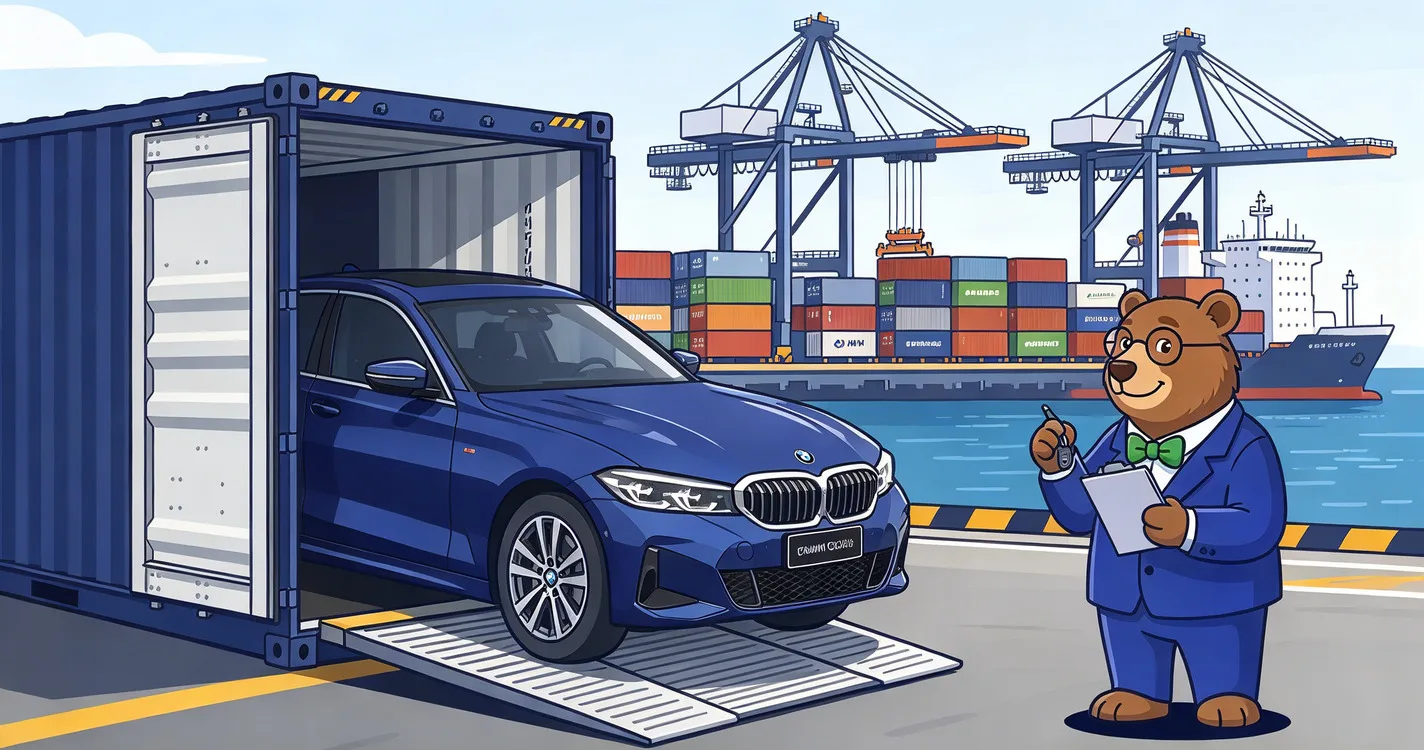
A car from a US auction often looks like a good buy. But the auction price is only the start. Before Croatian plates come transport, customs duty, VAT, approval, PPMV and registration. And sometimes a history nobody told you about.
This guide shows what an import really costs in 2026, the steps in order, and what to check before you bid.
In short
- You pay 10% customs duty and 25% VAT. Since 1 July 2026 the duty on cars built in the USA can drop to 0%, if you prove the origin.
- The biggest cost is the special motor vehicle tax (PPMV). Without proof of CO2 emissions, 401 g/km is used.
- For a 2018 saloon that is the difference between about 950 and 12,540 euros in tax.
- Approval of a US car starts at the DZM (the State Office for Metrology), with a report from the FSB and a noise measurement at the CVH (the Croatian vehicle centre).
Jump to: check the history·cost example·compare 12 countries
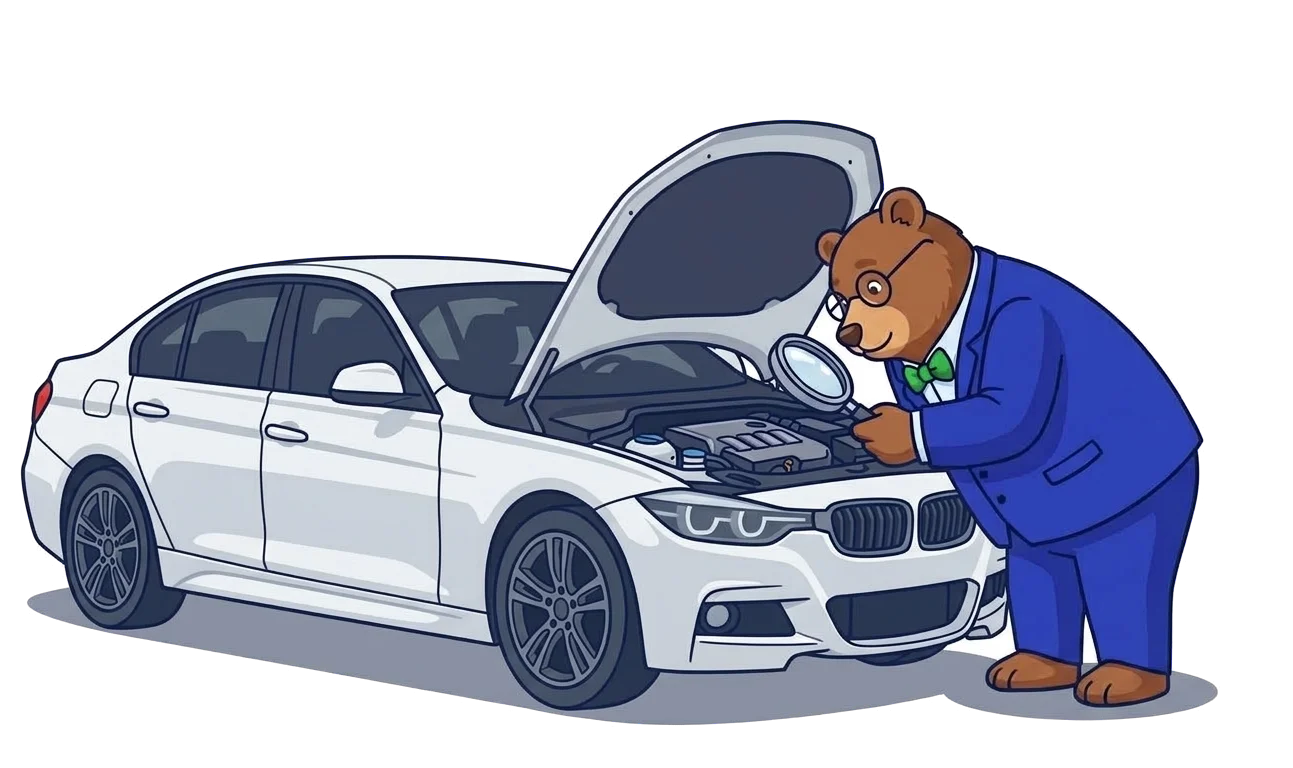
What did it go through in the US?
Once a car is registered here, its US past is easy to hide. The VIN still shows it: auction photos, damage and title brands.
Example: WBA3A5G59DNP26082Free preview included
- 30+ countries
- Result in under a minute
- Full PDF report
Customs duty, VAT and PPMV
Everything starts from the customs value: the price of the car plus transport and insurance to the EU border. The usual duty on passenger cars is 10%. VAT of 25% is added on the customs value plus the duty.
New since 1 July 2026: Regulation (EU) 2026/1455 cuts the duty on goods of US origin to 0%, for now until the end of 2029. It covers passenger cars. What counts, though, is where the car was built, not where you bought it. A Japanese, Korean or Mexican car from a US auction still pays 10%. According to the European Commission, a "Made in USA" sticker or a line on the invoice is not enough. For a used auction car the origin is hard to prove, so plan with 10%.
PPMV is the biggest cost. The Customs Administration (Carinska uprava) calculates it from the price of the same new car in Croatia and from CO2 emissions, and for a used car it is reduced by age. Three rules hit American cars in particular:
- without proof of CO2, 401 g/km is used,
- if the documents do not prove the date of first registration, 1 January of the year after manufacture is used,
- if the equipment cannot be established, the highest trim level is used.
For US cars with unknown CO2, the DZM calculates the value using the formula in Regulation (EU) 2018/858. You file the PPMV return within 15 days of import, and without proof of payment there is no registration.
Cost example: a 2018 saloon
You buy a 2018 saloon with a 2.0 petrol engine for USD 12,000 and pay USD 1,800 for shipping to Rijeka. For PPMV we assume that the same new model costs 30,000 euros in Croatia and that the first registration was in June 2018.
| Customs value (price plus transport) | USD 13,800 |
| Duty 10% | USD 1,380 |
| VAT 25% | USD 3,795 |
| Total customs costs | USD 5,175 |
| Same car with accepted US origin (0%) | USD 3,450 |
| PPMV with a proven 150 g/km | about €949 |
| PPMV without CO2 proof (401 g/km) | about €12,542 |
Customs converts the amounts at the official exchange rate. The price of a comparable new vehicle is set by the Customs Administration, so the PPMV calculation is illustrative. Not included: auction fees, transport inside the USA, the forwarder, approval, the end-of-life vehicle fee, registration and insurance.
Port and customs clearance
Rijeka is the main Croatian port, and Koper in Slovenia is often used for cars and containers. Some importers clear the car in Bremerhaven or Rotterdam and bring it by truck. An authorised customs representative (forwarder) files the declaration for release into free circulation, and you then file the PPMV return with the competent customs office.
Clearing in another EU country is allowed, for example in Slovenia with 22% VAT or in Germany with 19%. For a used car you then pay no Croatian VAT, but PPMV and approval stay the same.
Approval through the DZM
For cars from the USA and Canada the process starts, and conditionally also ends, at the State Office for Metrology (DZM). Contact the DZM first, and it decides the way forward. The car is then inspected at the Laboratory for Engines and Vehicles of the Faculty of Mechanical Engineering and Naval Architecture (FSB), which issues a report. Because the USA has no noise limits, noise data is usually missing, so a noise test at the CVH (the Croatian vehicle centre) is needed.
With the FSB report, a copy of the registration and the CVH approval, you apply to the DZM. With the DZM approval the car goes to an inspection station, which issues the certificate of conformity for an individually inspected vehicle. The order matters: conformity is established after the purchase, but before PPMV is set and the registration inspection.
Salvage, rebuilt, flood: damaged cars
Many cheap American cars carry a salvage, rebuilt or flood brand: an insurer has already declared them a total loss, or they were flooded. We found no Croatian rule that bans registering such a car by itself. It must pass the conformity procedure and the technical inspection.
Damage affects the tax too. If a car has damage beyond normal wear, a court expert can assess the loss of value, which can reduce PPMV, but while the assessment runs, repairs are not allowed. Customs can also request data from foreign authorities afterwards and issue a new decision if the data was wrong.
The Croatian registration certificate will not tell you that a car was a total loss in the USA.
That is why step 2 matters: check the US history before the auction, not after it.
Our guide to checking the history of an imported car shows what else can get lost when a car crosses a border.
Step by step: from the listing to your driveway
This is how an import works in practice. The timings are typical, not official deadlines. Because of the approval, allow a few weeks more than for a car from the EU.
Set a budget and choose the car
before buyingAdd transport, duty, VAT, approval and PPMV to the auction price. For PPMV also plan for the worst case, with no proof of CO2.
Check the VIN
before you bidGet the VIN and check the US history before you bid:
- salvage, rebuilt, flood or junk brands,
- auction photos and reported damage,
- mileage readings over the years,
- country of manufacture. A VIN starting with 1, 4 or 5 usually means a car built in the USA.
Contact the DZM
before you bidAsk the DZM which way the approval will go and how CO2 will be established for that model. Collect the manufacturer's data on CO2 and equipment, because PPMV depends on them.
Bid and buy
auction daySet your maximum bid including all fees. Only pay if you receive the original Certificate of Title, and keep the invoice and proof of payment.
Transport and shipping
2 to 6 weeksA forwarder collects the car, takes it to the US port and files the export. Choose the port: Rijeka, Koper or a port in Western Europe with a truck on to Croatia.
Customs clearance
after arrivalThe forwarder files the declaration and you pay duty and VAT. For 0%, prepare proof of US manufacture and of direct shipping.
Vehicle adjustments
usually a few days to 2 weeksThe DZM says the most common changes are:
- position and stop lamps and indicators,
- rear fog lamp and reversing lamp,
- reflectors,
- sometimes the speedometer or mirrors.
FSB, noise test and DZM
a few weeksThe FSB laboratory inspects the car, the CVH measures noise and the DZM issues the approval. If CO2 is not known, the DZM calculates it.
Certificate of conformity
1 visitAn authorised inspection station carries out the conformity procedure and issues the certificate of conformity for an individually inspected vehicle.
PPMV and end-of-life vehicle fee
within 15 days of importFile the PPMV return with the customs office, also through e-Građani, and pay within 15 days of the decision. Also pay the fee of 0.08 euros per kilogram to the Environmental Protection and Energy Efficiency Fund.
Technical inspection and registration
1 visitAt the inspection station for your place of residence, hand in:
- proof of ownership and the customs declaration,
- ID card,
- the certificate of conformity,
- the American registration document.
Pay the tax, insurance, environmental and road fees and the administrative fee. Before that, check whether a sworn court translator's translation is needed.
Fit the plates and drive home
doneAfter registration you get plates and can drive. Keep all the US paperwork: if you sell the car later, a documented history is an argument for honest buyers.
Before you bid
Check the US history
Auction photos, damage, title brands and mileage readings from over 30 countries, in one report.
- 30+ countries
- Under a minute
- Full PDF report
Not sure yet? See what a full report looks like first
Good to know
- Classic cars: cars over 30 years old that are classified as classics pay no PPMV, which is an advantage for American classics.
- Trial plates: for an imported used vehicle that has never been registered in Croatia, inspection stations can issue trial plates for up to 15 days.
- Annual road fee: for engines from 1,601 to 2,000 cm3 it is 95.60 euros a year, and it is adjusted for inflation.
- Buying in the EU instead? A car bought inside the EU pays no customs duty and no import VAT at the border. National taxes and registration costs still apply. Our guide to buying a car at auction in Europe explains that route.
Importing from the USA to another country?
Customs duty is the same everywhere in the EU. VAT, registration tax and the approval rules are not. Choose a country to read its guide.
- BulgariaVAT 20%, product fee, legalised translations
- CroatiaVAT 25%, PPMV tax by CO2
- CzechiaVAT 21%, no registration or road tax
- FranceVAT 20%, CO2 malus, RTI approval
- GermanyVAT 19%, no registration tax
- HungaryVAT 27%, registration tax by emissions class
- ItalyVAT 22%, IPT, superbollo over 185 kW
- LatviaVAT 21%, no registration tax
- NetherlandsVAT 21%, BPM by CO2
- PolandVAT 23%, excise 3.1% or 18.6%
- RomaniaVAT 21%, no registration tax
- SlovakiaVAT 23%, low registration fee
Frequently asked questions
What is the duty on a car from the USA?
Usually 10% on the price plus transport to the EU. Since 1 July 2026 a car built in the USA can have 0% duty if you prove the origin. 25% VAT is always added.
How much is PPMV for an American car?
It depends on the price of the same new car, CO2 emissions and age. Without proof of CO2, 401 g/km is used, so the tax for a 2018 saloon can be about 12,500 euros instead of under 1,000 euros.
Who handles approval of an American car?
The process starts at the DZM, with an inspection at the FSB laboratory and a noise test at the CVH, and ends with a certificate of conformity at an inspection station.
Can I register a car with a salvage brand?
We found no explicit ban, but the car must pass conformity and the technical inspection. Check the US history before you buy.
Sources
- Uredba (EU) 2026/1455, konačni tekst, članak 1. i prilog I.
- Zakon o posebnom porezu na motorna vozila
- Uredba o načinu izračuna PPMV-a (NN 156/22)
- Pravilnik o posebnom porezu na motorna vozila
- Carinska uprava: posebni porez na motorna vozila
- DZM: uputa za uvoz vozila iz SAD-a
- CVH: utvrđivanje sukladnosti pojedinačnog vozila
- CVH: registracija vozila
- gov.hr: naknada za otpadna vozila
- Narodne novine 155/2025: godišnja naknada za uporabu javnih cesta
As of October 2026. The fees of the FSB, CVH, DZM and inspection stations are not published in a form we could verify.
Read next