
Importing a car from the USA to Poland: what you need to know
Customs duty, excise, VAT, the first inspection and registration. Plus one trap that auction sellers do not mention.

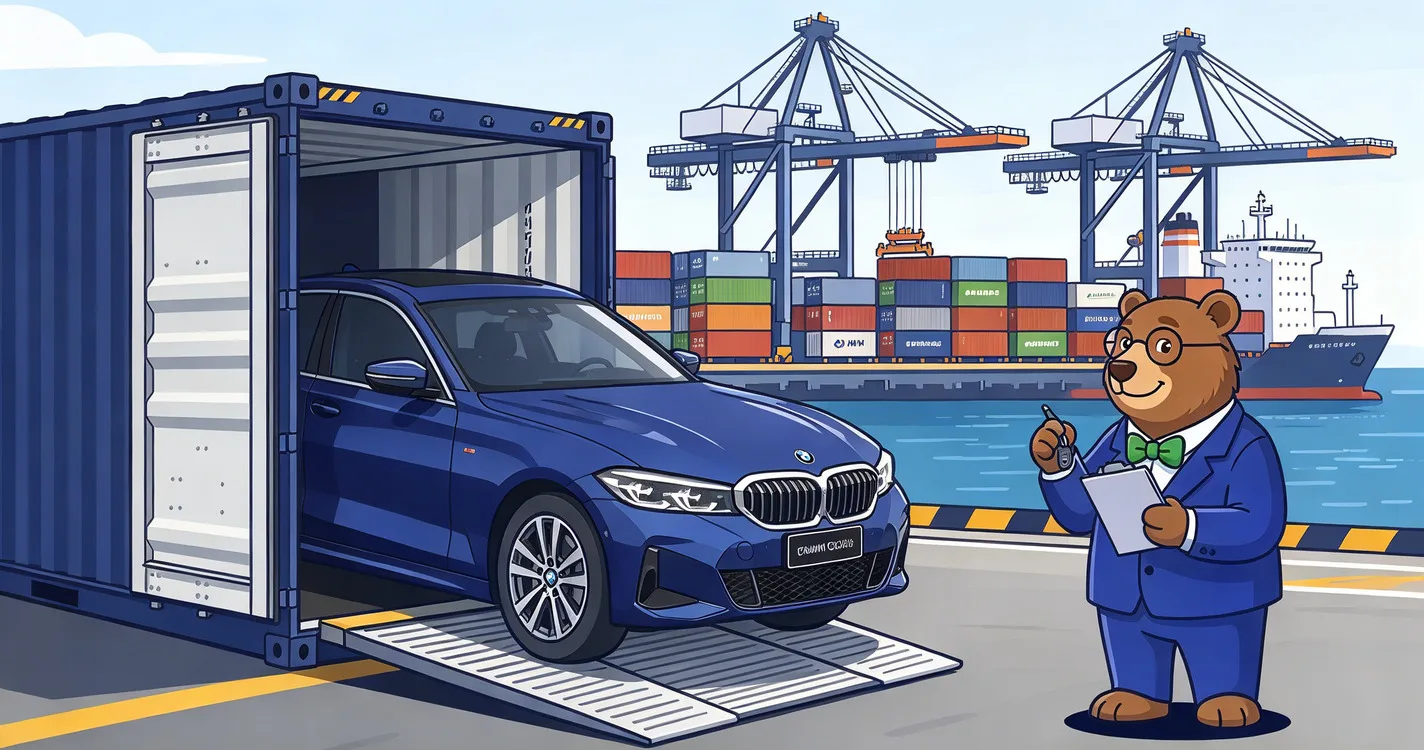
A car from a US auction tempts with its price and choice. But the auction price is only the start. Before the car gets Polish plates, you add transport, customs duty, excise, VAT, conversion work and inspection. And sometimes a history nobody showed you.
This guide shows the real costs in 2026, the steps from choosing a car to registration, and what is worth checking before an offer is placed.
In short
- The buyer pays 10% customs duty, excise and 23% VAT. Since 1 July 2026 the duty on cars built in the USA can drop to 0%, but it has to be proven.
- Excise depends on engine size: 3.1% up to 2000 cm3 and as much as 18.6% above. Hybrids pay half.
- Since the NSA (Supreme Administrative Court) ruling of December 2024, some vehicle registration offices have a problem registering cars from outside the EU. Ask your own office before buying.
- A car's Polish history in CEPiK starts with the first inspection in the country. US damage shows only in the American vehicle history.
Jump to: check the vehicle history·cost example·compare 12 countries
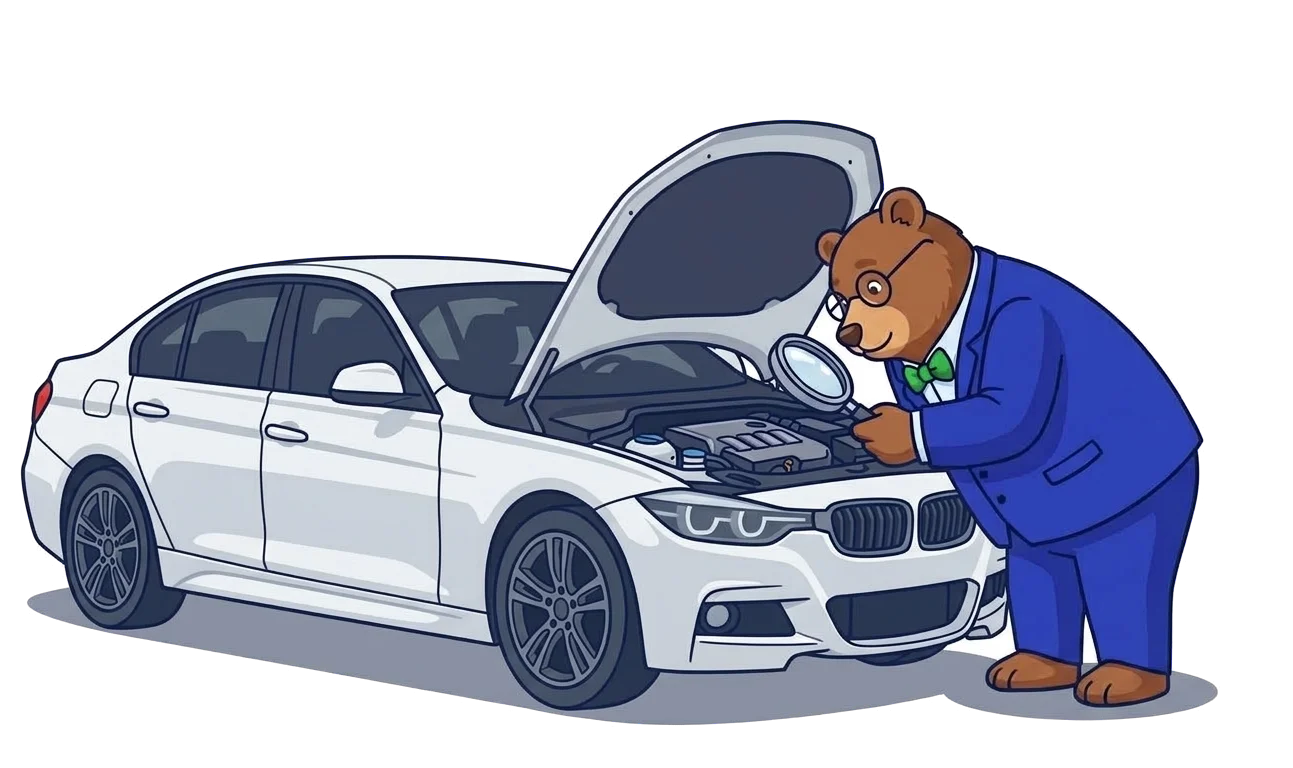
What did it go through in the USA?
Once a car is registered in a new country, its American past is easy to hide. The VIN still shows it: auction photos, damage and title statuses.
Example: WBA3A5G59DNP26082Free preview included
- 30+ countries
- Result in under a minute
- Full PDF report
Customs duty, excise and VAT
Everything is calculated on the customs value, which is the car price plus transport and insurance to the EU border. The standard duty on passenger cars is 10%. It is the same across the whole Union, because it is an EU tariff.
New from 1 July 2026: EU regulation 2026/1455 lowers the duty on goods of US origin to 0%, for now until the end of 2029. It also covers passenger cars. What counts, however, is where the car was built, not where it was bought. A Toyota from Japan or a car from Mexico still pays 10%, even if it was sold at an auction in Texas. US origin has to be proven, and for used auction cars that can be hard. So expect 10% and treat 0% as a possible bonus.
Excise is the biggest Polish specialty. The rates apply to the customs value plus duty:
- petrol or diesel engine up to 2000 cm3: 3.1%,
- petrol or diesel engine above 2000 cm3: 18.6%,
- hybrid up to 2000 cm3: 1.55%, and hybrid from 2000 to 3500 cm3: 9.3%,
- plug-in hybrid up to 2000 cm3: exempt until the end of 2029.
Since the Finance Minister's interpretation of February 2026, the reduced rates also cover mild hybrids (MHEV). Before that, offices often charged them the full rate.
Finally 23% VAT on the customs value, duty and excise together. Poland has no annual tax on passenger cars. The standing cost is compulsory third party insurance (OC).
Cost example: a 2018 sedan
The buyer pays USD 12,000 for a 2018 sedan with a 2.0 engine (1998 cm3) and USD 1,800 for transport to an EU port. The charges at clearance in Poland look like this:
| Customs value (price plus transport) | USD 13,800 |
| Duty 10% | USD 1,380 |
| Excise 3.1% | USD 471 |
| VAT 23% | USD 3,600 |
| Total taxes | USD 5,450 |
| Same car with accepted US origin (0% duty) | USD 3,700 |
| Same car with a 2.5 engine (excise 18.6%, duty 10%) | USD 8,344 |
The customs office converts the amounts at its own rate for the month. Not included: auction fees, transport in the USA and in Poland, the customs agent, translations, conversion work, inspection and registration. The difference between 2.0 and 2.5 shows how much engine size raises the bill.
Port and customs clearance
Cars from the USA for Polish buyers most often arrive at Bremerhaven, Hamburg, Rotterdam, Antwerp, Klaipeda, or at Gdynia and Gdansk. Clearance is almost always done by a customs agent on the buyer's behalf. The car can also travel under customs supervision to an office inland and be cleared there.
Clearance in Germany is legal and popular, because VAT there is 19% instead of 23%. Polish excise is still paid after the car is brought in, in the AKC-US declaration within 14 days. Note: German customs run criminal tax proceedings against importers who understated the car's value against the auction price.
Conversion work and the first inspection
A used car from the USA is admitted to traffic through a first technical inspection at a vehicle inspection station (SKP). The inspector identifies the car and checks the emission standard by comparing the plate data with the American EPA database. Since 19 September 2025 this inspection costs about PLN 240, or PLN 292 if the documents show the car had an accident.
On top of that comes legal uncertainty. After the NSA ruling of 4 December 2024, some county offices refused to register cars from the USA and Canada without an EU certificate of conformity. The government prepared a bill (UC95) with a new national procedure for approving such cars, but by mid October 2026 it had not been adopted.
Salvage, rebuilt, flood: what about damaged cars
Many cheap US cars carry a salvage, rebuilt or flood title, which means they were already a total loss or stood in water. A salvage title alone does not block registration in Poland. Cars marked junk or non-repairable, meant for scrap, cannot be registered. Offices have also sometimes treated imported wrecks as waste.
But the most important point is something else. A car's Polish history in CEPiK and on historiapojazdu.gov.pl starts with the first inspection in the country. The American damage, the auction photos and the US mileage are not there.
After registration in Poland, the car's history starts from zero. US damage stays across the ocean.
That is why step 2 below matters so much: the American history is checked before the bid, not after. It is also worth keeping the auction invoice, because customs offices look more closely at very low prices.
Our guide to checking the history of an imported car shows what else can get lost when a car crosses a border.
Step by step: from the listing to your own driveway
This is how an import works in practice. The times are approximate, not official deadlines. Count on roughly six to ten weeks for the whole route.
Budget and choosing the car
before buyingOn top of the auction price add transport, duty, excise, VAT and conversion work. First check the engine size: above 2000 cm3 excise rises from 3.1% to 18.6%.
Check the VIN
before you bidBefore placing an offer, ask for the VIN and check the American history:
- salvage, rebuilt, flood or junk title,
- auction photos and reported damage,
- mileage over the years,
- country of manufacture. A VIN starting with 1, 4 or 5 usually means a US-built car, which gives a chance of 0% duty.
Ask at the registration office
before you bidMake sure your office will register a car from the USA without an EU certificate of conformity, and ask which documents it expects. While there, find out whether the inspector at your local SKP tests cars from the USA.
Bid and buy
auction daySet a maximum offer that includes all fees. Pay only when the buyer gets the original title (Certificate of Title), not a junk title. Keep the invoice and the proof of payment.
Transport and shipping
1 to 4 weeksThe forwarder collects the car, takes it to a US port and files the export. A destination port has to be chosen: Bremerhaven, Rotterdam, Klaipeda or Gdynia. That decides where clearance is done.
Customs clearance
after arrivalThe customs agent declares the car and the buyer pays duty, excise and VAT. The buyer receives the import customs clearance document, without which the car cannot be registered. If clearance is done in Germany, the AKC-US still has to be filed in Poland within 14 days.
Transport to Poland
after clearanceA car without Polish registration usually arrives on a tow truck. The 30 days for registration count from the day the car is brought in.
Sworn translations
a few daysThe US title and the purchase document must be translated into Polish by a sworn translator. It is worth doing this straight away, because the registration office will not accept the application without it.
Lighting conversion
usually a few days to 2 weeksTypically these changes are needed:
- rear indicators changed to amber,
- front position lights changed from white to the correct colour,
- a rear fog light added,
- headlights changed from symmetrical American ones to asymmetrical ones,
- a speedometer in km/h (a dual mph and km/h scale is accepted).
First technical inspection
1 visitAt the SKP the inspector identifies the car and checks the emission standard. The cost is about PLN 240, or PLN 292 for a car that has had an accident. From that moment the mileage and results go to CEPiK.
Insurance and registration
1 visitBuy the OC insurance and file the application at the registration office, in person or through gov.pl. These are needed:
- an ID card and the application,
- the US title and proof of purchase with translations,
- the customs clearance document,
- proof of excise payment,
- the certificate from the technical inspection.
The fees are PLN 160. The temporary permit is issued on the spot, and the registration certificate (dowod rejestracyjny) arrives after about 30 days.
Plates on and drive
doneWith the plates and the temporary permit the car can be driven. Keep all the American documents. When selling, a documented history is an argument for honest buyers.
Before you bid
Check the US vehicle history
Auction photos, damage, titles and mileage from over 30 countries, in one report.
- 30+ countries
- Under a minute
- Full PDF report
Not sure yet? See what a full report looks like first
Good to know
- Registration deadline: there are 30 days from bringing the car in. A penalty applies for being late.
- Conditional registration: if the customs document or the proof of excise is not ready yet, the car can be registered temporarily on the basis of a declaration.
- Big engines: pickups and SUVs with a V6 or V8 fall into the 18.6% excise. Work it out before the bid, not after.
- Hybrids: thanks to the Finance Ministry interpretation of 2026, mild hybrids also pay the reduced excise.
- Buying in the EU instead? A car bought inside the EU pays no customs duty and no import VAT at the border. National taxes and registration costs still apply. Our guide to buying a car at auction in Poland explains that route.
Importing from the USA to another country?
Customs duty is the same everywhere in the EU. VAT, registration tax and the approval rules are not. Choose a country to read its guide.
- BulgariaVAT 20%, product fee, legalised translations
- CroatiaVAT 25%, PPMV tax by CO2
- CzechiaVAT 21%, no registration or road tax
- FranceVAT 20%, CO2 malus, RTI approval
- GermanyVAT 19%, no registration tax
- HungaryVAT 27%, registration tax by emissions class
- ItalyVAT 22%, IPT, superbollo over 185 kW
- LatviaVAT 21%, no registration tax
- NetherlandsVAT 21%, BPM by CO2
- PolandVAT 23%, excise 3.1% or 18.6%
- RomaniaVAT 21%, no registration tax
- SlovakiaVAT 23%, low registration fee
Frequently asked questions
How much is the customs duty on a car from the USA?
Normally 10% of the car price including transport to the EU. Since 1 July 2026 cars built in the USA can have 0% duty, if their origin can be proven. Excise and 23% VAT come on top.
How much is the excise on a car from the USA?
3.1% for engines up to 2000 cm3 and 18.6% above. Hybrids pay 1.55% up to 2000 cm3 and 9.3% up to 3500 cm3, and plug-in hybrids up to 2000 cm3 are exempt until the end of 2029.
Can I register a car with a salvage title?
A salvage title alone does not block registration, but junk or non-repairable cars do. The US history has to be checked before buying, because it will not appear in Polish registers.
Is clearance in Germany worth it?
VAT is lower there (19% instead of 23%), but Polish excise is paid anyway. The real auction price must be declared, because German customs pursue undervaluation.
Sources
- Regulation (EU) 2026/1455, annex I (chapter 87)
- General interpretation of the Finance Minister of 26 February 2026 (excise, hybrids), Official Journal of the Ministry of Finance, item 19
- Excise Tax Act, articles 104 and 105
- PUESC: AKC-US declaration
- Regulation on fees for technical inspections, Journal of Laws 2025, item 1223
- Warsaw 19115: registering a vehicle brought in from abroad
- gov.pl: draft act UC95 on vehicle type approval
- Auto Swiat: registering non-EU cars after the NSA ruling
- Auto Swiat: German customs and importers from Poland
- Warta: registering a car from the USA
As of October 2026. The rules on registering non-EU cars may change, so check them with the registration office.
Read next