
Importing a car from the USA: what you need to know in France
Customs duty, VAT, the malus, individual approval and the carte grise. And why approval often costs more than expected.

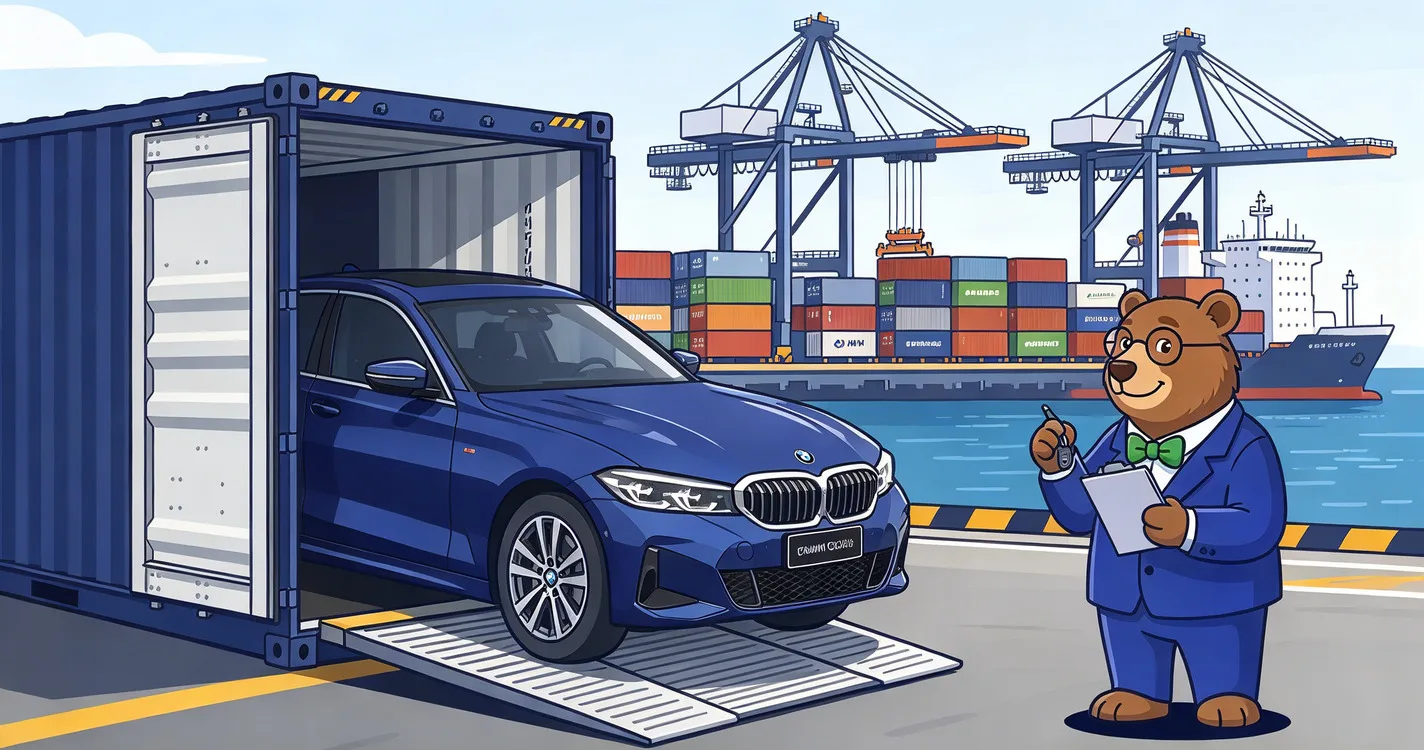
A car bought at a US auction often looks like a bargain. But the auction price is only the start. Before the car gets a French carte grise (registration certificate), you add transport, customs duty, VAT, approval and sometimes a malus (a penalty tax on polluting cars). And often a history nobody mentions.
In short
- You pay 10% customs duty and 20% VAT. Since 1 July 2026 the duty can drop to 0% for a car built in the USA, as long as you can prove it.
- Without a European certificate of conformity, you need an individual approval (RTI) from the DREAL, the regional vehicle authority. With UTAC tests, approval can cost several thousand euros.
- The malus also applies to imported used cars, under the scale for the year of first registration and reduced by age.
- A car first registered abroad before 2015 pays no CO2 malus.
Jump to: check the history·cost example·compare 12 countries
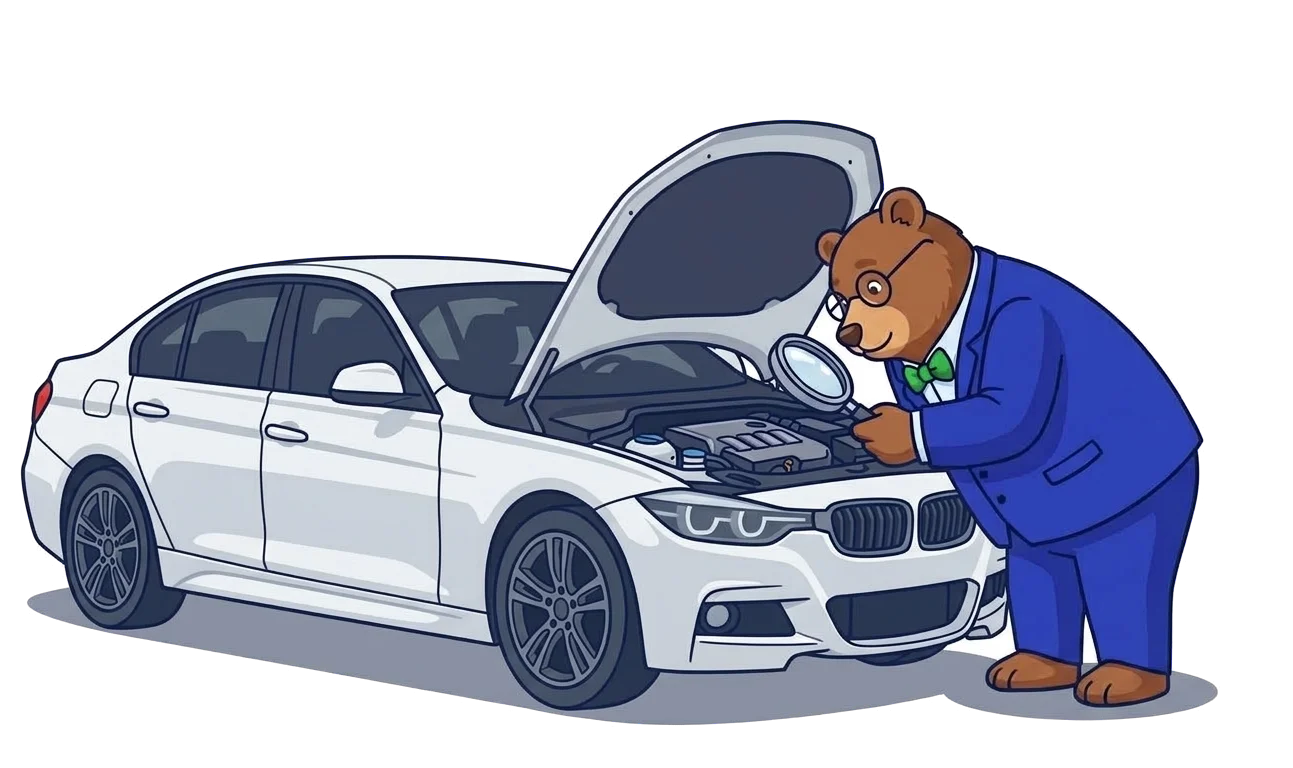
What did it go through in the US?
Once a car is registered here, its US past is easy to hide. The VIN still shows it: auction photos, damage and title brands.
Example: WBA3A5G59DNP26082Free preview included
- 30+ countries
- Result in under a minute
- Full PDF report
Customs, VAT and malus
Everything starts from the customs value: the purchase price plus transport and insurance to the EU border. On a passenger car, the duty is normally 10%. VAT of 20% is added on the customs value plus the duty, and it is always paid at customs.
New since 1 July 2026: EU Regulation 2026/1455 cuts the duty on goods of US origin to 0%, for now until the end of 2029. Passenger cars are included. What counts is where the car was built, not where you bought it: a Porsche built in Germany and bought in California still pays 10%. For a used auction car, that proof is often hard to get. So plan for 10% and see 0% as a possible bonus.
The malus is the big French trap. An imported used car pays the malus at its first registration in France, under the scale for the year of its first registration abroad, then reduced by its age in months. From 181 months, nothing is due. A car first registered before 1 January 2015 pays no CO2 malus.
One tricky point: for a car without European approval, service-public (the official government site) shows a scale based on fiscal horsepower, while in 2020 the government had chosen CO2 for imported vehicles. For a US car approved by RTI, get the malus simulated by the ANTS or a specialist before you buy. The weight malus has only existed since 2022, so a car registered before that should not pay it.
Cost example: a 2018 saloon
You buy a 2018 saloon with a 2.0 petrol engine for USD 12,000 and pay USD 1,800 for shipping to Le Havre. At 0.86 euros per dollar, here is what you pay at customs:
| Customs value (price plus transport) | €11,868 |
| Customs duty 10% | €1,187 |
| VAT 20% on value plus duty | €2,611 |
| Total paid at customs | €3,798 |
| Same car with accepted US origin (0%) | €2,374 |
| Regional tax, in Normandy for 8 CV (8 × €60) | €480 |
Customs applies its official exchange rate. Not included: auction fees, transport inside the USA, forwarder, RTI approval and UTAC tests, technical inspection, malus and insurance. The actual number of fiscal horsepower is set during the RTI.
Port and customs clearance
Le Havre is the usual port of entry in France for US cars shipped in containers. Allow about 12 to 18 days at sea from the East Coast and 4 to 5 weeks from the West Coast.
A forwarder usually files the declaration at the port. After payment, customs issues the 846 A customs clearance certificate, which you need for the carte grise. The quitus fiscal (tax clearance) only applies to purchases inside the EU, not to US cars.
Individual approval (RTI)
A car from outside the EU without a European certificate of conformity needs an individual approval report issued by the DREAL for your home area (the DRIEAT in Île-de-France). The file includes the US title, a manufacturer's statement of the rules the car meets, a weighing, a technical description and a technical inspection less than six months old.
If conformity cannot be proved by documents, the DREAL asks for tests at a recognised laboratory. In France the only recognised laboratory is UTAC, at Linas-Montlhéry. The DREAL fee is low, but the statement and the tests are expensive: one specialist puts the full approval of a US car at between 5,000 and 10,000 euros depending on the model.
Salvage, rebuilt, flood: damaged cars
Many cheap US cars have a salvage, rebuilt or flood title: an insurer has already written them off as a total loss, or they stood in water. No French rule targets these US brands, but the registration file asks for the foreign document "without particular mention". A title with a salvage mention can therefore cause problems.
In practice, the RTI and the technical inspection check the condition on the day: structure, airbags, brakes. Once registered in France, the car carries no trace of its US past.
The French carte grise will not tell you that a car was written off in the USA.
That is why step 2 matters: check the US history before you bid, not after. Auction photos often hide water damage.
Our guide to checking the history of an imported car shows what else can get lost when a car crosses a border.
Step by step: from the listing to your driveway
This is how an import works in practice. The timings are typical, not official. With the RTI, allow two to four months in total.
Set a budget and choose the car
before buyingAdd transport, customs, VAT, approval and the malus to the auction price. A car registered before 2015 avoids the CO2 malus.
Check the VIN
before you bidGet the VIN and check the US history before you bid:
- salvage, rebuilt or flood brands,
- auction photos and reported claims,
- mileage readings over the years,
- country of manufacture. A VIN starting with 1, 4 or 5 usually means a car built in the USA.
Check approval and the malus
before you bidAsk whether a manufacturer's conformity statement exists for this model and get the malus simulated. These two points decide whether the import is worth it.
Bid and buy
auction daySet your maximum bid including fees. Only pay if you get the original title (Certificate of Title), and keep the invoice or bill of sale.
Transport and crossing
2 to 6 weeksA forwarder collects the car, takes it to the US port and handles the export. Allow 12 to 18 days at sea from the East Coast to Le Havre.
Customs clearance
on arrivalThe forwarder files the declaration and you pay the duty and VAT. You receive the 846 A certificate. For the 0%, prepare proof of US origin and direct transport.
From the port to the workshop
after clearanceAn auction car arrives without valid plates: plan a truck or a temporary WW registration. It must be insured.
Conversion to European standard
often 1 to 3 weeksIn general, you need:
- amber rear indicators,
- a rear fog lamp,
- E-marked headlamps,
- a speedometer in km/h,
- sometimes modified side marker lights.
Technical inspection and RTI file
a few weeksPass a technical inspection (less than six months old) and gather the file: form, US title, manufacturer's statement, weighing, technical description and, if needed, UTAC test reports. Send it to the DREAL.
Visit to the DREAL
1 appointmentThe appointment is only set once the file is complete. The DREAL inspects the car, you pay the fee and receive the RTI report.
Carte grise on the ANTS site
onlineLog in to the ANTS site through FranceConnect with:
- the US title and the RTI report,
- the technical inspection less than six months old,
- the 846 A certificate and form cerfa 13750,
- proof of address less than six months old.
Pay the regional tax, the fees and any malus. You receive a provisional certificate so you can drive.
Fit the plates and drive
doneHave the plates made by an approved professional and insure the car in France. Keep all the US documents: when you sell, a documented history reassures honest buyers.
Before you bid
Check the US history
Auction photos, damage, title brands and mileage readings from over 30 countries, in one report.
- 30+ countries
- Under a minute
- Full PDF report
Not sure yet? See what a full report looks like first
Good to know
- Cars from before 2015: no CO2 malus, which makes older US cars much cheaper to register.
- No annual tax: France has no annual road tax disc for private cars. The carte grise taxes are paid once.
- In 2027: the CO2 malus threshold is due to fall to 103 g/km on 1 January 2027.
- Buying in the EU instead? A car bought inside the EU pays no customs duty and no import VAT at the border. National taxes and registration costs still apply. Our guide to buying a car at auction in France explains that route.
Importing from the USA to another country?
Customs duty is the same everywhere in the EU. VAT, registration tax and the approval rules are not. Choose a country to read its guide.
- BulgariaVAT 20%, product fee, legalised translations
- CroatiaVAT 25%, PPMV tax by CO2
- CzechiaVAT 21%, no registration or road tax
- FranceVAT 20%, CO2 malus, RTI approval
- GermanyVAT 19%, no registration tax
- HungaryVAT 27%, registration tax by emissions class
- ItalyVAT 22%, IPT, superbollo over 185 kW
- LatviaVAT 21%, no registration tax
- NetherlandsVAT 21%, BPM by CO2
- PolandVAT 23%, excise 3.1% or 18.6%
- RomaniaVAT 21%, no registration tax
- SlovakiaVAT 23%, low registration fee
Frequently asked questions
What customs duty applies to a car from the USA?
Normally 10% of the price plus transport to the EU. Since 1 July 2026, a car built in the USA can be at 0% if the origin is proved. 20% VAT is always added.
Do I pay the malus on a used US car?
Yes, at first registration in France, under the scale for the year of first registration abroad and reduced by age. No CO2 malus if the car was first registered before 2015, or after 181 months.
What is the RTI?
The réception à titre isolé: the individual approval by the DREAL of a car without a European certificate of conformity. It may require tests at UTAC.
Sources
- Regulation (EU) 2026/1455, Annex I (chapter 87)
- Customs: buying a vehicle abroad
- Service-public: malus for an imported used vehicle (F35947)
- Service-public: cost of the carte grise (F19211)
- Service-public: registering a vehicle bought outside the EU (F20992)
- DREAL: form RTI01.2, individual approval
- DREAL Centre-Val de Loire: individual approval
- Hautes-Alpes prefecture: registering a vehicle acquired abroad
- L'argus: weight malus 2026 to 2028
Position as of October 2026. The approval cost comes from professionals, not from an official scale. Get the malus simulated before any purchase.
Read next