
Importing a car from the USA: what you need to know in Italy
Customs duty, VAT, national approval and registration. And why in Italy the hardest part is the technical paperwork.

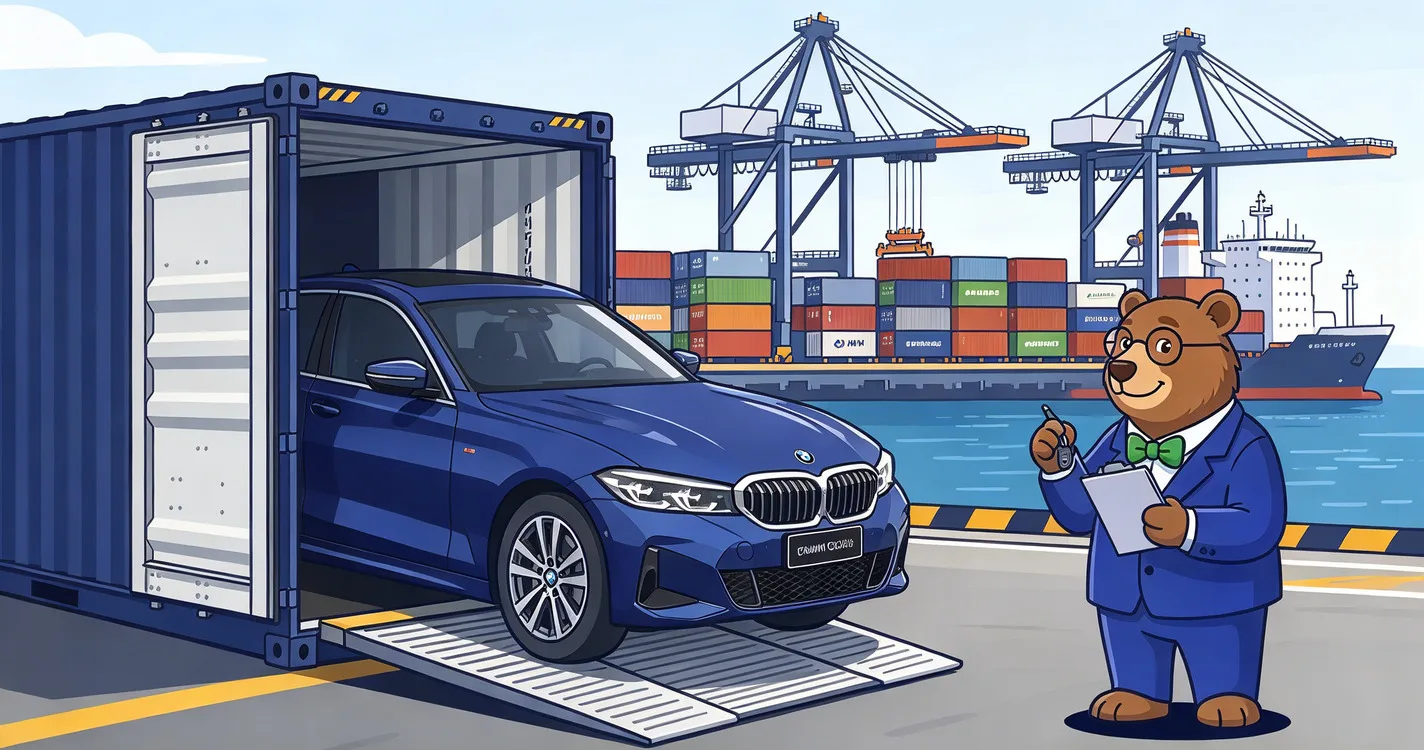
A car from a US auction often looks like a bargain. But the auction price is only the start. Before the Italian plates come transport, customs duty, VAT, technical papers, the inspection at the Motorizzazione and taxes. And sometimes a history nobody tells you about.
This guide shows what an import really costs in 2026, the steps in the right order and what to check before you bid.
In short
- You pay 10% customs duty and 22% VAT. Since 1 July 2026 the duty can drop to 0% for cars built in the USA, if you can prove the origin.
- Italy requires a non-EU car to meet all European directives. The inspection and test at the Motorizzazione (the motor vehicle office) is always compulsory.
- You need apostilles and sworn translations of all US documents.
- Above 185 kW you pay the superbollo (a yearly surtax on powerful cars) every year, which hits many American V8s.
Jump to: check the car's history·cost example·compare 12 countries
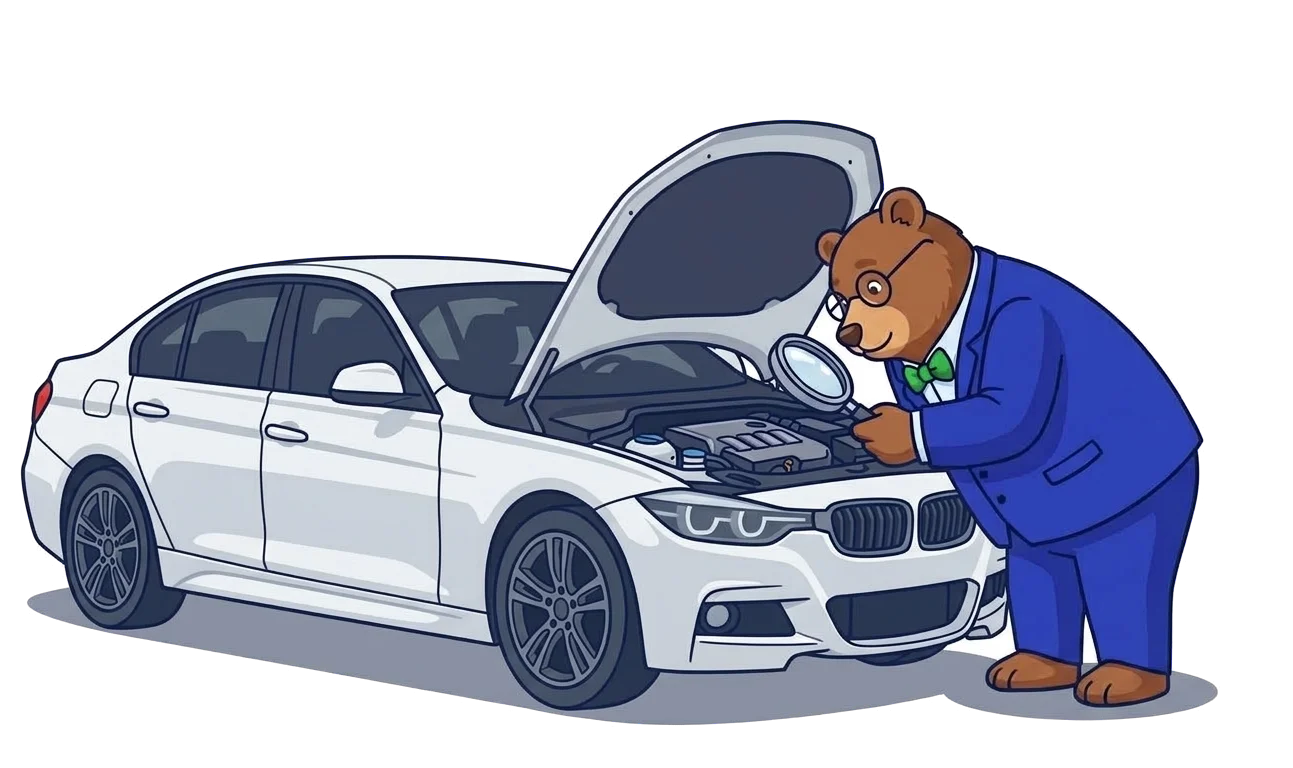
What did it go through in the US?
Once a car is registered here, its US past is easy to hide. The VIN still shows it: auction photos, damage records and title brands.
Example: WBA3A5G59DNP26082Free preview included
- 30+ countries
- Result in under a minute
- Full PDF report
Customs duty, VAT and Italian taxes
Everything starts from the customs value: the purchase price plus transport and insurance to the EU border. The normal duty on passenger cars is 10%. VAT of 22% is charged on the value plus the duty, paid directly at customs.
New since 1 July 2026: EU Regulation 2026/1455 cuts the duty on goods of US origin to 0%, for now until the end of 2029. Passenger cars are included, but what counts is where the car was built, not where you bought it. A Japanese, Korean or German car bought in Florida still pays 10%. In July 2026 the Customs Agency clarified that you do not need a certificate from the US authorities: origin is proved with commercial documents. A "Made in USA" label or a line on the invoice is not enough, though, and for a used auction car the proof stays difficult. Plan with 10% and treat 0% as a possible bonus.
At registration you also pay:
- IPT: 150.81 euros up to 53 kW, then 3.5119 euros per kW, with a provincial increase of up to 30%. Aosta, Trento and Bolzano do not apply it.
- Ecotassa: the law extends it to cars already registered abroad, from 1,100 to 2,500 euros above 190 g/km of CO2. Sources disagree on whether it is still applied in 2026, so check with an agency.
- Superbollo: 20 euros a year for each kW above 185, reduced after 5, 10 and 15 years and zero after 20.
Cost example: a 2018 saloon
You buy a 2018 saloon with a 2.0 petrol engine for USD 12,000 and pay USD 1,800 for shipping to Genoa or La Spezia. At 0.86 euros per dollar, with 140 kW and residence in a province with the 30% increase, the numbers are these:
| Customs value (price plus transport) | €11,868 |
| Duty 10% | €1,187 |
| VAT 22% on value plus duty | €2,872 |
| Total paid at customs | €4,059 |
| Same car with accepted US origin (0%) | €2,611 |
| IPT (140 kW, +30%) | €639 |
| ACI, stamp duties, fees and plates | €111 |
Customs uses its own official exchange rate. Not included: auction fees, transport inside the USA, customs agent, technical papers, conversion work, inspection and test, any ecotassa and insurance. The IPT calculation on the full power should be checked with the ACI calculator for your province.
Port and customs
Container ships from the East Coast serve Genoa, La Spezia and Livorno, taking about 18 to 28 days from port to port. Many auction cars instead arrive in Bremerhaven or Antwerp and continue by truck. In practice a customs agent files the declaration. For national approval you will need the customs bill or customs certificate, with duty and VAT paid.
National approval: where Italy is strict
A passenger car coming from a non-EU country can be registered only if it meets all the harmonised European rules. There are no exemptions for American cars: they apply only to Switzerland, San Marino, the Vatican and people returning to Italy. The car always goes through an inspection and test at the Motorizzazione Civile.
The hard part is the technical documentation. You need a declaration that the car meets EU rules on emissions, noise, fuel tank, steering, brakes, seats, seat belts and crash protection, or a data sheet from a Centro Prova Autoveicoli (vehicle test centre). The US title and registration card must carry an apostille, and every document not in Italian needs a sworn translation.
Salvage, rebuilt, flood: the damaged cars
Many cheap American cars have a salvage, rebuilt or flood title: an insurer has already declared them a total loss, or they stood in water. In many US states a car becomes salvage when the repair costs more than about 75% of its value. No Italian rule mentions these American brands, but the Motorizzazione asks for the final foreign registration as the document of origin, and a salvage certificate often is not one.
The inspection and test checks the state of the car on that day, not the quality of the repair. Once the car is registered in Italy, the libretto di circolazione (registration document) does not show the American past.
The Italian libretto di circolazione will not tell you that a car was a total loss in the USA.
That is why step 2 matters so much: check the US history before the bid, not after. A title brand can also disappear after a new registration in another US state.
Our guide to checking the history of an imported car shows what else can get lost when a car crosses a border.
Step by step: from the listing to your driveway
This is how an import works in practice. The timings are typical, not official deadlines. With national approval, allow two or three months in all.
Set a budget and choose the car
before buyingTo the auction price add transport, duty, VAT, technical papers, IPT and, if it applies, ecotassa. Above 185 kW also budget for the superbollo every year.
Check the VIN
before you bidAsk for the VIN and check the US history before you bid:
- salvage, rebuilt or flood titles,
- auction photos and damage claims,
- mileage over the years,
- country of manufacture. A VIN starting with 1, 4 or 5 usually means a car built in the USA.
Check the technical documentation
before you bidAsk the manufacturer or a specialist whether an EU declaration of conformity exists for this model and this VIN. Without one, you need a test centre. This step decides whether the car can be registered.
Bid and buy
auction daySet your maximum bid including all fees. Pay only if you receive the original Certificate of Title and the registration card, and keep the invoice and proof of payment.
Transport and shipping
3 to 8 weeksA forwarder collects the car, takes it to the US port and handles the export. Choose the port: Genoa, La Spezia or Livorno, or Bremerhaven or Antwerp with a truck to Italy.
Customs clearance
on arrivalThe customs agent files the declaration and you pay duty and VAT. You receive the customs bill. For 0%, prepare proof of US origin and of direct transport.
Apostilles and sworn translations
1 or 2 weeksHave the US title and registration card apostilled and have every document not in Italian translated by a sworn translator.
Conversion work
usually 1 or 2 weeksYou will usually need:
- amber rear indicators instead of red ones,
- a rear fog lamp,
- E-marked approved headlamps,
- a speedometer in km/h.
Technical approval at the Motorizzazione
depends on the officeYou submit the technical documentation and the request for a preliminary check, with a self-declaration on VAT, purchase and mileage. Each Motorizzazione office has its own forms.
Inspection and test
1 appointmentThe Motorizzazione checks the chassis number and the engine and tests the car. If everything complies, the car can be registered.
Registration and PRA
1 appointment or an agencyPay the fees (10.20 euros), the stamp duty (32 euros) and the plates (41.78 euros), then IPT and ACI fees (27 euros). You receive the plates and the Documento Unico. If due, the ecotassa is paid with form F24.
Insure the car and drive off
doneTake out RCA (third party liability insurance) before you drive. After that, the bollo and any superbollo arrive every year. Keep all the American documents: for whoever buys the car from you, a documented history makes the difference.
Before you bid
Check the US history
Auction photos, damage, titles and mileage from over 30 countries, in a single report.
- 30+ countries
- Under a minute
- Full PDF report
Not sure yet? See what a full report looks like first
Good to know
- Province: the IPT depends on the province of residence. Aosta, Trento and Bolzano do not apply the increase.
- Euro class: an American car with little emissions paperwork risks a low class, with a higher bollo and access limits in some cities.
- Classic cars: vehicles over 30 years old follow a separate procedure with ASI or FMI certification.
- Buying in the EU instead? A car bought inside the EU pays no customs duty and no import VAT at the border. National taxes and registration costs still apply. Our guide to buying a car on mobile.de and bringing it to Italy explains that route.
Importing from the USA to another country?
Customs duty is the same everywhere in the EU. VAT, registration tax and the approval rules are not. Choose a country to read its guide.
- BulgariaVAT 20%, product fee, legalised translations
- CroatiaVAT 25%, PPMV tax by CO2
- CzechiaVAT 21%, no registration or road tax
- FranceVAT 20%, CO2 malus, RTI approval
- GermanyVAT 19%, no registration tax
- HungaryVAT 27%, registration tax by emissions class
- ItalyVAT 22%, IPT, superbollo over 185 kW
- LatviaVAT 21%, no registration tax
- NetherlandsVAT 21%, BPM by CO2
- PolandVAT 23%, excise 3.1% or 18.6%
- RomaniaVAT 21%, no registration tax
- SlovakiaVAT 23%, low registration fee
Frequently asked questions
How much duty do you pay on a car from the USA?
Normally 10% on the price plus transport to the EU. Since 1 July 2026 a car built in the USA can have 0% duty if you prove the origin. VAT of 22% is always paid.
Do you need the Motorizzazione inspection for an American car?
Yes, for non-EU cars the inspection and test at the Motorizzazione is always compulsory, together with the documents proving compliance with European rules.
Do you pay ecotassa on a used imported car?
The law provides for it on cars already registered abroad too, from 1,100 to 2,500 euros above 190 g/km. Check with an agency which CO2 value is used for your car.
Can you register a car with a salvage title?
No rule expressly forbids it, but the Motorizzazione asks for a final foreign registration document. Check the car's US history before you buy it.
Sources
- Regulation (EU) 2026/1455, Annex I (chapter 87)
- ItaliaOggi: zero duties from the USA and proof of origin (July 2026)
- Motorizzazione Civile di Treviso: vehicles imported from non-EU countries
- Agenzia delle Entrate: Resolution 31/E of 2019 (ecotassa)
- Ministerial Decree 223/1998: provincial registration tax
- Altroconsumo: superbollo
- Agenzia delle Entrate: Resolution 344/E of 2008
- Sicurauto: US cars excluded from circulation
As of October 2026. Check ecotassa, IPT and Euro class with an agency before you buy.
Read next