
The imported bargain that is hiding where it came from
Most used cars crossing Europe started life in Germany, and a border crossing is exactly where a car's real history goes missing. What an import hides, and how to see the truth before you pay.

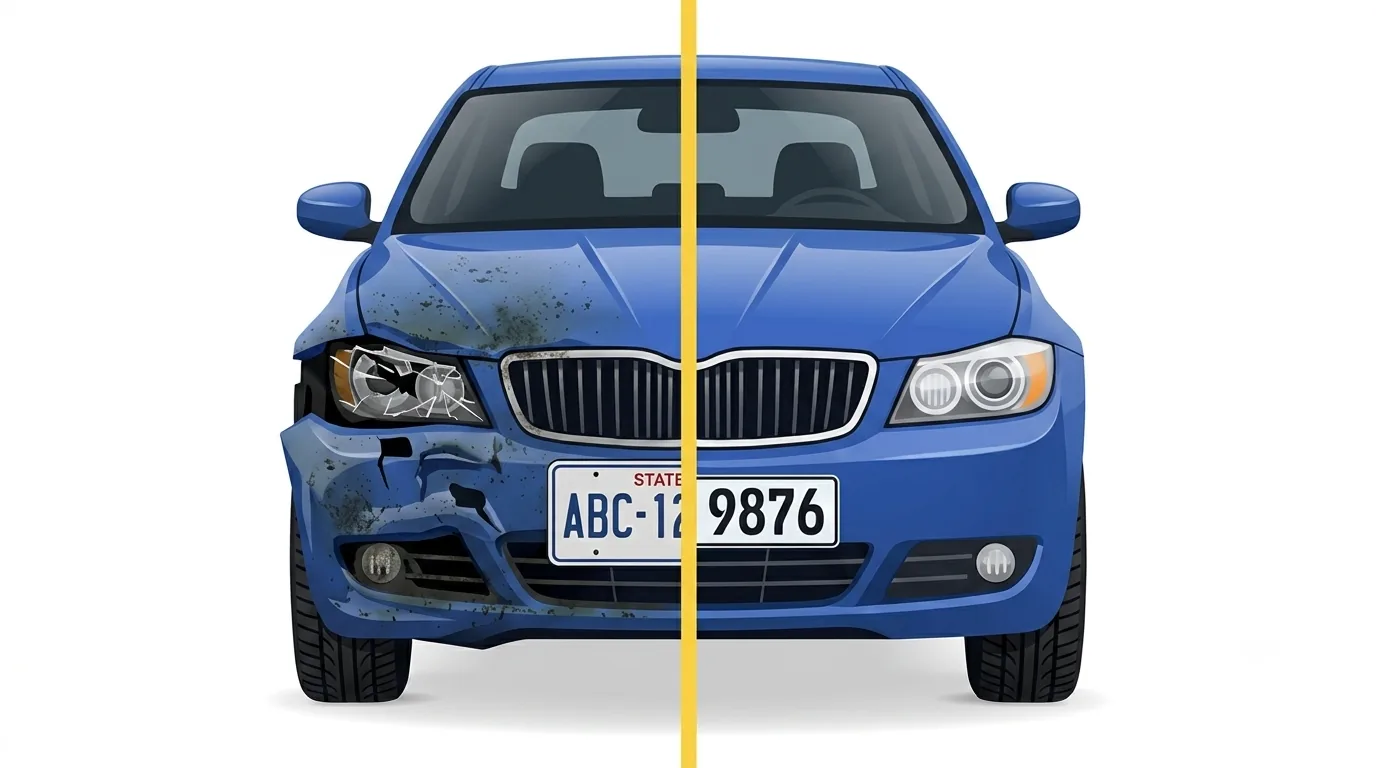
A fresh set of plates says nothing about the life the car had before it crossed the border.
An imported used car can be the best value on the market. A big country like Germany builds and maintains millions of cars, and when they flow east and south across Europe they often arrive cheaper and better equipped than anything sold locally. But the same journey that makes an import attractive is the one that quietly erases its history. Here is what a border crossing hides, and how to read a car's real past before you pay for it.
The short version
- Most used cars imported across Europe started their life in Germany, the continent's largest car market.
- A car that crosses a border usually leaves its recorded history behind, which is why imports carry the highest rates of hidden mileage and damage.
- Fresh plates and a tidy folder are not proof. They are the easiest part of a car to replace.
- The VIN still carries the record. One check reads mileage, damage, finance and the country trail across more than 30 countries.

Trace the import before you buy
See a car's real mileage, damage, finance and country history across 30+ countries, in under a minute.
Example: WBA3A5G59DNP26082Free preview included
Where Europe buys its used cars
Follow the used car trade in Europe and most roads lead back to Germany. It has the largest vehicle fleet on the continent, a strong culture of servicing, and buyers who change cars often, which means a steady supply of relatively young cars leaving the country every year. Poland, Lithuania, Romania, Ukraine, the Czech Republic and much of central and eastern Europe run in large part on these German exports.
The car that looks like a careful German one owner may well be one. The trouble is that so does the car that is not.
For a buyer, a German import can be a genuine bargain: a well built car, often with a fuller specification than the local market offers, at a tempting price. None of that is the trap. The trap is assuming that because a car came from an orderly, well regulated country, its history came with it. Usually it did not.
The border is where the history vanishes
Every developed car market keeps records: periodic inspections, service stamps, insurance claims, and in a few countries a full mileage log. Those records live in the country where the car was driven. When the car is exported, the records almost never travel with it. The new country opens a fresh file, and the old one goes quiet.
This is not a small effect. A study commissioned by the European Parliament found that 5 to 12 percent of cars sold within a single country have manipulated odometers. For cars sold across EU borders, that figure jumps to between 30 and 50 percent. The border is not incidental to the fraud. It is the method.
It helps to picture where the cars start. In Germany, the ADAC estimates that around one in three used cars has had its mileage tampered with. Now send that fleet across a border, strip away the inspection and service records that might have caught the fraud, and you have the perfect conditions for a rolled back odometer to pass as genuine.
What an import can hide
Three kinds of history tend to disappear at the border. Each one can cost you far more than you save on the lower price.
Mileage. This is the big one. A car driven hard for years can shed a third of its distance on paper the moment it changes country, because the log that recorded the true figure stayed behind. How a digital odometer is rewritten in seconds, and why the real number often survives elsewhere in the car, we cover in our full guide to odometer fraud.
Damage and write offs. A car repaired after a serious crash, or written off by an insurer and quietly rebuilt, carries no smell and no obvious scar. Flood damage can sit hidden under a fresh valet for months. These records exist in the country where the accident happened, and they are precisely the ones that do not follow the car abroad.
Outstanding finance and theft. A car can be sold to you while still carrying a loan in its previous country, or worse, while listed as stolen. In the UK, where checks are common, around one in four cars put through a history check still has finance owing against it. On an import, that debt and any theft record are effectively invisible unless you go looking.
| On an import | Seller and papers | With a VIN check |
|---|---|---|
| Real mileage | ×Trust the dial | ✓Verified against logs |
| Accident and write off history | ×Left in the old country | ✓Surfaced where recorded |
| Outstanding finance | ×Invisible | ✓Flagged |
| Country and ownership trail | ×A fresh local file | ✓Traced across 30+ countries |
What the VIN still remembers
Here is the part that works in your favour. The paperwork can be lost, swapped or faked, and the records can stay behind at the border, but the car itself keeps one thing that does not change: its VIN. The 17 character vehicle identification number is stamped into the car and tied to it for life, across every country, owner and number plate it ever has.
That single number is the key to the history the seller cannot hand you. A history check uses the VIN to pull records from the car's earlier life, wherever it was: mileage readings logged at inspections and services, accident and write off records, finance and theft flags, and the trail of countries the car has been registered in. MrVIN reads these sources across more than 30 countries in one report, which is exactly the reach an imported car needs.
The seller controls the folder. Nobody controls the VIN. That is why you check the number, not the paperwork.
How to check an import before you buy
You do not need to be an expert. You need to do a few things in the right order, and to do them before any money changes hands.
Find the VIN and check it matches. Read the 17 character number off the windscreen, the door pillar and the registration document. On an honest import all three agree. A mismatch is reason enough to walk away.
Run the VIN before you view, not after. A history check takes a minute and costs less than a tank of fuel. Do it early, so you arrive already knowing the car's recorded mileage, its damage and finance history, and where it has been registered.
Match the records against the car in front of you. Compare the logged mileage with the dashboard and with the wear on the pedals, wheel and seats. Compare the damage history with the panels and paint. Small gaps are normal. A story that does not add up is not.
Treat a suspiciously low reading on an older import as a warning, not a win. It is exactly the pattern a rolled back odometer creates, and on a car that has crossed a border it is the hardest claim to verify without the records.
The bottom line
An imported car is not a worse car. It is a car whose history is harder to see, and that difficulty is the whole opportunity for anyone selling one dishonestly. The lower price is real. So is the missing paper trail. The only way to know which kind of import you are looking at is to read the record the car carries itself.
Whichever service you use, run the VIN before you sign. On an import it is not an extra precaution. It is the only part of the car's history the seller cannot quietly leave at the border.
Know before you buy
Mileage, damage, finance and import records across 30+ countries, in one report, in under a minute.
Not sure yet? See what a full report looks like first
Frequently asked questions
Can I check an imported car with just the VIN?
Yes. The VIN is the one identifier that stays with a car for life, even when it changes country, owner and number plate. A history check reads the records tied to that VIN across more than 30 countries, so a car that was driven and logged in Germany can still be traced after it arrives somewhere else.
Where do I find the VIN on an imported car?
It is a 17 character code stamped on the car and printed in the papers. Look at the base of the windscreen on the driver side, on the door pillar when you open the driver door, and in the registration document. On an honest import all three match. If the plate details and the VIN tell different stories, stop and ask why.
Does a German service history transfer with the car?
Only the paper does, and paper is easy to lose or fake. A stamped service book and an inspection report help, but stamps can be added and books can be swapped. A mileage and damage history recorded against the VIN does not depend on the seller handing you the right folder.
Why is an imported car riskier than a local one?
Because the border breaks the paper trail. A study for the European Parliament found manipulated mileage on 5 to 12 percent of cars sold inside one country, but on 30 to 50 percent of cars sold across borders. Once a car leaves the country that recorded its history, the records that would expose a rolled back odometer or a repaired crash usually stay behind.
Can a check show if the car was crashed or written off abroad?
Where the data exists, yes. A history check can surface accident and damage records, insurance write offs and salvage or auction listings from the car's previous country, which is exactly the history a seller has no reason to mention.
Is a car imported from Germany always a bad buy?
Not at all. Germany has a huge, well maintained car fleet, and many imports are genuinely good cars sold honestly. The point is not to avoid imports, it is to check the specific car in front of you, because the ones with something to hide look exactly like the ones without until you read the records.
Sources
- European Parliament: Odometer manipulation in motor vehicles in the EU (EPRS, 2018). 5 to 12% domestic and 30 to 50% across borders manipulation; €8.9bn annual cost. Read
- ADAC (Germany): around 1 in 3 used cars clocked in the largest used car market in Europe.
- RAC and HPI (UK): around 25% of checked cars carry outstanding finance; around 4% written off; around 384,000 written off or seriously damaged each year.
Read next