
Importing a car from the USA to Czechia: what you need to know
Customs duty, VAT, the technical approval and registration. And why a car's history is easily lost on the way across the ocean.

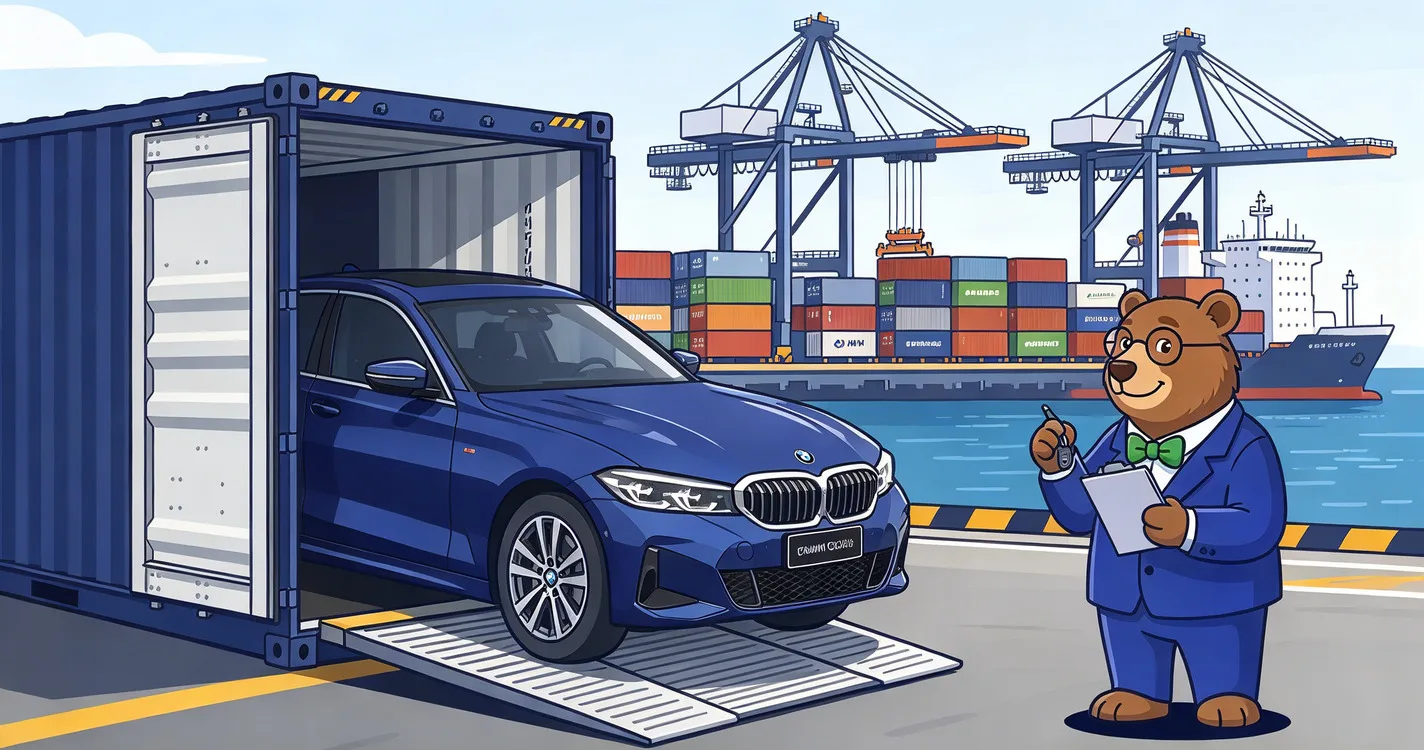
A car from a US auction tempts with its price and its choice. But the auction price is only the start. Before the car gets Czech plates, you add transport, customs duty, VAT, modifications and inspections. And sometimes a past that nobody told you about.
This guide shows what an import really costs in 2026, how it goes step by step and what to check before you bid.
In short
- You pay 10% customs duty and 21% VAT. Since 1 July 2026 the duty can drop to 0% for cars built in the USA, but you must prove the origin.
- Czechia has no excise duty on cars, no registration tax and no road tax on passenger cars. Engine size does not change the tax.
- Every car from the USA needs an approval of its technical roadworthiness. Since July 2025 it has been easier.
- A car's Czech history only begins after the import. US damage shows up only in the American vehicle history.
Jump to: check the vehicle history·cost example·compare 12 countries
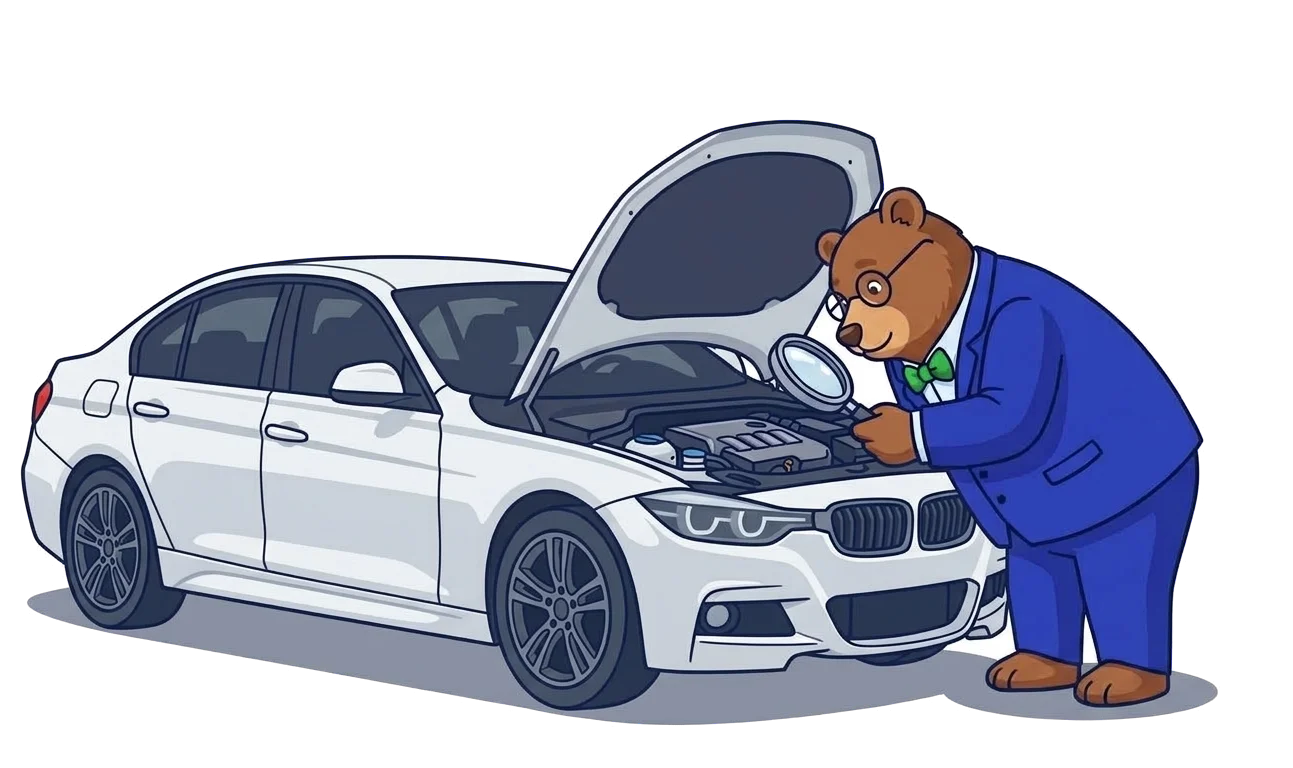
What did it go through in the US?
Once a car is registered here, its American past is easy to hide. The VIN still shows it: auction photos, damage records and title brands.
Example: WBA3A5G59DNP26082Free preview included
- 30+ countries
- Result in under a minute
- Full PDF report
Customs duty, VAT and what you do not pay in Czechia
Everything is calculated from the customs value: the price of the car plus transport and insurance to the EU border. The usual duty on passenger cars is 10%. Then 21% VAT is added on the customs value plus the duty.
New since 1 July 2026: EU Regulation 2026/1455 cuts the duty on goods of US origin to 0%, for now until the end of 2029. Passenger cars are included. What counts, though, is where the car was built, not where you bought it. A Toyota built in Japan or a Hyundai built in Korea still pays 10%, even if it was sold at a US auction. You must prove the US origin, and for used auction cars that is often hard. So plan with 10% and treat 0% as a possible bonus.
What you do not pay in Czechia: excise duty on cars, a registration tax based on engine size or CO2, and, since 2022, road tax on passenger cars. A big engine therefore does not raise the tax here, unlike in Poland, for example.
The emission fee still exists, though it is often reported as abolished. You pay it at the first registration of an imported car: CZK 3,000 for EURO 2, CZK 5,000 for EURO 1 and CZK 10,000 for a car with no emission standard. Cars with EURO 3 or higher are exempt, so a 2018 car should not pay it.
Cost example: a 2018 saloon
You buy a 2018 saloon with a 2.0 engine for USD 12,000 and pay USD 1,800 to ship it to a port in the EU. When it is cleared in Czechia, the taxes work out like this:
| Customs value (price plus transport) | USD 13,800 |
| Duty 10% | USD 1,380 |
| VAT 21% on customs value plus duty | USD 3,188 |
| Total taxes | USD 4,568 |
| Same car with accepted US origin (0% duty) | USD 2,898 |
The customs office converts the amounts at its official exchange rate. Not included: auction fees, transport inside the USA and to Czechia, the customs agent, modifications, the STK inspection, the approval and registration. With a 3.5 engine the taxes would come out the same.
Port and customs clearance
Czechia has no seaport. Cars from the USA for Czech buyers mostly land in Bremerhaven, Hamburg, Rotterdam or Antwerp and travel on by truck. The customs declaration (JCD, the single administrative document) is usually filed by a customs agent, either at the port or, after transit, at a customs office in Czechia.
You can clear the car in another EU country, for example in Germany with 19% VAT. You then no longer pay Czech VAT, but you still need the technical approval, because the car has no European certificate of conformity.
Approval of technical roadworthiness
A car imported from the USA must have its technical roadworthiness approved before registration. First it goes through an import inspection at an STK (a technical inspection station), which issues a protocol. With it you apply for the approval at any municipality with extended powers. The fee is CZK 3,000, or CZK 2,400 online through the Citizen Portal. Driving a car without the approval risks a fine of up to CZK 50,000.
Since 1 July 2025 the approval is simpler. Decree 222/2025 removes, for individually imported cars, the requirement for European approval marks on lights, glass, belts, mirrors and tyres, as long as the parts technically meet the UN regulations. A speedometer in miles or a missing headlight levelling plate is not a problem either. So a car no longer fails just because its American headlights have no E mark.
Salvage, rebuilt, flood: what to do with cars after a crash
Many cheap US cars have a salvage, rebuilt or flood title. An insurer has already written them off as a total loss once, or they stood in water. Czech rules do not deal with the American title brand. What is judged is the technical condition of the car at the import STK inspection and the approval, not its American past. A car with a junk or non-rebuildable title, which may not go back on the road in the USA, will hardly be accepted as a vehicle document, though.
A car's Czech history only begins with the import. American damage, auction photos and mileage from the USA are not in Czech records.
After registration in Czechia, a car's history starts from zero. The damage from the USA stays across the ocean.
That is why step 2 matters so much: check the American history before the auction, not after it. Keep the auction invoice, because customs officers look more closely at very low prices.
Our guide to checking the history of an imported car shows what else can get lost when a car crosses a border.
Step by step: from the listing to your doorstep
This is how an import goes in practice. The times are rough, not official deadlines. For the whole journey, plan roughly six to ten weeks.
Set a budget and choose a car
before you buyAdd transport, duty, VAT and modifications to the auction price. In Czechia engine size does not matter, so a car with a bigger engine does not cost you more in taxes.
Check the VIN
before you bidAsk for the VIN and check the American history before you bid:
- a salvage, rebuilt, flood or junk title,
- auction photos and reported damage,
- mileage over the years,
- the country of manufacture. A VIN starting with 1, 4 or 5 usually means a car from the USA and a chance of 0% duty.
Talk to an STK
before you bidAsk an STK that does import inspections whether this particular model will pass and what will need to be changed, mainly on the lights. It saves you an unpleasant surprise.
Bid and buy
auction dayWork out your maximum bid including the auction fees. Pay only if you get the original title (Certificate of Title). Keep the invoice and the proof of payment safe.
Transport and shipping
1 to 4 weeksThe freight forwarder collects the car, takes it to a US port and arranges the export. Choose the destination port, usually Bremerhaven, Hamburg or Rotterdam.
Customs clearance
after arrivalThe customs agent files the customs declaration and you pay the duty and VAT. You receive the JCD and the proof of payment, which you will need for the approval and the registration.
Transport to Czechia
after clearanceWithout Czech registration the car usually arrives on a tow truck or a lorry, straight to a workshop.
Modifications to the European standard
usually a few days to 2 weeksTypically you need:
- asymmetric European dipped beam headlights,
- amber rear indicators,
- a rear fog light.
According to importers, the light conversion starts at roughly CZK 8,000.
Import STK inspection and registration check
1 visitAt the STK the car goes through a technical inspection including an emissions measurement, and a registration check of the VIN. You receive the protocol for the approval. The stations set their own prices.
Approval of technical roadworthiness
1 visit or onlineAt a municipality with extended powers you file an application with the American documents, the STK protocol, the registration check, the JCD and your ID. The fee is CZK 3,000, or CZK 2,400 online.
Insurance and registration
1 visitTake out compulsory liability insurance and register the car at any municipality with extended powers. You need:
- the application and proof of residence in Czechia,
- the decision approving technical roadworthiness,
- proof of the technical inspection and registration check, not older than 30 days.
The fee is CZK 800 including plates, CZK 640 online. Check in advance whether the office will want an official translation of the American title.
Screw on the plates and drive
doneWith the plates and the vehicle registration certificate you can hit the road. Keep all the American documents. When you sell the car, a documented history is an argument for honest buyers.
Before the auction
Check the car's history in the USA
Auction photos, damage, titles and mileage from more than 30 countries in one report.
- 30+ countries
- Under a minute
- Full PDF report
Not sure yet? See what a full report looks like first
Good to know
- Big engines: with no excise or registration tax, a V8 car pays the same taxes in Czechia as one with a 2.0 engine. That is an advantage over Poland or Hungary.
- Online discounts: the approval costs CZK 2,400 online instead of CZK 3,000, and the registration CZK 640 instead of CZK 800.
- Moving back: if you move back after at least 12 months outside the EU, you can import a car for personal use without duty and VAT, provided you clear it within 12 months.
- Planned changes: the government has approved a major amendment of the road vehicles act with more online services. It is meant to apply gradually from November 2026.
- Buying in the EU instead? A car bought inside the EU pays no customs duty and no import VAT at the border. National taxes and registration costs still apply. Our guide to buying a car at auction in Europe explains that route.
Importing from the USA to another country?
Customs duty is the same everywhere in the EU. VAT, registration tax and the approval rules are not. Choose a country to read its guide.
- BulgariaVAT 20%, product fee, legalised translations
- CroatiaVAT 25%, PPMV tax by CO2
- CzechiaVAT 21%, no registration or road tax
- FranceVAT 20%, CO2 malus, RTI approval
- GermanyVAT 19%, no registration tax
- HungaryVAT 27%, registration tax by emissions class
- ItalyVAT 22%, IPT, superbollo over 185 kW
- LatviaVAT 21%, no registration tax
- NetherlandsVAT 21%, BPM by CO2
- PolandVAT 23%, excise 3.1% or 18.6%
- RomaniaVAT 21%, no registration tax
- SlovakiaVAT 23%, low registration fee
Frequently asked questions
How much is the duty on a car from the USA?
Normally 10% of the price of the car plus shipping to the EU. Since 1 July 2026 cars built in the USA can have 0% duty if you prove their origin. On top comes 21% VAT, always.
Do you pay a tax based on engine size in Czechia?
No. Czechia has no excise or registration tax on cars and, since 2022, no road tax on passenger cars. You pay only duty, VAT and fees.
Is there still an environmental tax?
Yes, the emission fee still exists, but only for cars with EURO 2 or lower. Cars with EURO 3 and newer are exempt.
Can I register a car with a salvage title?
Czech rules do not deal with the American title. What counts is the technical condition at the STK and the approval. But check the history of a car from the USA before you buy, because it will not be in Czech records.
Sources
- Regulation (EU) 2026/1455, Annex I (chapter 87)
- Public administration portal: importing a vehicle and approval of technical roadworthiness
- Public administration portal: registering a new or imported vehicle
- Public administration portal: the emission fee
- Decree 222/2025 Coll. (individually imported vehicles)
- Financial Administration: road tax and passenger cars
- Ministry of Foreign Affairs: importing a car as personal property
- Ministry of Transport: amendment of the road vehicles act
Status as of October 2026. STK and modification prices are set by the stations and workshops themselves.
Read next