
How to buy a car at auction in France
France is one of the few European markets where anybody can bid without a trade licence, and one of the few where a tax at registration can cost more than the car.


Most European buyers never sit in a room like this. They bid through a broker, because the licence is not theirs.
France is one of the few European markets where anybody can bid without a trade licence, and one of the few where a tax at registration can cost more than the car. Both of those change what a bargain is.
The short version
- Anyone can bid. State sales need nothing more than a free registration.
- Commission runs 10 to 20 percent at private houses and about 6 percent at state sales.
- There is no test drive. A visual inspection at the viewing is all you get.
- The malus starts at 108 g/km and reaches 80,000 euro, less a reduction for the car age.
- Payment can fall due the same day, which is the shortest clock in this series.
Skip ahead: check a car nowthe malus
Already watching a lot? The auction sheet tells you what the seller declared. A history check tells you what happened before the car reached the yard.
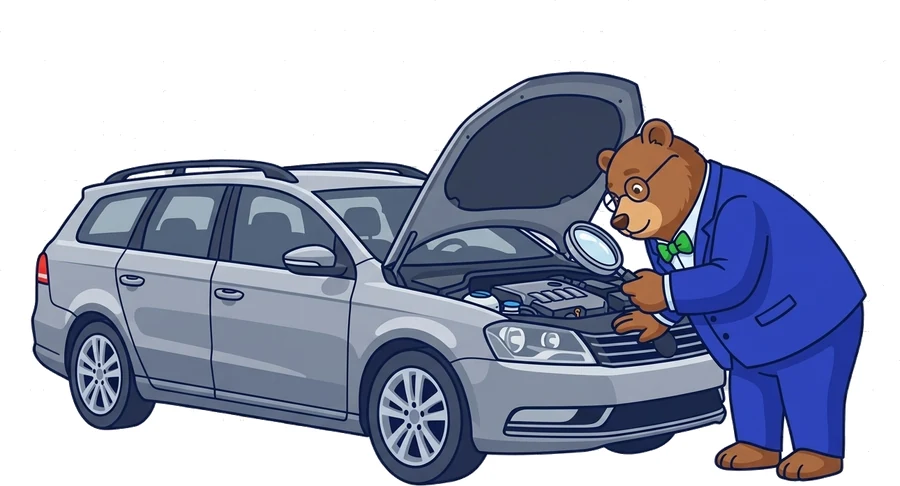
Check it before you bid
The auction sheet tells you what the seller declared. A history check tells you what happened before the car reached the yard.
Example: WBA3A5G59DNP26082Free preview included
- 30+ countries
- Result in under a minute
- Full PDF report
Where the cars come from
France has a deep domestic auction market and does not depend on imports to fill it. The stock comes from fleet and leasing returns, dealer trade ins, insurance write offs, and vehicles seized or retired by the state.
The operators are worth knowing by name, because they carry different things.
| Operator | What they carry |
|---|---|
| VPauto | A permanent catalogue of around 500 vehicles, with sites at Lorient, Nantes, Rouen, Lyon, Bordeaux, Marseille and Lille |
| Alcopa Auction | Passenger cars, light commercials, and a dedicated stream of accident damaged vehicles |
| BCAuto Encheres | Runs a specific category for accidented and non running vehicles |
| Interencheres | An aggregator listing sales from many houses at once |
| Encheres-domaine.gouv.fr | State disposals. Free registration, and the lowest fees in the market |
France also runs ahead of most of Europe on electric stock. In March 2026 VPauto held the first French auction dedicated entirely to electric vehicles, with more than 130 cars and a sale rate around 95 percent. If you are looking for a cheap EV, this is currently the most interesting auction market in Europe.
Anyone can bid, and that is the catch
France is one of the most open auction markets in Europe for a private buyer. State sales through the domaine site need nothing more than a free registration. Private operators ask you to register in advance and sometimes to leave a deposit, but they do not require a trade licence.
That openness is genuinely useful and it removes the broker cost that dominates buying from American auctions. It also removes the filter. Nobody is checking whether you understand what you are bidding on.
The single most important consequence: you cannot test drive. A visual inspection during the pre sale viewing is all you get. You are buying on photographs, a technical inspection report if one exists, and whatever the catalogue says.
What it costs to buy one
The 20 to 50 percent discount against market price is real, and it is calculated on the hammer price. Everything below sits on top of it.
| Charge | Typical amount |
|---|---|
| Commission, private operators | 10 to 20% of the hammer price |
| Commission, state sales | around 6% |
| Carte grise | Varies by region and fiscal horsepower |
| Technical inspection | Often needs renewing |
| Malus ecologique | From 50 EUR, up to 80,000 EUR, less an age reduction |
| Repairs | Whatever the car needs, and you could not drive it first |
A 20 percent commission on a car bought at a 30 percent discount has already eaten most of the saving. Work out the commission for the specific house you are bidding at before you decide what the car is worth to you, because the range between 6 and 20 percent is wider than most people negotiating margin.
The malus, and why it decides everything
France charges an ecological penalty on a car first registration in the country, based on its CO2 emissions. It is paid once, not annually, and for an imported or auction bought car it is the difference between a bargain and a disaster.
| CO2 emissions, WLTP | Malus on the 2026 scale |
|---|---|
| Below 108 g/km | Nothing |
| 108 g/km | 50 EUR |
| 120 g/km | 310 EUR |
| 140 g/km | 2,205 EUR |
| 160 g/km | 8,770 EUR |
| 180 g/km | 45,990 EUR |
| 191 g/km and above | 80,000 EUR |
The scale tightens every year. For 2026 it starts five grams lower than it did in 2025 and the ceiling rose by ten thousand euro. Read it against the kind of car people buy at auction hoping for a bargain. The middle of the curve is where it turns violent: twenty grams between 160 and 180 adds another 37,000 euro. A large petrol saloon or an American V8 can carry a penalty several times the hammer price, payable before the car can be registered.
A weight tax sits alongside it, charged from 1,500 kg in 2026. The two together are capped at 80,000 euro.
What changes for a car already registered abroad
Everything above is the full rate, and an imported car rarely pays it. Two rules cut it down. The scale that applies is the one in force when the car was first registered abroad, not the 2026 one, so an older car is judged by an older and gentler table. Then a reduction is applied for the car age, growing with every month since that first registration, and at 181 months, a little over fifteen years, it reaches 100 percent and nothing is owed at all.
That reduction is what turns the malus from a universal problem into a question about recent cars. A three year old saloon coming out of a fleet sale pays most of the scale. A fifteen year old one pays none of it. Everything in between has to be calculated rather than guessed, and the two inputs are the CO2 figure and the date of first registration abroad.
The process, step by step
1. Register before the sale
State sales need a free registration. Private houses usually want you registered in advance and may hold a deposit. Doing this on the day is how people end up watching a lot they cannot bid on.
2. Go to the viewing
This is the only inspection you get, and there is no test drive. Take somebody who knows cars, look underneath, and read the technical inspection report if one is published.
3. Decide your maximum before you start looking
Work out the total you are willing to spend registered and repaired, subtract the commission, subtract the carte grise, subtract the malus for that specific car, and what remains is your maximum bid. Treat it as fixed.
4. Bid
In the room or online. Leaving a maximum is usually the better discipline, because it removes you from the part of the process designed to make you competitive.
5. Pay and collect
Payment is generally due the same day or within 48 hours. Arrange transport before you bid, since many lots cannot be driven away.
6. Register within a month
The carte grise application goes through ANTS online and must be completed within one month of the sale. You will need the auction receipt, the original carte grise, identification and a certificat de non gage.
The deadlines that cost money
French auctions run on shorter payment clocks than most of Europe, and the registration deadline is a legal one rather than a commercial one.
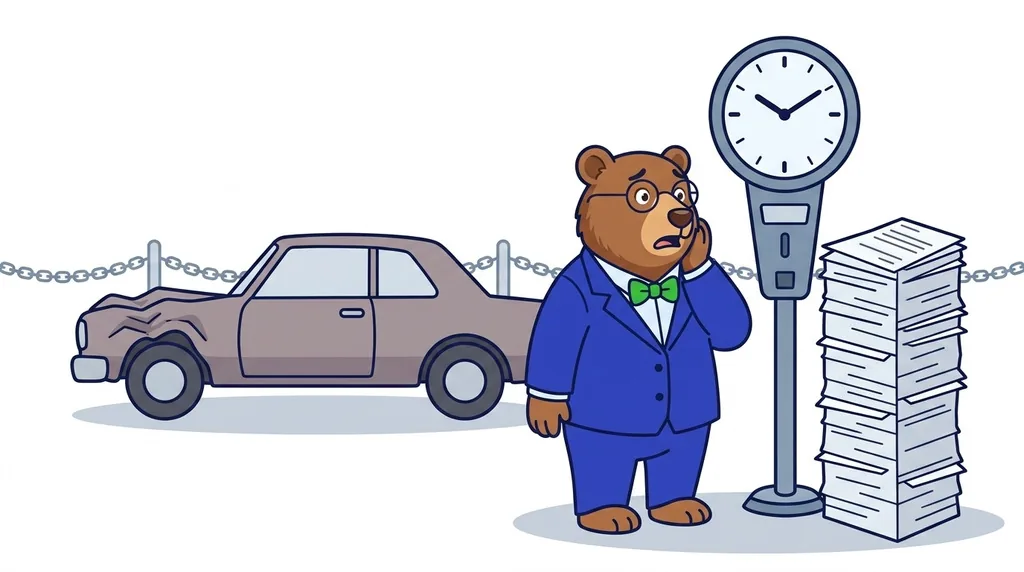
Same day or 48 hours. That is the shortest payment window of any market in this series.
| What | Terms in France |
|---|---|
| Payment | Same day, or within 48 hours |
| Collection | Shortly after payment, storage charges vary by house |
| Carte grise application | Within one month of the sale, through ANTS |
| Technical inspection | Must be valid for registration, and often needs renewing |
Forty eight hours is not enough time to arrange finance. If you intend to bid, the money needs to be available before the sale rather than after it, and that is the single most common way a French auction purchase goes wrong.
Damage codes, and what they actually mean
Listings carry short damage codes. They are useful and they are not reliable. They are assigned by people walking a yard, they are explicitly reference only, and they are frequently incomplete.
Impact and structural
FR front end
RR rear end
SD side
TP top or roof
FD frame damage reported
RO rollover
Panel damage is a repair job. Frame damage and rollover are a question about whether the car should be repaired at all.
Water, weather and external
WA water or flood
HL hail
VN vandalism
AO all over
Flood hides the most. Water works through wiring over months, so the car can drive perfectly on collection and fail progressively afterwards.
Fire and hazard
BN burn
BE burn, engine
BI burn, interior
BC biohazard or chemical
Mechanical and cosmetic
MC mechanical
NW normal wear
MN minor dents and scratches
MC is the least informative code in the set. It covers a flat battery and a destroyed gearbox equally.
Title and history flags
VI / VP missing or altered VIN
CC cash for clunkers
DH damage history
PR partial or incomplete repair
RJ rejected repair
ST stripped
PR and RJ deserve more attention than they get. Both mean somebody already tried to fix this car and stopped.
- High risk
- Medium
- Lower
| Risk | Codes | Why |
|---|---|---|
| High | FD, RO, WA, BN, BE, VI, VP | Structural, electrical or legal problems repair does not reliably solve |
| Medium | FR, RR, SD, TP, AO, MC, PR, RJ | Repairable, but cost varies enormously and the code will not say by how much |
| Lower | HL, VN, MN, NW, ST | Cosmetic or predictable, provided nothing else is listed alongside |
Never bid on a code alone. Check it against the photographs, the title status and an independent history report.
Words that mean less than they sound
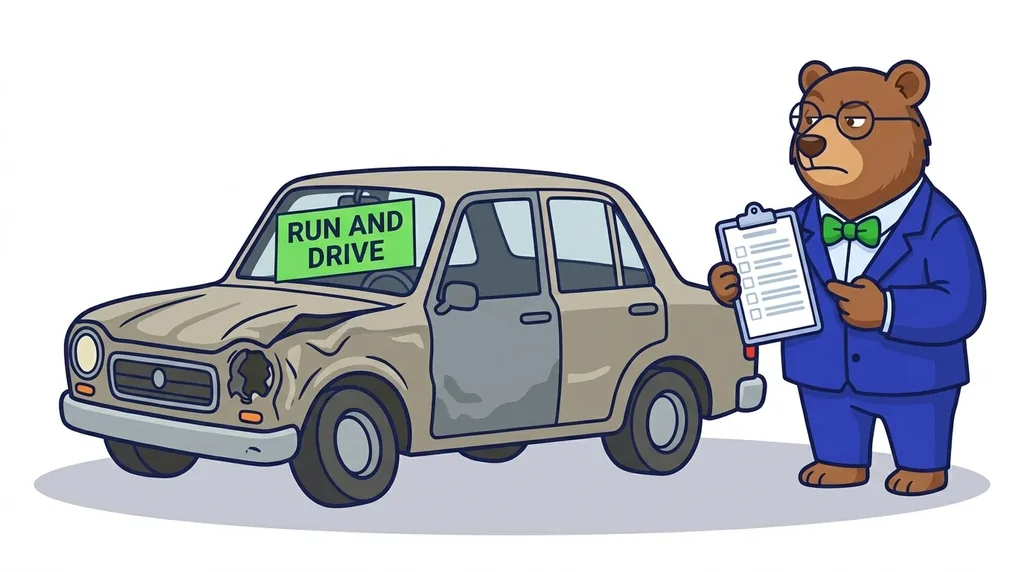
Run and Drive means it moved once, in a yard. It is not a statement about anything else.
Run and Drive means the vehicle started and moved under its own power at some point in the yard. It is not a statement about safety, legality, or whether the car will complete a journey, and a car can run and drive with serious faults. Budget as though transport may still be needed.
Clean title means the vehicle was never declared a total loss. That is weaker than it sounds. If damage was repaired privately, or without an insurance claim, nothing was declared and the title stays clean.
Salvage title means an insurer declared the car a total loss. Buyers treat it as a warning, and it is at least an honest one. Depending on local rules it can also make registration and resale considerably harder.
Sold as seen, and the protection you do have
At auction, the description is the contract.
Sold as seen means any fault, visible at the time or discovered later, becomes yours when the hammer falls. No warranty, no return, no renegotiation.
No major mechanical faults carries meaningfully more weight, and generally covers engine, gearbox, suspension, clutch, brakes and steering. It sets a higher expectation than a plain sold as seen listing.
You are not entirely without recourse. A materially misdescribed car, sold as running and arriving unable to start, usually gives grounds to challenge the sale, and if the auction house own condition report was inaccurate the claim may lie against the house rather than the seller. It is a narrow window and a poor substitute for checking first.
Why the listing is not enough
Everything on the auction sheet comes from the seller side. The damage codes are assigned in the yard. The title reflects only what was declared. The photographs were chosen by somebody who wants the car sold.
An independent history check is the only input that does not originate with the seller, and it covers what the auction sheet cannot: what happened to the car before it arrived.
It is also the only part of the record that survives what comes next. A car bought here gets repaired, exported, registered somewhere new and advertised as an ordinary used car, and at every one of those stages less of its past is visible. That is why the same check matters at both ends. Before you bid, it tells you what you are buying. Before you buy from a classified, it tells you whether the car in front of you came out of a yard like this one.
Panels get replaced and paperwork gets reissued. The history does not get repaired.
If you import from the US instead
Buying from an American salvage auction is possible from France, and it is a considerably heavier process than buying at Lyon or Bordeaux. Most US lots need a dealer licence, so a broker is genuinely required, and the charges stack on arrival.
| Charge | Rate or amount |
|---|---|
| Customs duty, passenger cars | 10% |
| Customs duty, pick ups and utility vehicles | 22% |
| VAT | 20% |
| Shipping, RoRo | 1,600 EUR to 2,200 EUR |
| Shipping, 20 foot container | 2,800 EUR to 3,800 EUR |
| Homologation fee, 2026 | 86.90 EUR, plus any UTAC testing |
An American car is not road legal in France as it arrives. It has to be francised through a Reception a Titre Isole, presented to DREAL or DRIEE for enhanced technical inspection, and usually modified for lighting, seatbelts and emissions. You will need form 846A from customs, and either a European certificate of conformity or an identification certificate confirming the car can be brought to European standards.
Taken together, importing and homologating a US car in France commonly runs 5,000 EUR to 15,000 EUR on top of the purchase, before the malus. And the malus is where this route most often collapses, because the cars people want from America are precisely the ones that emit enough to attract five figures of penalty.
Your pre-bid checklist
- Register before the sale day, not on it.
- Look up the CO2 figure and the malus for that exact car.
- Check the commission rate for that specific auction house.
- Go to the viewing. It is the only inspection you get.
- Set a total for the car registered and repaired, then work back to a maximum bid.
- Have the money available. Payment can fall due the same day.
- Arrange transport before you bid.
- Read every damage code. Treat MC and PR as questions, not answers.
- Run an independent history check on the VIN.
- Add 20 percent to whatever the repair estimate says.
A car 30 percent below market with a 20 percent commission and a 6,000 EUR malus is not 30 percent below market. Work out the whole number before you raise your hand.
Before you sign anything
Know what you are bidding on
Mileage, damage, finance and import records across 30+ countries, in one report, in under a minute.
- 30+ countries
- Under a minute
- Full PDF report
Not sure yet? See what a full report looks like first
Frequently asked questions
Can a private individual buy at a French car auction?
Yes. State sales through the domaine site require only a free registration, and private operators ask you to register in advance and sometimes leave a deposit. No trade licence is needed, which is unusual in Europe.
How much is the commission?
Typically 10 to 20 percent of the hammer price at private operators, and around 6 percent at state sales. The range is wide enough to change what a car is worth to you, so check it for the specific house before bidding.
Can I test drive a car before bidding?
No. You get a visual inspection at the pre sale viewing and nothing more, which is why the car recorded history is the only independent information available to you.
What is the malus and when do I pay it?
It is a one off CO2 penalty charged at first registration in France. The 2026 scale begins at 108 g/km and 50 euro and reaches 80,000 euro at 191 g/km. For a car already registered abroad the scale from its original registration year applies, reduced by a coefficient that grows with the car age and reaches 100 percent at 181 months, so a vehicle over about fifteen years old pays nothing.
About this guide
- Scope: this is the France edition. The pan-European overview compares what registration adds in five markets, and the Germany edition covers the market most of Europe buys from.
- Auction access and fees: private buyer eligibility, commission ranges and the typical discount against market price, from French consumer guidance on buying at auction. Commission varies by operator and should be confirmed against the terms of the sale.
- Operators: VPauto, Alcopa Auction, BCAuto Encheres, Interencheres and the state disposal site, with the March 2026 electric vehicle sale reported by French motoring press.
- Malus ecologique: 2026 CO2 thresholds, amounts and the age based reduction for vehicles previously registered abroad, from French government guidance. The scale is progressive gram by gram, so the figures shown are points on it rather than the whole table. An imported car is charged on the scale of its original registration year, so calculate for the specific vehicle rather than reading this table off.
- Damage codes: described as the auctions publish them. They are assigned by hand, are explicitly reference only, and no bidding decision should rest on them alone.
- Import charges: French customs duty, VAT and homologation requirements for vehicles imported from outside the EU, including the Reception a Titre Isole process. Shipping and total homologation costs are typical quoted ranges rather than fixed prices.
Read next