
Buying a used VW Passat: best years, common problems and what to check
It was built for covering long distances, and many have done exactly that. The trick is finding one where the maintenance kept pace with the mileage.

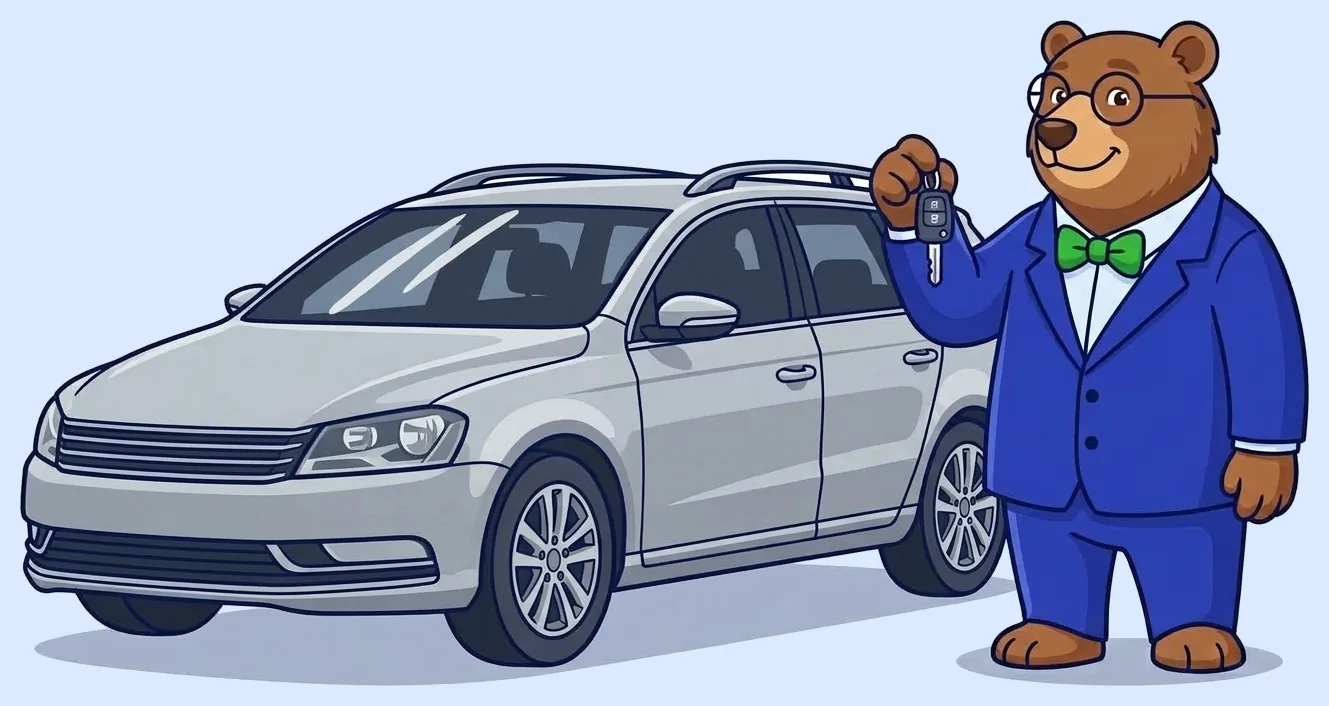
High mileage is normal on a Passat. Neglect is what costs the next owner.
The Passat is a high-mileage car by nature. It's built to cover big distances in comfort, and plenty on the used market have done exactly that. That isn't a problem in itself: the engines and gearboxes are well known and any independent garage can work on them. What catches buyers out is neglect, because a high-mileage Passat that wasn't looked after leaves the expensive repairs for the next owner (Parkers).
This guide covers the three generations you will find for sale, the best years to buy and the ones to approach with care, the common problems on the 2.0 TDI and the DSG, and what to check before you pay.
The short version
What to remember
- The best used buy is a B7 2.0 TDI with the emissions update on paper and a regular service record.
- Avoid the earliest B6 2.0 TDI unless the oil pump drive has been inspected or replaced.
- Squawking or rumbling as you pull away is the dual-mass flywheel, and it is not cheap.
- Buy a DSG Passat with a warranty, not on assurances.
- The B8 is the nicest inside and the least reliable. Check every recall and every electrical feature.
- High mileage is normal. Unproven mileage is the problem.
Skip ahead: check a car nowthe viewing checklist
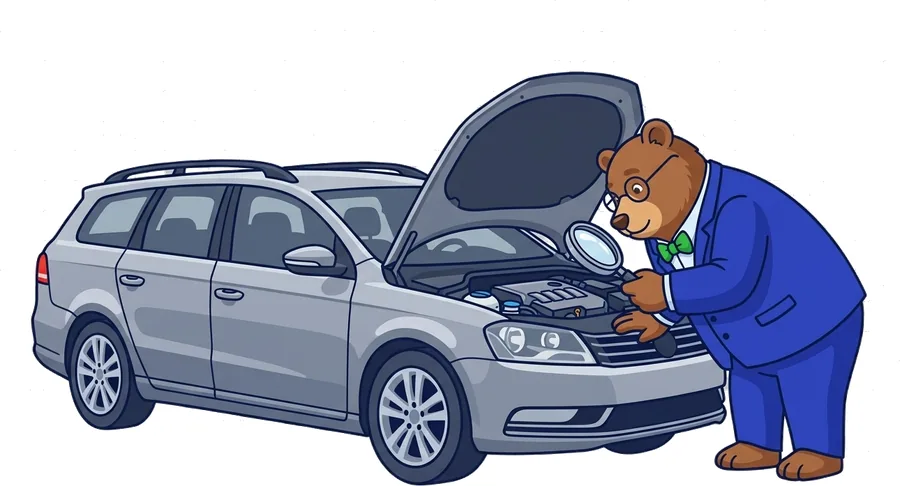
Before you hand over the money
Check the mileage, damage, finance and import history behind the car. It takes under a minute.
Example: WBA3A5G59DNP26082Free preview included
- 30+ countries
- Result in under a minute
- Full PDF report
VW Passat generations: B6, B7 or B8
Three generations make up almost every used Passat for sale today, each as a saloon and an estate. The Passat B7 is also the single most checked exact car in our ranking of the most bought used cars in Europe.
| Generation | Built | Common versions |
|---|---|---|
| B6 | 2005 to 2010 | 1.9 TDI, 2.0 TDI, 1.8 TSI, 2.0 FSI |
| B7 | 2010 to 2014 | 1.6 TDI, 2.0 TDI, 1.4 TSI, 1.8 TSI |
| B8 | 2015 on | 1.6 TDI, 2.0 TDI, 1.4 TSI, 1.5 TSI, GTE |
B6 (2005 to 2010)
The budget option now. At this age, condition matters far more than the equipment list. The early 2.0 TDI diesels have one fault every buyer should know about before viewing one.
B7 (2010 to 2014)
More a major facelift than a new car, and the generation most buyers end up considering. Solid when it's been maintained. Most of the diesels were caught by the emissions scandal, so what was done to the car, and how it behaves afterwards, matters here.
B8 (2015 on)
Larger, quieter and much nicer inside. It also has the weakest reliability record of the three. In one owner survey it finished 19th of 20 in its class, with electrical faults, warning lights and sensors the most common complaints (What Car?). Buy on the maintenance record and check the recall work is done.
Best years and years to avoid
On a car built to cover big distances, the history matters more than the year. As a rule of thumb:
- Best buys: a B7 2.0 TDI (2010 to 2014) with the emissions update on paper and regular service stamps, ideally with a manual gearbox.
- Buy with care: the B8, which has the weakest reliability record, and any DSG automatic. Check every recall, and buy the DSG with a warranty.
- Avoid: the earliest B6 2.0 TDI, built up to roughly mid 2006, unless there is evidence the oil pump drive has been inspected or replaced.
The build date decides which of these you are looking at, and a first registration can be months later. On a Volkswagen the tenth character of the VIN is the model year code, as our Volkswagen VIN decoder explains.
VW Passat common problems
The diesel emissions fix on the B7
Most B7 2.0 TDIs used the diesel engine that was later found to be cheating emissions tests. Those cars were recalled for a software update and a small hardware change.
After the work, owners reported smoke, hesitation, poor throttle response and rough running. Volkswagen extended its cover on some EGR parts afterwards, so ask whether any repairs were done under that programme (Parkers).
That engine is known as the EA189. The B8 moved to its successor, the EA288.
Oil pump drive on the early B6 2.0 TDI
On the early B6 2.0 TDI, the oil pump is driven by a short hexagonal shaft that wears down.
If it wears through, the pump stops turning and the engine loses oil pressure without warning, which usually wrecks it. Cars built up to roughly mid-2006 are the worst affected, and specialists recommend inspecting the drive at around 150,000 km (MyTurboDiesel, UKPassats owner forum).
Dual-mass flywheel on the 2.0 TDI
A worn flywheel squawks, rumbles and growls as you pull away and change gear.
The 2.0 diesel is the worst for it and the part isn't cheap. Treat any noise from it as a bill you'll pay soon, not something that will settle down (Parkers).
DSG gearbox problems
Feel for judder as you move off in first, and for snatchy or shuddering changes.
A dealer can reset the gearbox so a worn one feels smoother than it is, which is why Parkers says to buy a DSG Passat with at least three months' warranty (Parkers).
Starting problems on the 2.0 TDI
If the diesel struggles to start, shows a glow plug warning light and runs unevenly once going, the usual cause is a faulty fuel pressure sensor. It's a known fault and a cheap part (Haynes).
Electronic parking brake
Both the B6 and B7 can lose the parking brake control module, which shows up as a warning light or a brake that won't release. Reaching it means taking the centre console out, so the labour costs more than the part (Haynes).
Rust on the B6
These rust, and it gets more common as the cars age. The usual spots are the tops and rear corners of the rear wheel arches, where the foam liners inside trap moisture, the lower edges of the doors where the seam sealer was applied badly, the tailgate, and the inner edge of the bonnet.
Volkswagen issued a workshop bulletin about wheel arch corrosion on Passats of this era, so it's a recognised fault, not bad luck (Cars.com, owner forums).
Look for bubbling paint rather than obvious holes. Heavy rust on a car this age can also point to a bad accident repair rather than ageing.
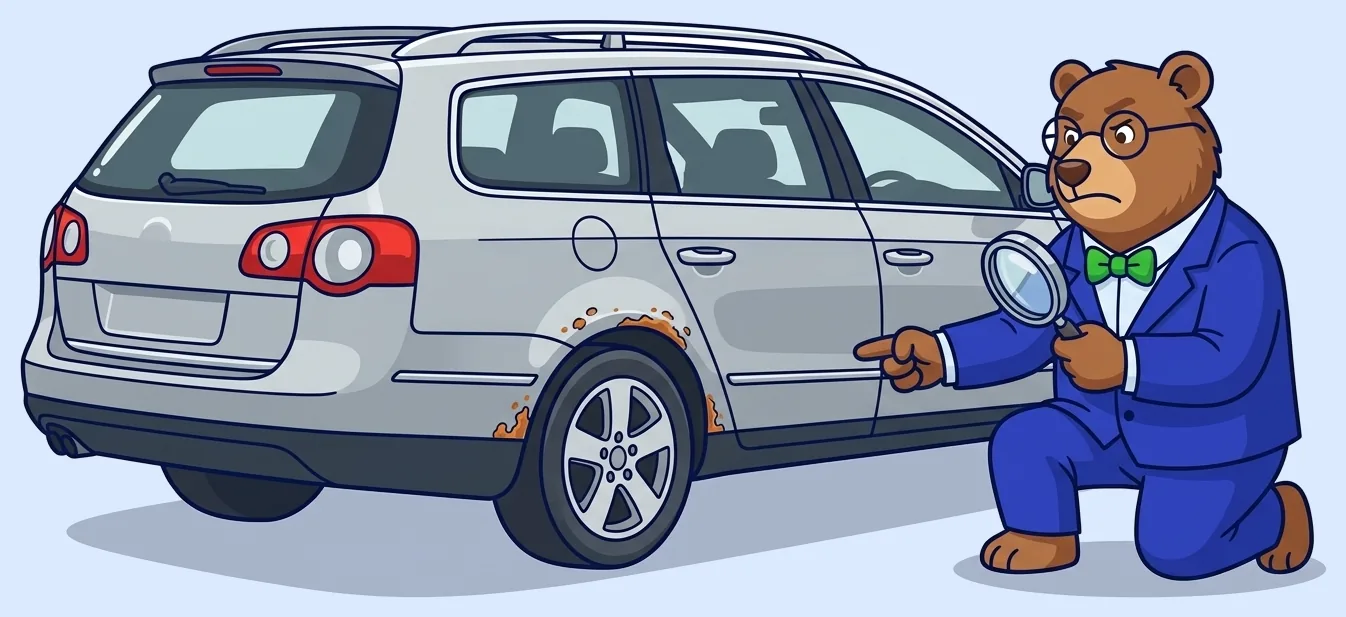
Rust starts at the arch lip. Run your hand along it before you look at anything else.
Smaller annoyances
On the B7: worn rear suspension bushes that rumble at low speed, parking sensors that stop working, keyless entry that turns unreliable, and a smell of fuel in the cabin from a leaking fuel return pipe.
On B6 diesels, the oil filter housing leaks (Haynes). On petrol Passats of these years, listen for timing chain rattle at start-up (Parkers).
Your ten minutes with the car
- Start it from cold. A diesel should fire straight away with no flashing glow plug light and no judder. On a petrol, listen for a chain rattle.
- On a manual 2.0 TDI, pull away gently and shift through a few gears. Squawking, rumbling or growling is the flywheel.
- On a DSG, drive it slowly in traffic and pull away from a standstill several times. Judder in first or rough changes means the gearbox needs money. Buy from a dealer with at least three months' warranty.
- On a B7 diesel, ask for proof the emissions update was done, and watch for hesitation, smoke or rough running on the drive.
- Apply and release the electronic parking brake several times. It should work cleanly every time, with no warning message.
- Drive slowly over uneven road with the radio off and listen for noise from the rear.
- Test the parking sensors and the keyless entry, and sniff the cabin for fuel.
- On a B6, check the tops and rear corners of the wheel arches, the lower edges of the doors and the tailgate for bubbling paint.
- Check the VIN for open recalls, especially on a B8, and ask which oil was used if the car ran on long service intervals.
How to check a used VW Passat by VIN
A high mileage car is exactly the kind a seller is tempted to wind back, and the Passat is a high mileage car. The record behind the VIN shows whether the mileage and the maintenance add up.
You will find the VIN at the base of the windscreen, on the type plate inside a door frame and on the registration document. Check that they match before you check anything else.
- Mileage readings from inspections and services over the car's life. A reading that goes down is the sign of a clocked car, which our guide to odometer fraud covers in detail.
- Damage records, including repairs the seller may not mention.
- Import history. Many used Passats are former company cars from Germany, and the history often stays behind at the border. See how to check an imported car.
- Open recalls are a separate check: a Volkswagen dealer can look the VIN up and tell you whether the emissions update and any other recall work was done.
Before you agree a price
Check the Passat you are about to buy
Mileage over time, damage, finance and import records across 30+ countries, in one report, in under a minute.
- 30+ countries
- Under a minute
- Full PDF report
Not sure yet? See what a full report looks like first
What we'd buy
A B7 2.0 TDI with the emissions update on paper, a manual gearbox that pulls away quietly and a service record with regular stamps. There's a reason it's one of the most common Passats on the road.
If you want the DSG automatic, buy it with a warranty rather than on assurances.
If you want the B8's cabin, check every recall is done and every electrical feature works before you talk price.
And on a B6, avoid the earliest 2.0 TDI unless there's evidence the oil pump drive has been inspected or replaced.
A Passat can cover 300,000 km and more. Whether this one does depends on how the last two owners treated it, and the history is where that shows.
Comparing it with something smaller or sportier? Read our used VW Golf guide or the used BMW 3 Series guide.
Frequently asked questions
Which VW Passat years are the best to buy used?
A B7 (2010 to 2014) 2.0 TDI with the emissions update on paper, a manual gearbox that pulls away quietly and a service record with regular stamps. The B8 is nicer inside but has the weakest reliability record of the three, so buy one only with every recall done and every electrical feature working.
Which VW Passat should I avoid?
The earliest B6 2.0 TDI, built up to roughly mid 2006, unless there is evidence the oil pump drive has been inspected or replaced. Also any DSG automatic sold without a warranty, and any high mileage car with gaps in its service history.
What are the most common 2.0 TDI problems on a Passat?
A worn dual-mass flywheel, running problems after the emissions fix on the B7, starting trouble from a faulty fuel pressure sensor, and on the early B6 the oil pump drive. The flywheel and the oil pump drive are the expensive ones.
Was my Passat affected by the diesel emissions scandal?
If it is a B7 with the 2.0 or 1.6 TDI, very likely: those used the EA189 diesel that was recalled for a software update and a small hardware change. A Volkswagen dealer can confirm from the VIN whether the work was done.
Is a high mileage Passat worth buying?
Often, yes. A Passat can cover 300,000 km and more when it is maintained, and high mileage is normal for the car. What matters is proof the mileage is real and that the maintenance kept pace with it.
How can I check a used Passat's history by VIN?
Enter the 17 character VIN in the MrVIN check to see the recorded mileage readings, damage, finance and import history across more than 30 countries. For open recalls, a Volkswagen dealer can look the VIN up for you.
Sources
- Parkers, Volkswagen Passat B7 used review and buying guide
- What Car?, used Volkswagen Passat 2015 to 2022, reliability and common problems
- Haynes, VW Passat common problems 2005 to 2010 and 2010 to 2015
- MyTurboDiesel, oil pump and balance shaft module failure on 2.0 TDI engines
- UKPassats owner forum, B6 2.0 TDI oil pump failures
- Cars.com and Volkswagen owner forums, Passat corrosion on wheel arches, doors and tailgate
Read next