
What a used car really costs in Europe in 2026
Used cars are getting cheaper almost everywhere in Europe. Insuring and financing them is not. Here is where the money actually goes, and the three lines you can still compare before you sign.


The advertised price is one of four numbers. The other three are set after you have already agreed to buy.
The short version
- Used car values keep easing through 2026 across most of western Europe, with the gaps between markets widening.
- Insurance rose across Europe on the back of parts, labour and repair costs. That pressure is easing, but the higher prices are already in your renewal.
- Under EU rules your claims history must be recognised in any member state you move to. The car's history is not so portable.
- From 20 November 2026 one new credit rulebook applies across the EU, including to 0% instalment offers.
Cars got cheaper. Owning them did not
Start with the good news, because there is some. Residual values are expected to keep easing through 2026 in Austria, France, Germany, Italy, Spain, Switzerland and the UK as the market normalises from the 2021 to 2023 peak. The declines are slight, but the direction is clear, and the differences between national markets are widening rather than closing.
That is a buyer's market. It just is not a cheaper one overall, because the purchase price is the only line that fell. Financing costs eased from their peak but remain far above the near free money of a few years ago, and insurance moved firmly the other way.
Insurance is the line that moved against you
The pressure came from claims inflation, and it was the same story in nearly every European market. Parts got more expensive. Repairs got more complex, because even an ordinary bumper now carries sensors and cameras. Labour cost more. Insurers repriced to match, and premiums rose across the continent.
There is some relief in that. Motor claims inflation has stopped climbing and is now easing across European non-life insurers. But easing pressure does not mean falling prices: the increases of the last few years are already baked into the premium you are quoted today.
Which is why the only reliable answer is to check what your own car and postcode cost today, rather than assuming last year's premium still reflects the market.
What varies is how much competition there is where you live. The clearest evidence comes from the market with the fiercest price comparison culture in Europe: in the UK, average comprehensive premiums fell about 16% in the year to autumn 2025 as comparison sites intensified competition between insurers. Same claims inflation, opposite direction of travel, because buyers there switch.

The lesson generalises even where the numbers do not. Premiums are set on three things almost everywhere in Europe: the car itself, where it is kept, and your own claims record. Two of those are decided the moment you choose which car to buy.
Which means the cheapest policy for the car you are about to buy is a number you can find out today, before you own it. It takes a minute and it is the same exercise you should repeat at every renewal.
One credit rulebook, from November
If you finance the car, and across Europe a large share of private buyers do, one date matters this year. From 20 November 2026 the new EU Consumer Credit Directive applies in every member state.
Before any of that, though, the useful step is the same as it has always been: find out what rate you actually qualify for, rather than accepting the one put in front of you. Checking costs nothing.
Two changes are worth knowing before you sign anything:
Creditworthiness checks get stricter. Lenders have to look harder at whether you can actually afford the repayments. Expect more documentation and fewer instant approvals at a dealer's desk.
Zero interest deals are covered for the first time. Interest free instalment plans and buy now pay later arrangements fall under the same consumer credit rules as ordinary loans. That is a protection, not a restriction: the same disclosure and assessment duties now apply to the offer that used to be waved through fastest.
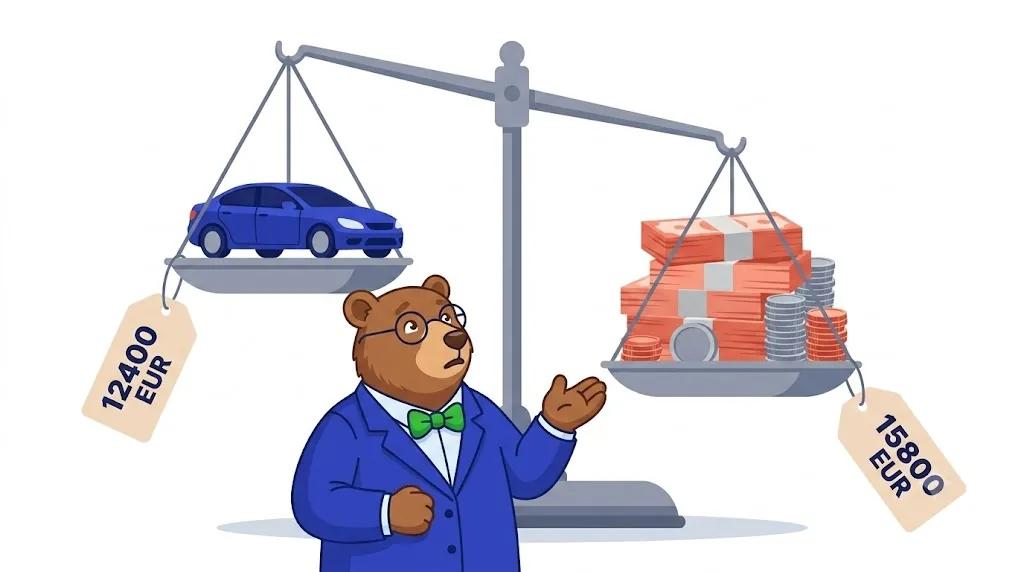
Whatever the rules, the arithmetic does not change. The rate you are offered depends on your credit profile, and the spread between a good rate and a poor one on a typical used car is worth more than any discount you will win by haggling over the price. Compare before you walk in, because arriving with financing arranged also makes you a cash buyer in the negotiation.
Your record crosses the border. The car's does not
This is the part most buyers do not know, and it cuts both ways.
Your own claims history is portable. Under the amended EU Motor Insurance Directive, an insurer must treat a claims history statement issued in another member state as equal to a domestic one, and must offer a customer from another member state the same discounts an otherwise identical domestic customer would get, including bonus-malus discounts. Insurers may not discriminate based on your nationality or on which member state you previously lived in. If you move country, ask your old insurer for the statement and insist it is applied.
One caveat worth knowing: the systems themselves stay national. The directive requires that your statement is recognised and counted, not that a Polish no-claims discount converts into an identical Romanian one.
The car's history is not portable at all. When a vehicle is exported and re-registered, its record does not follow it into the new national database. Europe moves an enormous number of used cars across its internal borders, driven by the price gap between western and central and eastern markets. Western Europe, and Germany above all, supplies them. In several central European markets around one in five imported used cars comes from Germany alone, and in Poland roughly half of the used cars inspected are imports.

Vehicle history check
Check the car before you check the price
See a car's real mileage, damage, finance and country history across 30+ countries, in under a minute.
Example: WBA3A5G59DNP26082Free preview included
- 30+ countries
- Result in under a minute
- Full PDF report
What holds its value in 2026
Depreciation never appears on an invoice, which is why it gets left out of the calculation, and it is usually the largest cost of all. In 2026 it varies enormously by fuel type.
Electric cars are falling hardest. Used battery electric vehicles now trade below their pre pandemic values, down roughly 4.4% year on year. A Tesla Model 3 that sold used at €35,000 to €40,000 in 2022 now goes for around €22,000 to €28,000 across most European markets. A large part of the reason is that buyers cannot verify battery condition: there is still no standard state of health certification, so the market prices in the uncertainty.
Hybrids are the strongest. They entered 2026 up about 2.2% year on year, the best performing fuel type. Petrol and diesel values stayed relatively stable.
Read that as a buyer rather than as a headline. Fast depreciation is painful if you are selling and useful if you are buying. If you intend to keep the car for years, the electric bargain is a genuine bargain. If you expect to sell in three, the curve matters more than the sticker.
The short version
Three contracts, three chances to compare:
- The car. Check its history against the VIN before you commit, especially on an import. A car that crossed a border arrives with a blank local record whatever happened to it before.
- The loan. Compare lenders rather than accepting the desk offer. New EU rules from November mean more checks, not better rates.
- The insurance. Compare every year. If you have moved country, ask for your claims history statement and insist it is applied, because EU rules require it to count.
Prices came down this year. The bills that follow the purchase did not. The three lines above are where a careful buyer still gets to decide how much a used car really costs.
Before you sign anything
Know before you buy
Mileage, damage, finance and import records across 30+ countries, in one report, in under a minute.
- 30+ countries
- Under a minute
- Full PDF report
Not sure yet? See what a full report looks like first
Frequently asked questions
Does my no claims discount transfer if I move to another EU country?
Your claims history has to be recognised. Under the amended EU Motor Insurance Directive, an insurer must treat a claims history statement from another member state as equal to a domestic one, and must give you the same discounts an otherwise identical domestic customer would get. Insurers may not discriminate on nationality or previous residence. The systems themselves stay national, so the statement has to be counted, but it does not convert one for one. Ask your previous insurer for the statement in writing.
Why has car insurance become more expensive across Europe?
Claims inflation. Parts, labour and repair costs rose sharply across European markets, and insurers repriced to match. Modern cars are also more expensive to repair, because sensors and cameras sit behind ordinary panels. That pressure is now easing, but the increases of recent years are already reflected in current premiums.
Is a used electric car a good buy in 2026?
On price, yes. Used electric cars now trade below their pre pandemic values, so they are among the cheapest ways into a modern car. The risk is battery condition, because there is still no standard state of health certification, which is exactly why the market discounts them. Check the car's history and, if you can, get the battery health tested before buying.
What changes for car loans on 20 November 2026?
The new EU Consumer Credit Directive applies in every member state from that date. Creditworthiness checks become stricter, and zero interest instalment plans and buy now pay later offers are covered by the same rules as ordinary consumer credit for the first time.
Sources
- Directive (EU) 2021/2118 amending the Motor Insurance Directive 2009/103/EC: equal treatment of claims history statements across member states, and the prohibition on discrimination by nationality or previous residence. Read
- EU Consumer Credit Directive (CCD II), Directive (EU) 2023/2225: application in member states from 20 November 2026, stricter creditworthiness assessment, and coverage of zero interest and buy now pay later credit. Read
- European insurance market analysis: the easing of motor claims inflation across European non-life insurers, and the fall in average UK comprehensive premiums attributed to comparison site competition. S&P Global Ratings Confused.com price index
- Central European market data: the share of imported used cars originating in Germany, and the scale of used car imports into Poland. Read
- Autovista residual value analysis: the 2026 residual value outlook for western European markets, and the widening gaps between national markets. Read
- Cross-border trade patterns: price differentials between western and central and eastern European markets as the driver of used car flows. Read
Read next