
How to buy a car on leboncoin without overpaying
leboncoin is not a car website. It is France's biggest general classifieds platform, and cars became one of its largest categories almost by accident. That explains both its biggest advantage and its biggest drawback.

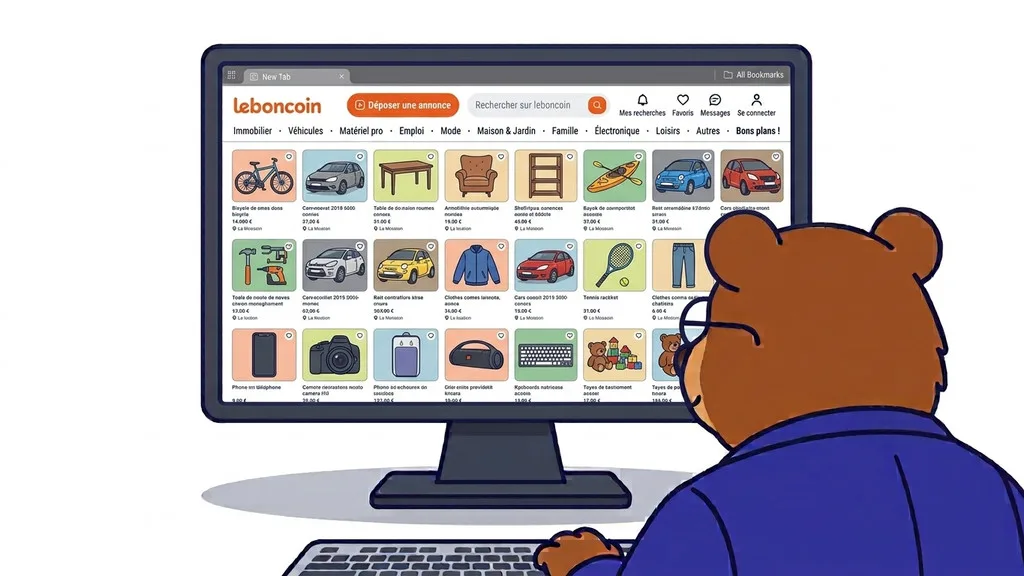
Cars sit alongside sofas and bicycles. That is the whole opportunity, and the whole problem.
Nowhere else in France has as many private sellers, and almost nowhere else has listings that vary this much in quality and detail.
Most dealer stock lives elsewhere. La Centrale carries more than 350,000 vehicles and is heavily focused on professional sellers, warranties and recent inspections. For most buyers, the best approach is to search both sites, but for very different reasons.
Everything below focuses on the part you can control: who you contact, what you pay, and what you can still do if something goes wrong later.
The short version
What to remember
- Change the sort order. The default is pertinence, and pertinence is influenced partly by popularity.
- Expect 5 to 15 percent of negotiating room, especially if a listing has been online for more than a month.
- The detailed Argus cote costs 8 EUR to 15 EUR and often pays for itself in a single negotiation.
- Carte grise costs depend on your region and are halved for vehicles over ten years old.
- A private seller who resells around five cars a year can legally be treated as a professional.
- Histovec is free and official, but the seller must generate the report. Asking for it is part of the screening.
Skip ahead: check a car nowwhat the carte grise costs

Before you drive across France
The French record starts when the car was registered here. A cross border check covers everything before that, which is where an imported car keeps its history.
Example: WBA3A5G59DNP26082Free preview included
- 30+ countries
- Result in under a minute
- Full PDF report
Where the stock actually is
| Where | What it is | Why you would use it |
|---|---|---|
| leboncoin | The largest pool of private sellers in France | Best prices, least structure, most effort required |
| La Centrale | More than 350,000 listings, heavily dealer focused | Dealer stock, warranties and recent CT inspections |
| AutoScout24, L'Argus | Smaller, mixed marketplaces | Useful for checking values and comparing prices |
A practical approach is to value the car using La Centrale and buy it on leboncoin. Dealer listings are often the closest thing to a published market price, while private sellers tend to price vehicles based on what they remember paying for them.
What pertinence actually ranks
Since late 2024, leboncoin has sorted results by pertinence by default on both desktop and mobile. Before trusting the first page of results, it helps to understand what that means.
Relevance now includes buyer engagement as a ranking factor. Listings that receive more clicks, messages and saves move higher. On top of that, sellers can pay for visibility, and professional dealers have access to automated promotion tools.
| Feature | What it does | What it tells you about the car |
|---|---|---|
| Pertinence, the default | Combines relevance with engagement signals | Popular, not good |
| Remontée | Pushes a listing back into chronological order, then decays within hours | Nothing |
| Mise en avant | A coloured frame or badge that keeps working on the eye | Nothing |
| Supersmartbump | Automated promotion tool sold to dealers | Nothing |
Two things follow from this. Cars with great photos collect clicks and rise in the rankings whether they are good buys or not. At the same time, genuinely good cars with poor photos and short descriptions disappear deep into the results.
When to buy, and when to send the message
There are two clocks worth paying attention to: the calendar and the age of the listing.
| Period | What happens |
|---|---|
| January and February | Lower demand, slower sales and more patient sellers |
| End of summer | Another quiet period before autumn demand picks up |
| Autumn | The busiest buying season and usually the firmest prices |
Then there is the listing itself. A good rule is to wait three to four weeks after publication before reaching out. If a car has been listed for a month without selling, the seller has often already started reconsidering the asking price, even if they have not updated the advert.
Keep the first message simple. Ask whether the car is still available and whether anything has changed since it was listed. Mentioning a price immediately gives away information before the seller has revealed anything.
What it should cost you
Before negotiating, work out what the car is actually worth.
The basic Argus cote is free and gets you close, and a detailed version is available for a few euro. Whichever you use, compare the figure against similar listings within roughly 100 kilometres, because that is the market the seller is comparing against as well.
A MrVIN report approaches the same question from the other side. It carries a valuation alongside the mileage readings, the damage records and the finance history, so the number and the reasons to argue it down arrive in the same document. A rolled back odometer or an undisclosed repair is not a valuation input. It is a discount.
Realistic negotiation room is usually 5 to 15 percent. Expect closer to 5 to 10 percent on a well priced, well maintained vehicle, and up to 15 percent when the car needs work or the advert has been online for a long time.
The strongest negotiating tool with a private seller is often being ready to pay immediately. The second strongest is a written repair estimate. Worn tyres, a clutch nearing replacement or a timing belt due soon are concrete costs. Concrete costs move negotiations more effectively than opinions.
The carte grise maths
Registration costs are neither fixed nor negotiable, so they should be part of your calculations before you make an offer.
The regional tax is based on fiscal horsepower, multiplied by your region's rate, then adjusted by the vehicle's age. That creates two important consequences.
| Region | Rate per CV |
|---|---|
| Auvergne Rhône Alpes, Hauts de France | 43 EUR |
| Île de France | 68.95 EUR. The regional rate is 54.95 EUR, plus a 14 EUR per CV surcharge since 1 March 2026, falling to 12 EUR in 2027 |
| Bourgogne Franche Comté, Bretagne, Centre Val de Loire, Grand Est, Normandie, Provence Alpes Côte d'Azur | 60 EUR, the legal maximum |
The rate depends on where you live, not where the car is located. This is not a reason to shop in another region. It is a reason to check the CV figure on any car you are considering, because the bill scales with it.
That scaling is what makes Île de France sting. At 68.95 EUR per CV, a seven CV car costs about 483 EUR to register there against 301 EUR in Auvergne Rhône Alpes, for the same car.
The private seller who is actually a professional
Many traders advertise as private sellers. In France, that distinction matters more than most buyers realise.
Transactions between private individuals do not carry the garantie légale de conformité. The seller is liable only for vices cachés, and most private adverts try to limit even that with a line about selling the car as seen.
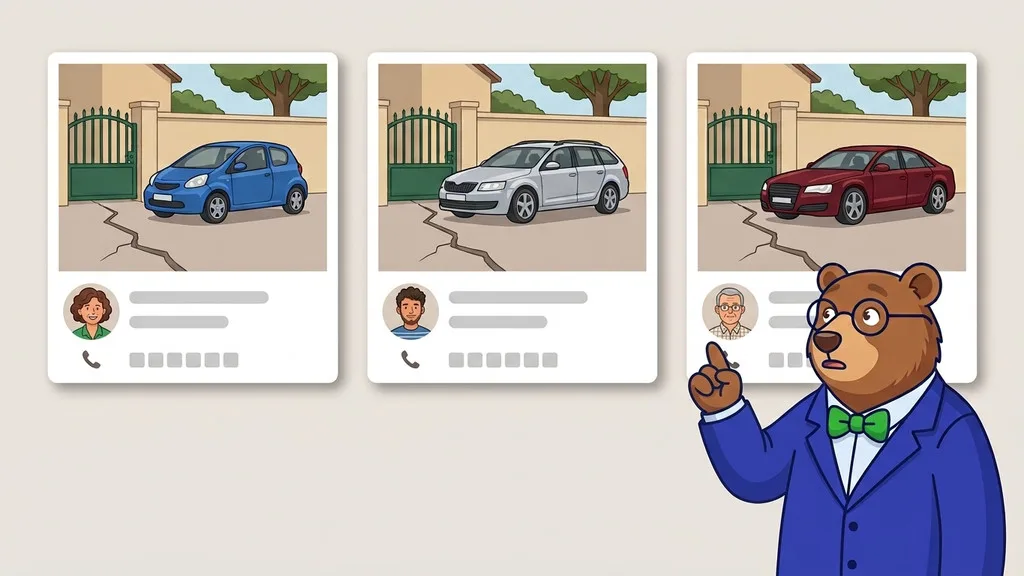
Here is the part almost nobody tells buyers. That exclusion does not survive if the seller is effectively acting as a professional. Someone reselling around five cars a year can be legally reclassified as a trader, and a professional is deemed to know the defects in what he sells, which neutralises the exclusion clause. Recent case law has gone further and treated a private seller who carried out the repair work behind the defect in a similar way.
| Signal | Why it matters |
|---|---|
| Several cars sold from the same account or phone number | Grounds for reclassification |
| Photos always taken in the same location | A forecourt rather than a private driveway |
| The same background across adverts from different sellers | One trader running several private accounts |
| Offers delivery, financing or part exchange | Typical dealer behaviour |
| I did the repairs myself | Can become legally important later |
The disguised trader is not only a risk. He is also evidence.
Reading a French listing
| Term | What it means |
|---|---|
| Première main | One owner from new. Verify through the carte grise and Histovec |
| Carnet d'entretien suivi | Service book available. Ask to see every page |
| Distribution faite | Timing belt replaced. Ask for the invoice, not the reassurance |
| CT vierge | Inspection passed with no recorded defects |
| CT avec contre visite | Failed items requiring a follow up inspection |
| Vendu en l'état | Sold as seen. An attempt to limit liability, and not always effective |
| Véhicule accidenté | Accident damaged. At least it is stated |
| VGE, VEI | Serious damage or economic write off classification |
| Non fumeur | Largely meaningless, but often says something about the seller's style of advert |
CT vierge is the phrase to search for, because it is the one claim in a French advert that a third party actually signed.
What the seller must give you
France has fairly strict documentation requirements, and each document tells you something about the seller as well.
| Document | Requirement |
|---|---|
| Contrôle technique | Less than six months old, for vehicles over four years old |
| Certificat de situation administrative | Less than fifteen days old. Proves no lien and no opposition |
| Certificat de cession | Signed by both parties |
| Carte grise | Crossed out, dated and signed, with the sale declared through ANTS |
A seller who struggles to provide these documents is often telling you how the rest of the transaction will go.
Histovec, and why you have to ask
Histovec is the Interior Ministry's free vehicle history service. It draws on the national registration database and includes ownership changes, mileage readings recorded at inspections, recorded damage procedures, theft reports, liens and administrative restrictions.
There is one important limitation. Only the current owner can generate the report and share it with you. You cannot obtain it yourself using the registration number alone.
That makes Histovec more than a document. It is also a behavioural test. A seller with nothing to hide can send the link within a minute or two from their phone. Ask early, before spending a Saturday travelling to inspect a car.
Paying, and the scams
The classic fake listing follows a familiar pattern. The price is dramatically lower than comparable vehicles, the seller wants to move the conversation to a messaging app, claims to be abroad and asks for a deposit to reserve the car or arrange transport.

Two quick checks eliminate many of these. Reverse search the photos using Google Images or TinEye, because stolen photo sets are the most common tell. Then look closely at the seller's account rather than just the advert: how old it is, what else has been listed and whether there are any ratings.
Payment scams exist as well, and they run in both directions.
| Signal | What it means |
|---|---|
| Deposit before viewing | Theft, without exception |
| Bank cheque presented at the meeting | Counterfeit cheques can take banks up to two weeks to detect |
| A cheque written for more than the agreed price, with a refund requested | The classic overpayment fraud |
| Pressure to conclude the sale immediately | Manufactured urgency is the whole method |
For larger transactions, an escrow service holds the funds until both sides complete the sale, typically costing 1.5 to 2 percent and usually shared between buyer and seller. On a 10,000 EUR car that is 150 EUR to 200 EUR for certainty.
If you are accepting a bank cheque, ask for a copy beforehand so your bank can verify it before you arrive.
Before you pay
- Sort by price and date instead of relying on pertinence.
- Read the poorly presented adverts. That is often where the value is.
- If your timing is flexible, shop in January, February or late summer.
- Wait three to four weeks on a listing before making contact.
- Buy the detailed Argus cote and compare against similar local listings.
- Check the CV figure and calculate the carte grise cost before negotiating.
- Ask for the Histovec link early and treat a refusal as useful information.
- Confirm the CT is under six months old and the certificat de situation administrative under fifteen days.
- Save screenshots of the advert and keep all communication.
- Never pay a deposit for a car you have not seen in person.
Pertinence decides what you see first. The CV figure decides what the car costs after you buy it. Neither of them says anything about the car, which is the one thing you have to establish yourself.
Before you sign anything
Know what you are buying
Mileage, damage, finance and import records across 30+ countries, in one report, in under a minute.
- 30+ countries
- Under a minute
- Full PDF report
Not sure yet? See what a full report looks like first
Frequently asked questions
What does leboncoin actually rank when it sorts by pertinence?
Relevance plus buyer engagement. Listings that collect more clicks, messages and saves move higher, and sellers can pay for visibility on top of that through Remontée, Mise en avant and the Supersmartbump tool sold to dealers. Pertinence tells you a listing is popular, not that the car is good. Sort by price and by date instead.
How much does a carte grise cost, and can I reduce it?
The regional tax is fiscal horsepower multiplied by your region's rate, adjusted for age. Rates run from 43 euro per CV in Auvergne Rhône Alpes to 68.95 in Île de France, and 60 is the legal maximum in several regions. The rate follows where you live, not where the car is. Vehicles over ten years old receive a 50 percent reduction, which is a quiet argument for the eleven year old example.
Can I get a Histovec report myself before contacting the seller?
No. Only the current owner can generate a Histovec report and share the link with you, so you cannot pull one from the registration number alone. That makes asking for it a behavioural test as much as a document request: a seller with nothing to hide sends the link within a minute from their phone. Ask early, before you spend a Saturday driving.
Does vendu en l'état mean I have no recourse against a private seller?
Not necessarily. A private sale carries no garantie légale de conformité and the seller is liable only for vices cachés, which most private adverts try to exclude. That exclusion does not survive if the seller is effectively acting as a professional. Someone reselling around five cars a year can be legally reclassified as a trader, and a professional is deemed to know the defects in what he sells.
Which documents must a French seller give me?
A contrôle technique less than six months old on a vehicle over four years old, a certificat de situation administrative less than fifteen days old, a certificat de cession signed by both parties, and the carte grise crossed out, dated and signed with the sale declared through ANTS. A seller who struggles to produce these is telling you how the rest of the transaction will go.
How much can you negotiate on leboncoin?
Usually 5 to 15 percent. Closer to 5 to 10 on a well priced, well maintained car, and up to 15 when it needs work or the advert has been online a long time. Waiting three to four weeks after publication before making contact helps, because by then the seller has already started reconsidering the price. With a private seller, being ready to pay immediately is often the strongest lever you have.
About this guide
- Scope: valuation costs, negotiating ranges and seasonal patterns are typical rather than fixed, and vary by vehicle, region and seller.
- Carte grise rates: regional rates per CV change, and the Île de France surcharge is scheduled to step down in 2027. Confirm the current rate for your own region before budgeting, along with the inspection requirements and the rules on reclassifying a private seller as a professional.
- Listing terms: the local words are left exactly as they appear on the platform, because a translated term cannot be searched for. The condition and history fields in particular are seller declarations, not verified facts.
- Negotiating ranges and seasonal patterns: typical estimates rather than rules. They move with the model, the season, the seller and how long the advert has been up, and are worth treating as a starting point rather than a target.
- Why the VIN matters here: a border crossing is where a car paper trail usually goes missing, covered in how to check an imported car, and the mileage side in odometer fraud. If the car you are looking at came from Germany, the import guide for this market covers what it costs to bring one over yourself.
Read next